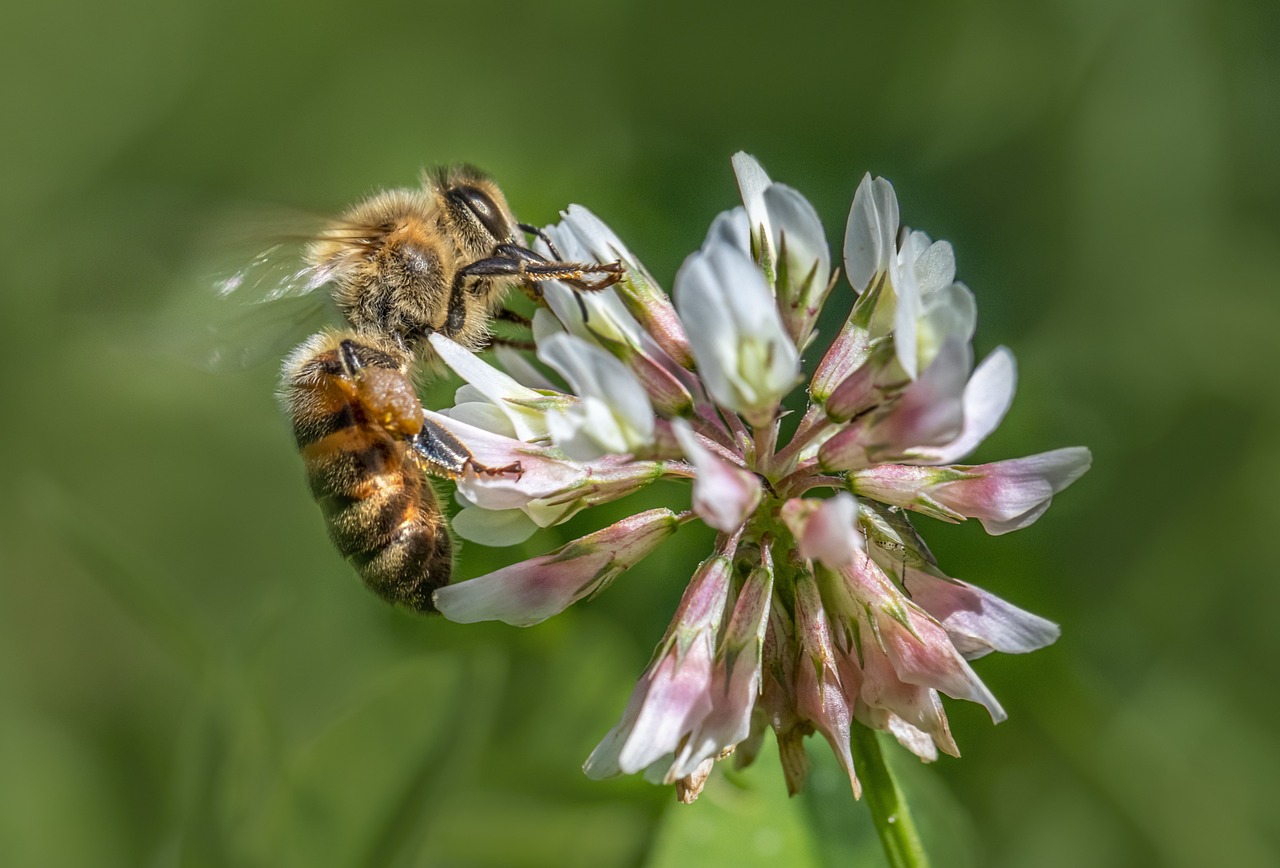
Here’s a detailed overview of the Western honey bee (Apis mellifera), one of the world’s most important pollinators and perhaps the best-known insect to humans:
Western Honey Bee (Apis mellifera)
Taxonomy & Classification
- Kingdom: Animalia
- Phylum: Arthropoda
- Class: Insecta
- Order: Hymenoptera
- Family: Apidae
- Genus: Apis
- Species: A. mellifera
General Description
The Western honey bee is a highly social insect, famous for its honey production and complex colonies. It has been domesticated for thousands of years and is now found worldwide.
- Size: Workers 12–15 mm; queens 18–20 mm; drones 15–17 mm.
- Coloration: Generally golden-brown with black stripes, though coloration varies by subspecies.
- Body Structure:
- Hairy thorax, smooth abdomen with alternating dark and light bands
- Proboscis adapted for nectar feeding
- Hind legs of workers have pollen baskets (corbiculae) for transporting pollen
- Caste System:
- Workers – sterile females, perform foraging, nursing, cleaning, and hive defense
- Drones – males, their only role is to mate with virgin queens
- Queen – fertile female, sole egg-layer in the colony
Behavior & Lifestyle
- Social Structure: Lives in highly organized colonies of 20,000–80,000 individuals.
- Communication:
- Waggle dance to indicate direction and distance of food sources
- Round dance for nearby nectar sources
- Defense: Workers can sting vertebrates, but usually die afterward due to their barbed stinger.
- Lifespan:
- Workers: ~6 weeks in summer, up to 6 months in winter
- Drones: ~2 months (die after mating or expelled before winter)
- Queen: 2–5 years, sometimes longer
Diet
- Adults: Nectar (energy) and pollen (protein).
- Larvae: Fed by workers with a mixture of pollen, nectar, and glandular secretions (royal jelly for queens).
- Honey: Produced from concentrated nectar, serves as colony’s food reserve.
Habitat
- Natural habitats include woodlands, meadows, and savannas, but due to domestication, they are found in almost every environment where flowering plants grow.
- Wild colonies often nest in hollow trees, rock crevices, or other sheltered cavities.
Geographic Range
- Native: Africa, Europe, western and central Asia.
- Introduced: Worldwide through human activity; now present on every continent except Antarctica.
- Subspecies: Over 20 recognized, including A. m. ligustica (Italian), A. m. carnica (Carniolan), A. m. mellifera (dark European), and A. m. scutellata (Africanized “killer bee” hybrids in the Americas).
Reproduction & Colony Cycle
- Swarming: The colony reproduces by swarming—half the colony and the old queen leave to start a new nest while a new queen emerges in the old hive.
- Mating: Queens mate in flight with multiple drones (polyandry).
- Brood Development:
- Egg → larva → pupa → adult
- Worker development: 21 days; Drone: 24 days; Queen: 16 days
Ecological Role
- Pollination: One of the most important pollinators globally, essential for both wild plants and crops.
- Biodiversity Support: Maintains ecosystems by enabling seed and fruit production.
- Food Source: Prey for birds, mammals, and other insects.
Special Adaptations
- Pollen baskets (corbiculae): Specialized structures for carrying pollen.
- Sophisticated communication system: Dance language unique among invertebrates.
- Thermoregulation: Can cluster and vibrate muscles to maintain hive temperature in winter.
Conservation & Threats
- IUCN Status: Not globally threatened, but populations face pressure.
- Major Threats:
- Parasites: Varroa mite (Varroa destructor), Nosema fungi
- Pesticides: Neonicotinoids linked to bee decline
- Diseases: Viruses spread by mites (e.g., deformed wing virus)
- Habitat loss and reduction of floral diversity
- Colony Collapse Disorder (CCD): Sudden disappearance of worker bees, complex causes
- Conservation Measures: Integrated pest management, reduced pesticide use, habitat restoration, and support for wild pollinators.
Interesting Facts
- A single bee produces only about 1/12 of a teaspoon of honey in her lifetime.
- Colonies can regulate hive temperature between 34–36 °C, crucial for brood survival.
- Bees can recognize human faces, a rare ability among insects.
- Honey from different plants varies in flavor, color, and medicinal properties.
Visited 1,774 times, 83 visit(s) today
Views: 1336
Subscribe to the newsletter: