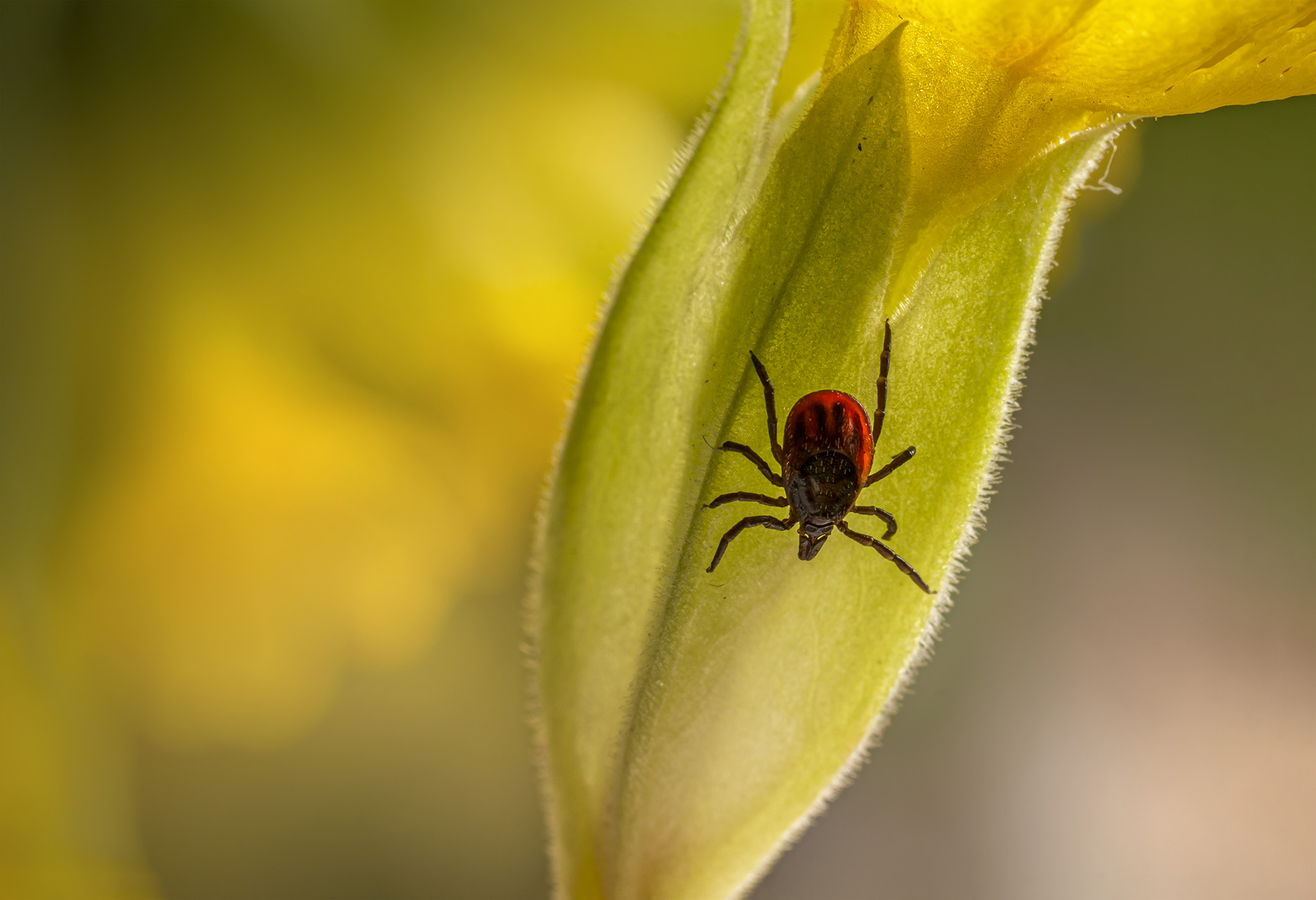
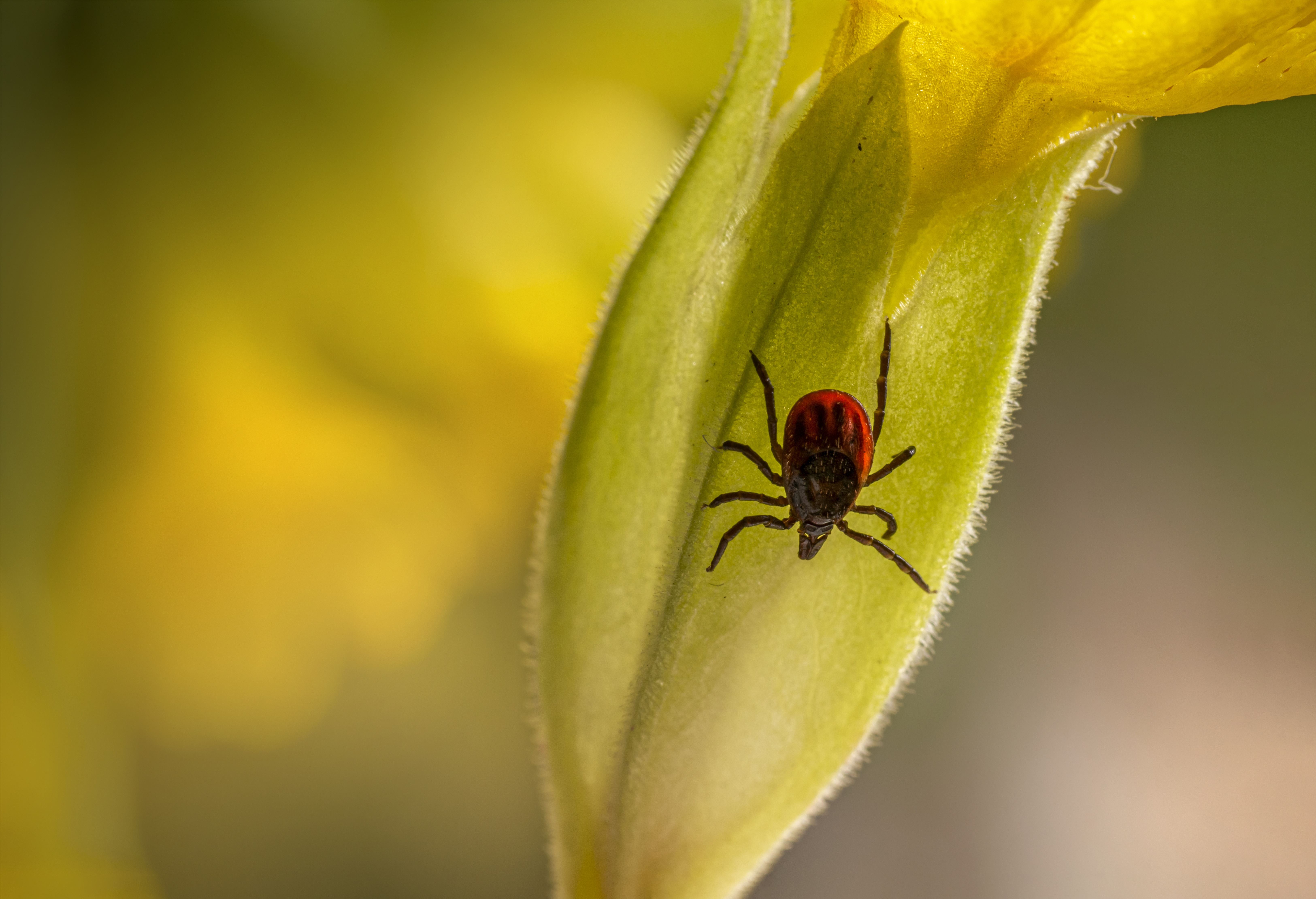
🕷️ Deep Review: Castor bean tick (Ixodes ricinus)
While the other animals we’ve discussed are generally “crowd-pleasers,” the Castor bean tick is the one you’ll want to respect from a distance. As the most common tick in Europe, it is a master of patience and a significant player in public health. Its name comes from the engorged female’s resemblance to the seed of the castor oil plant (Ricinus communis).
📏 Physical Characteristics
- The “Hard” Tick: It belongs to the Ixodidae family, characterized by a hard, chitinous shield on its back called a scutum.
- Sexual Dimorphism:
- Males: Very small (~2–3 mm) and dark. Their scutum covers their entire back, preventing them from expanding much during feeding.
- Females: Larger (~3–4 mm when unfed) with a reddish-brown body. Their scutum only covers the front portion, allowing their abdomen to stretch significantly—up to 1 cm or more—as they fill with blood.
- Anatomy: Like all arachnids, adults and nymphs have eight legs. They lack eyes but possess a specialized sensory structure called the Haller’s organ on their front legs, which detects carbon dioxide, heat, and vibrations.
🌍 Habitat and Distribution
- Geographic Range: Found throughout Europe, extending into North Africa and Western Asia.
- The “Goldilocks” Environment: They are highly sensitive to drying out (desiccation). They require high humidity (at least 80%) to survive.
- Microhabitat: You’ll find them in the “litter layer” of deciduous and mixed woodlands, overgrown meadows, and even suburban gardens. They spend about 95% of their lives on the ground, only climbing up vegetation when they are ready to hunt.
🔄 The Three-Host Life Cycle
The Castor bean tick is a “three-host tick,” meaning it requires a new host for each of its three life stages. This process can take anywhere from 2 to 6 years to complete.
| Stage | Typical Host | Size Comparison |
| Larva | Small rodents, birds, lizards. | Size of a poppy seed (6 legs). |
| Nymph | Hares, squirrels, cats, humans. | Size of a pinhead. |
| Adult | Large mammals (deer, sheep, dogs, humans). | Size of a sesame seed (unfed). |
Between each stage, the tick drops back into the leaf litter to molt, which requires specific temperature and humidity levels.
🏹 Behavior: The “Questing” Method
Ticks don’t jump, fly, or drop from trees (that’s a common myth!). Instead, they use a passive hunting strategy called questing:
- The tick climbs to the tip of a blade of grass or a leaf.
- It holds onto the plant with its back legs and reaches out with its front legs.
- When a host brushes past, the tick hooks onto the fur, feathers, or clothing.
- It then crawls around for several hours to find a “soft spot” (like an armpit or behind an ear) to attach and begin a meal that can last several days.
⚠️ Medical Significance (The Candor Part)
As an AI, I’m not here to scare you, but a little directness is necessary: Ixodes ricinus is the primary vector for several serious pathogens in Europe.
- Lyme Disease (Borreliosis): Caused by bacteria. If you see a “bullseye” rash, see a doctor immediately.
- Tick-borne Encephalitis (TBE): A viral infection of the central nervous system. In many parts of Europe, vaccines are highly recommended for those spending time outdoors.
- Prevention is Key: In 2026, with winters trending milder, tick season starts earlier and lasts longer. Use repellents containing DEET or Icaridin, wear long trousers tucked into socks, and always perform a tick check after a walk in the woods.
Pro-Tip: If you find one attached, use fine-tipped tweezers to grasp it as close to the skin as possible and pull upward with steady, even pressure. Don’t “unscrew” it, and definitely don’t use matches or oil—that just makes the tick more likely to regurgitate fluids into your bloodstream.
Views: 1861
Subscribe to the newsletter: