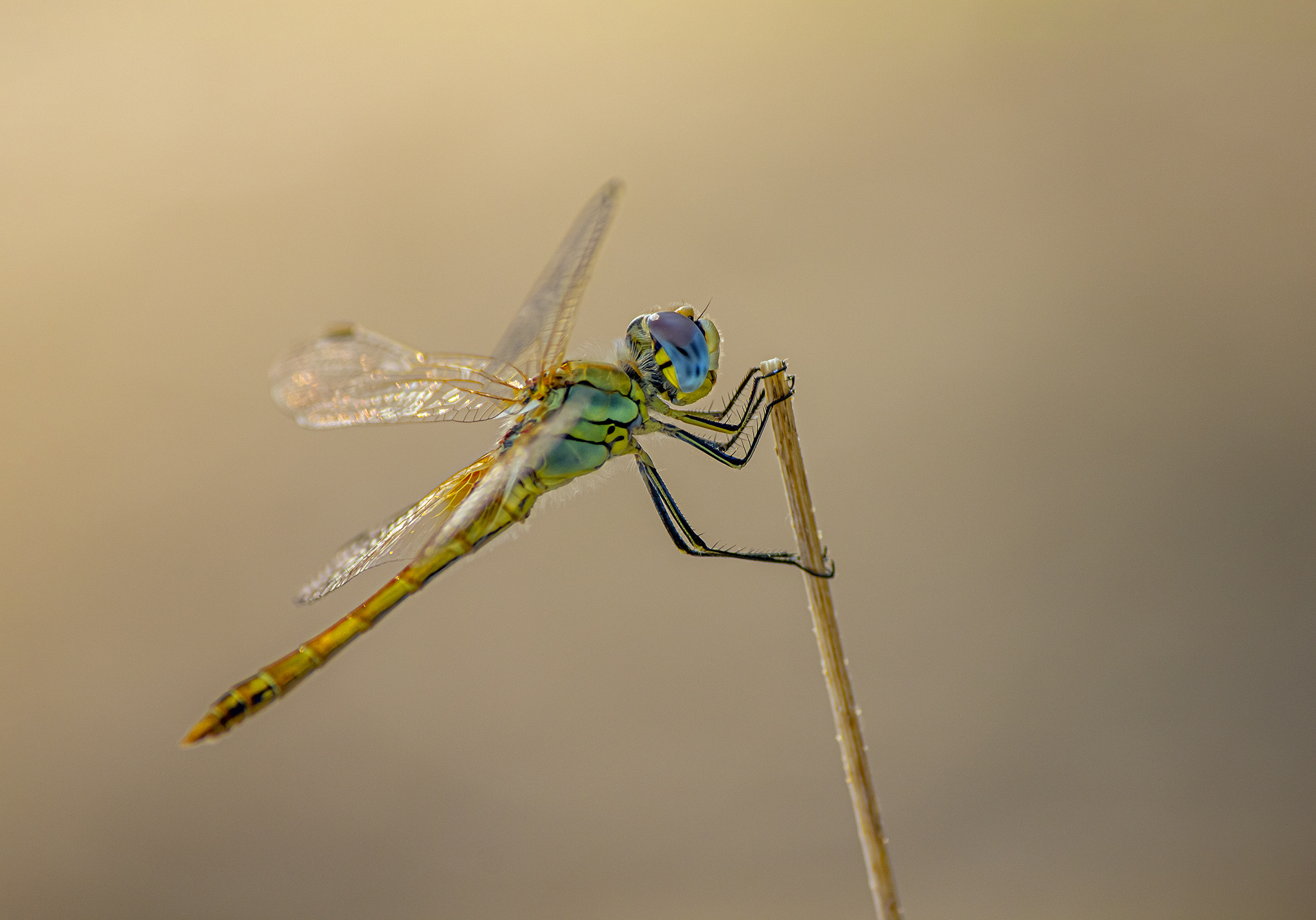

The Yellow-winged darter (Sympetrum flaveolum)—known in Estonia as the Kollatähn-loigukiil—is the “gold-leaf” specialist of the dragonfly world. While many darters have hints of color at the base of their wings, this species takes it to an extreme, looking as though it has been dipped in liquid saffron.
In the wetlands and peat bogs of Northern Europe, they are a hallmark of late summer, often appearing in massive numbers when the conditions are just right.
1. The “Golden” Identification
The most diagnostic feature of this species is the extensive yellow coloration on the wings, which sets it apart from other common red dragonflies like the Ruddy Darter or Common Darter.
- The Saffron Patches: Large, bright yellow-orange patches cover the base of the wings. On the hindwings, this patch is massive, often extending halfway across the wing.
- The Male’s Red Body: Mature males develop a brilliant blood-red abdomen, which contrasts sharply with the golden wings.
- The Female’s Camouflage: Females and immature males are a yellowish-brown. While they lack the red body, their wing patches are often just as vivid, making them easy to identify even from a distance.
2. The Irruptive Wanderer
The Yellow-winged darter is known in ecology as an irruptive species.
- Population Explosions: Their numbers fluctuate wildly from year to year. In “good” years, they migrate in massive swarms across Europe and the Baltics, appearing in every meadow and garden. In other years, they may be almost entirely absent.
- Shallow Water Specialist: They prefer very shallow, standing water with plenty of vegetation—think marshy pond edges, peat bogs, or even flooded ruts in forest tracks. They often lay their eggs in dry or drying mud that they “predict” will be flooded by autumn rains.
3. Typical “Darter” Behavior
As their name suggests, they belong to the “darter” group (Sympetrum).
- The Perch-and-Pounce: They don’t spend all day on the wing like the large Hawkers (Aeshna). Instead, they choose a favorite perch—usually a tall grass stalk or a dry twig—and “dart” out to catch small flies before returning to the exact same spot.
- Obelisking: On very hot days, you might see them sticking their abdomens straight up in the air toward the sun. This is called “obelisking” and is a way to regulate their body temperature by minimizing the surface area exposed to direct sunlight.
📸 Photographer’s Perspective: Capturing the Glow
The Yellow-winged darter is a dream subject for macro photography because of its predictable behavior and stunning translucence.
- Backlighting is Key: To truly show off the “yellow wings,” position yourself so the sun is behind the dragonfly. The light passing through the amber wing patches will make them glow like stained glass, creating a much more dramatic image than standard front-lighting.
- The “Return” Strategy: If you spook one, don’t move. Because they are territorial “darters,” they will almost always return to the same twig within 30 seconds. Pre-focus on the perch and wait for the touchdown.
- Parallel Plane: To get the entire wing and the body sharp in a single frame, your camera sensor must be perfectly parallel to the dragonfly’s body. Even at $f/8$, the depth of field is paper-thin at high magnifications.
- Morning Dew: In the early morning (around 6:00 AM or 7:00 AM), these dragonflies are often covered in dew and unable to fly until they warm up. This is the best time for “statue-like” portraits with incredible detail.
Quick Facts Table
| Feature | Detail |
| Scientific Name | Sympetrum flaveolum |
| Estonian Name | Kollatähn-loigukiil |
| Body Length | 33–37 mm |
| Flight Period | Late June to October (Peak in August) |
| Habitat | Shallow, weedy ponds and peat bogs |
| Key ID | Massive yellow patches at the base of the wings |
Explore more high-resolution “golden” captures and 2026 dragonfly updates at karits.eu.
Views: 1331
Subscribe to the newsletter: