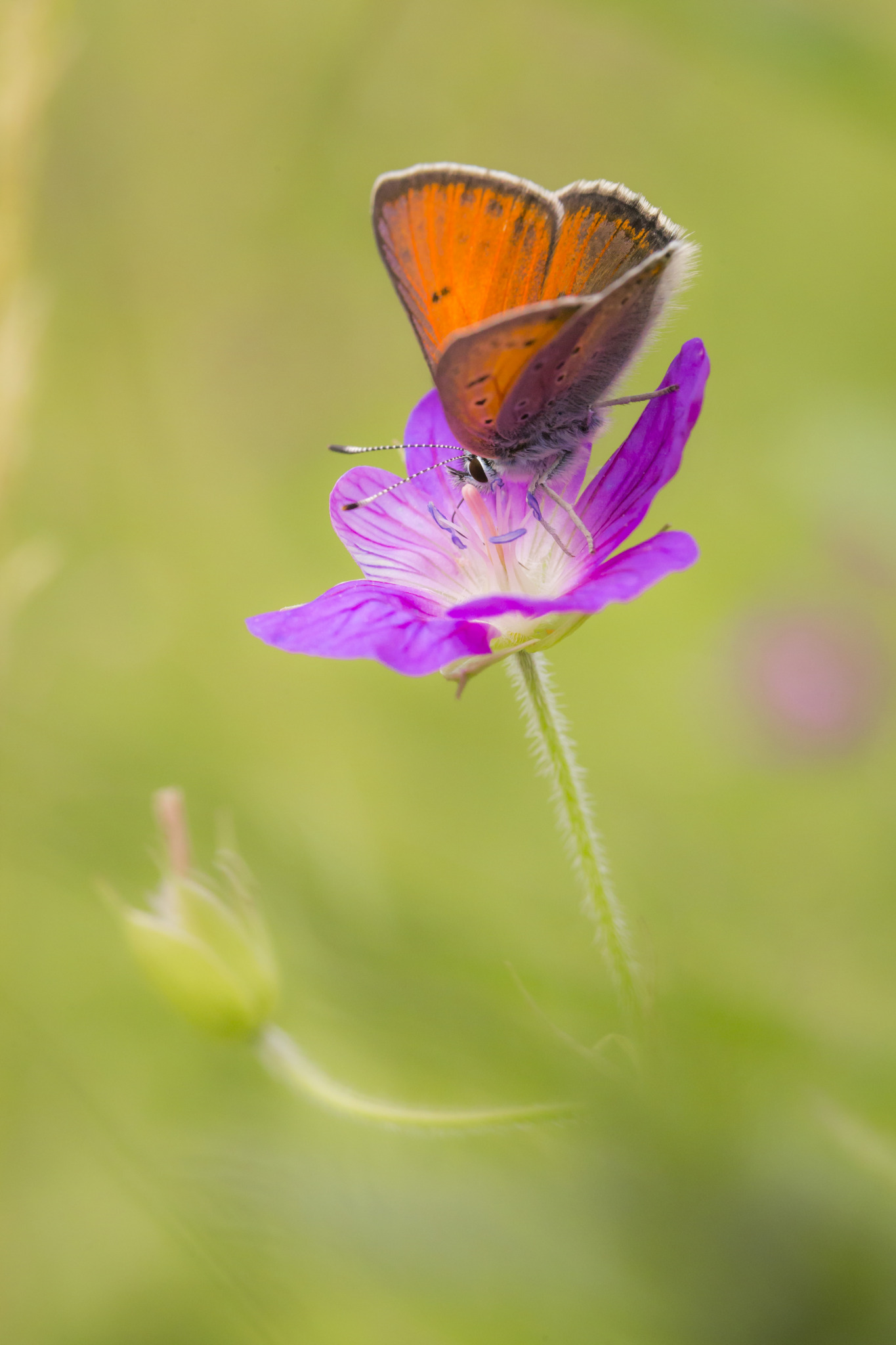

Absolutely — here is a fresh, updated deep overview of the Small Copper (Lycaena phlaeas).
🦋 Small Copper (Lycaena phlaeas)
🔹 Taxonomy
- Order: Lepidoptera
- Family: Lycaenidae (Blues, Coppers, Hairstreaks)
- Genus: Lycaena
- Species: L. phlaeas
🌍 Distribution & Range
One of the most widespread coppers in the world:
- Europe — abundant almost everywhere
- North Africa and Middle East
- Across temperate Asia to Japan
- Introduced to North America, locally established
- Present even in subarctic and high-altitude meadows
Extremely adaptable → thrives in disturbed or urban areas.
🏞️ Habitat
A species of sunny, open places:
- Dry grasslands and heaths
- Road verges, field margins, wasteland
- Coastal dunes
- Brownfield and post-industrial sites
- Garden edges with sorrel present
Key requirement: Host plants in the Rumex genus (usually small sorrels).
✨ Identification
Wingspan: 22–30 mm → small, but brilliantly vivid.
Upperside:
- Bright copper-orange forewings
- Distinct black spots and dark border
- Hindwings dark brown with narrow orange margin
Underside:
- Muted beige–grey, fine dark spotting
- Helps camouflage when wings are closed
Sexes similar → males slightly smaller and more territorial.
🌱 Diet & Host Plants
Larval food plants:
Almost always sorrels (Rumex):
- Sheep’s sorrel (Rumex acetosella)
- Common sorrel (R. acetosa)
- Occasionally dock species (Rumex obtusifolius, R. crispus)
Adult nectar:
- Dandelions
- Thyme, clover, ragwort
- Bird’s-foot trefoil
- Heathers in heathlands
Often first and last butterflies of the season nectaring on short flowers.
🔄 Life Cycle
Highly flexible depending on climate:
| Region | Broods per year | Flight time |
|---|---|---|
| Northern Europe | 2 | May–Sept |
| Central Europe | 3 | Apr–Oct |
| Mediterranean | 3–4 | Nearly year-round |
- Eggs: laid singly on sorrel leaves or nearby vegetation
- Larvae: green with fine pale lines; feed low to the ground
- Pupation: often on plant stems or leaf litter
- Overwintering: as larvae in cool regions
Very fast breeder → population spikes possible in warm years.
🧠 Behavior & Ecology
- Strong territorial males: chase almost anything in flight
- Rapid, low darting flight close to ground
- Will bask with wings wide open on bare ground or stones
- Often one of the most visible coppers in human-modified landscapes
🧩 Subspecies & Variation
Many regional forms — over 30 described subspecies.
Differences include:
- Width of dark borders
- Size of orange hindwing band
- Spot patterns
Local adaptation to climate and host plant availability is strong.
🌿 Conservation Status
- Generally common and stable
- Benefited by:
- Light disturbance
- Short vegetation
- Abundant sorrels
Threats:
- Overintensive agriculture reducing sorrel patches
- Heavy pesticide use
- Scrub overgrowth in unmanaged meadows
Still one of the most resilient small butterflies in Europe.
✅ Quick Summary
| Feature | Detail |
|---|---|
| Wingspan | 22–30 mm |
| Broods | 2–4 depending on climate |
| Host plants | Sorrels (Rumex) |
| Habitat | Dry open grasslands & disturbed sites |
| Conservation | Widespread & adaptable |
Views: 1623
Subscribe to the newsletter: