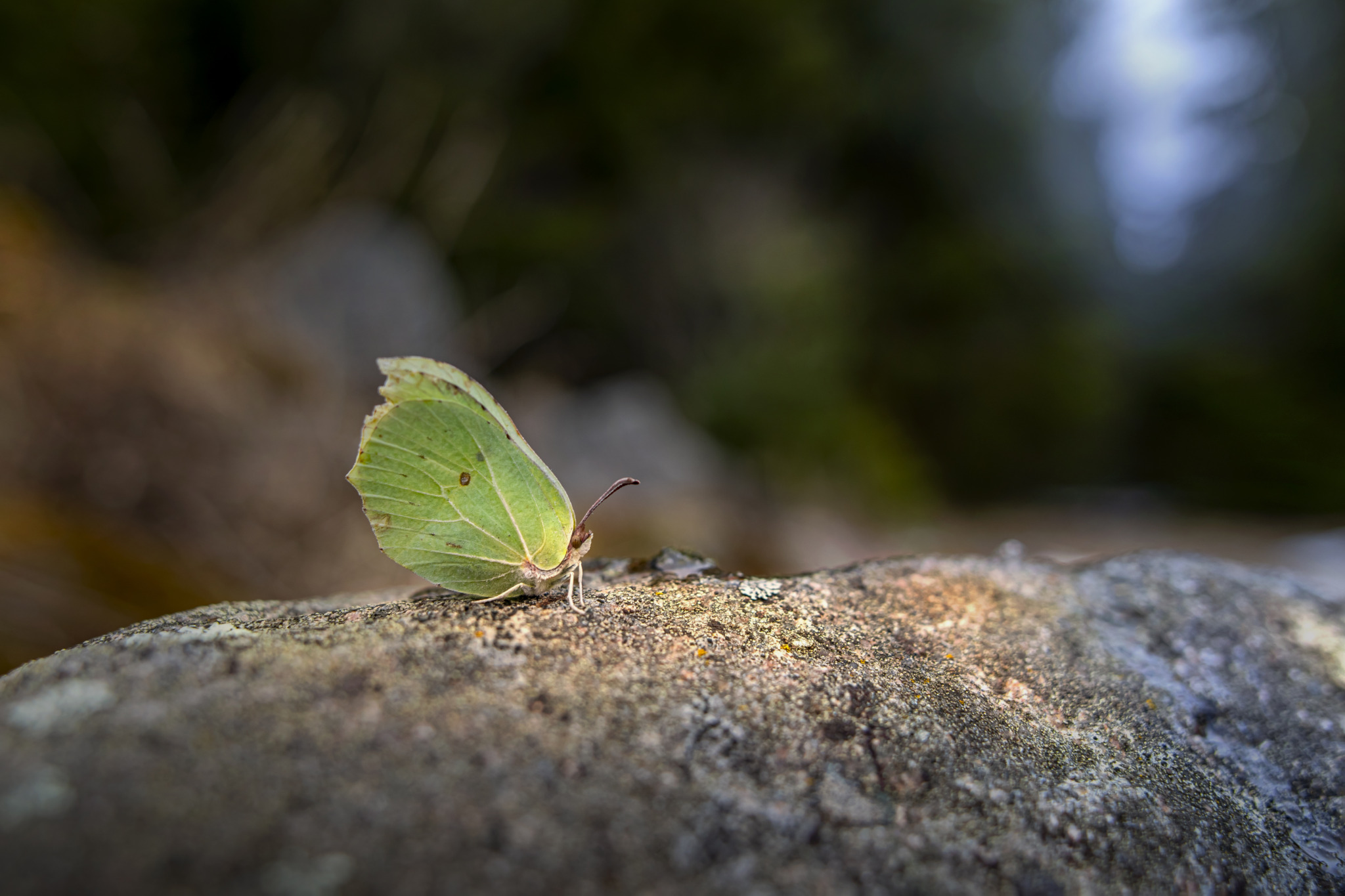
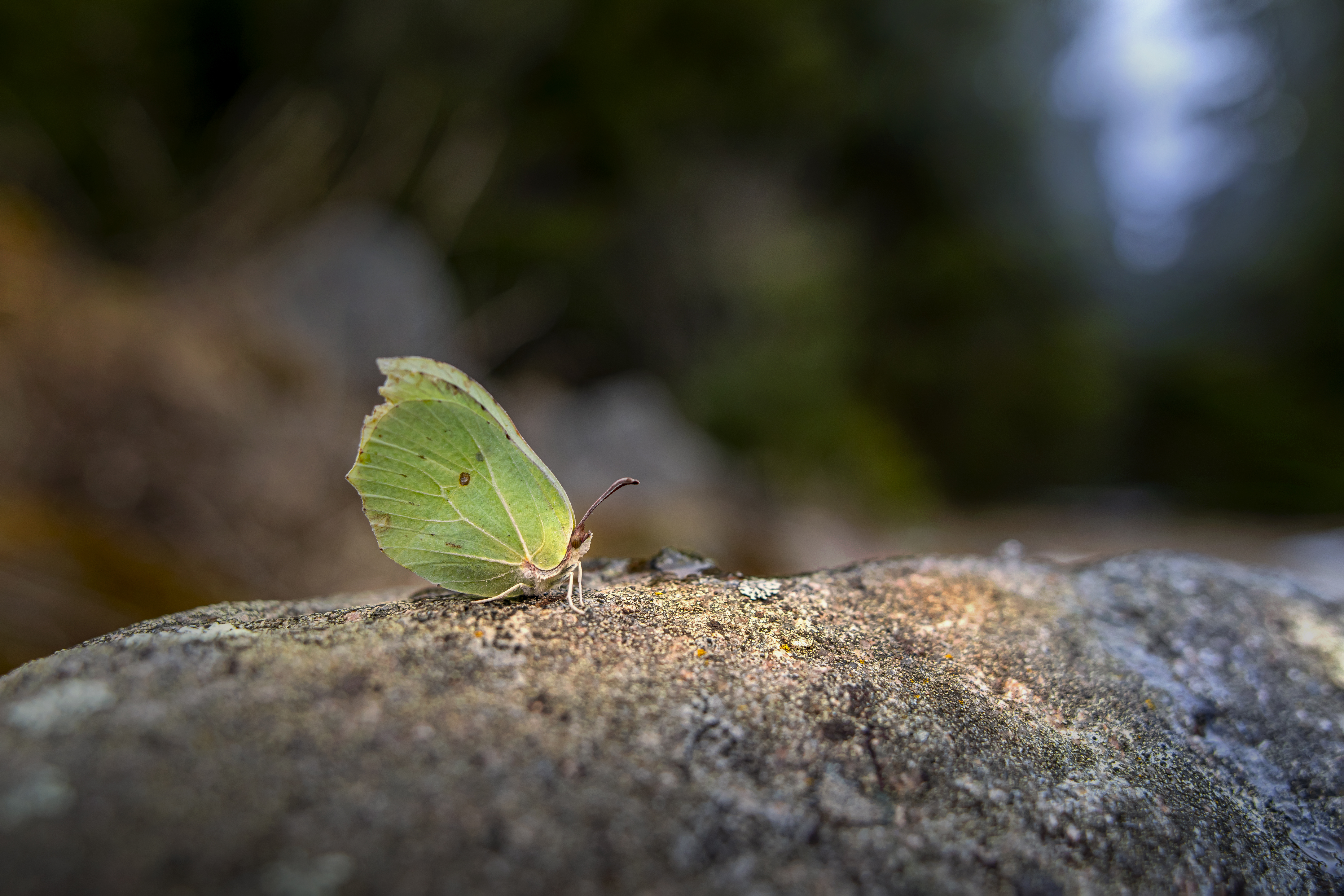
The Harbinger of Spring: The Story of the Common Brimstone (Gonepteryx rhamni)
When the first weak rays of the February or March sun hit the woodland floor, a flash of sulfur-yellow often signals the end of winter. This is the Common Brimstone (Gonepteryx rhamni), a butterfly so iconic that many believe its “butter-colored” wings gave rise to the very word “butterfly.”
A Master of Disguise: The Living Leaf
The Common Brimstone is a marvel of evolutionary design. Its wings are shaped perfectly to mimic a leaf, complete with realistic “veins” and a hooked tip.
- Males: Boast a brilliant, saturated yellow that is impossible to miss in flight.
- Females: Are much more subtle, appearing pale green or almost white. They are often mistaken for Large Whites, but their unique wing shape always gives them away.
When resting, the Brimstone always keeps its wings closed, perfectly disappearing against the ivy or evergreen leaves where it loves to hide.
The Marathon Runner of Butterflies
While most butterflies live for only a few weeks, the Common Brimstone is a true survivor. It is one of the longest-lived butterflies in the world, capable of living for up to a full year.
- The Winter Sleep: They spend the harsh winter months in “hibernation” (reproductive diapause), tucking themselves deep into holly or ivy bushes.
- First Out, Last In: Because they overwinter as adults, they are the first to emerge in the spring and among the last to be seen in the autumn.
The Buckthorn Connection
The survival of this species is tied directly to two specific plants: the Buckthorn and the Alder Buckthorn. These are the only plants the Brimstone larvae will eat. If you want to attract these “flying lemons” to your garden, planting a Buckthorn bush is the most effective way to do it.
📸 Photographer’s Perspective: Catching the Yellow Flash
The Common Brimstone is a notoriously difficult subject because it is a “nervous” flyer—it rarely settles for long and is incredibly sensitive to shadows.
- The Morning Chill: In early spring, look for them on cool mornings. Before they have fully “warmed up,” they are more likely to sit still on a flower (like Primrose or Dandelion) to bask, giving you a precious few extra seconds to focus.
- Watch the “Hot” Colors: The male’s yellow is so bright that it can easily “clip” in your camera’s yellow channel, losing all the delicate texture of the wing veins. Underexpose slightly (-0.3 or -0.7 EV) to preserve that rich detail.
- Side-On Profile: Because they never open their wings at rest, focus on a perfect side-on profile. Use a small aperture (around f/8 or f/11) to ensure the entire wing from the “hook” to the body is tack-sharp.
- The Leaf Shot: For a more artistic shot, try to capture them partially hidden in green foliage. This tells the story of their camouflage much better than a clear shot on a flower does.
Quick Facts Table
| Feature | Detail |
| Wingspan | 60–74 mm |
| Global Range | Europe, North Africa, and Asia |
| Hibernation | Overwinters as an adult in the open (unusual for butterflies) |
| Host Plants | Buckthorn (Rhamnus cathartica) and Alder Buckthorn |
| Lifespan | Up to 12 months |
| Key ID | Hooked wing tips and a small orange spot on each wing |
Views: 1862