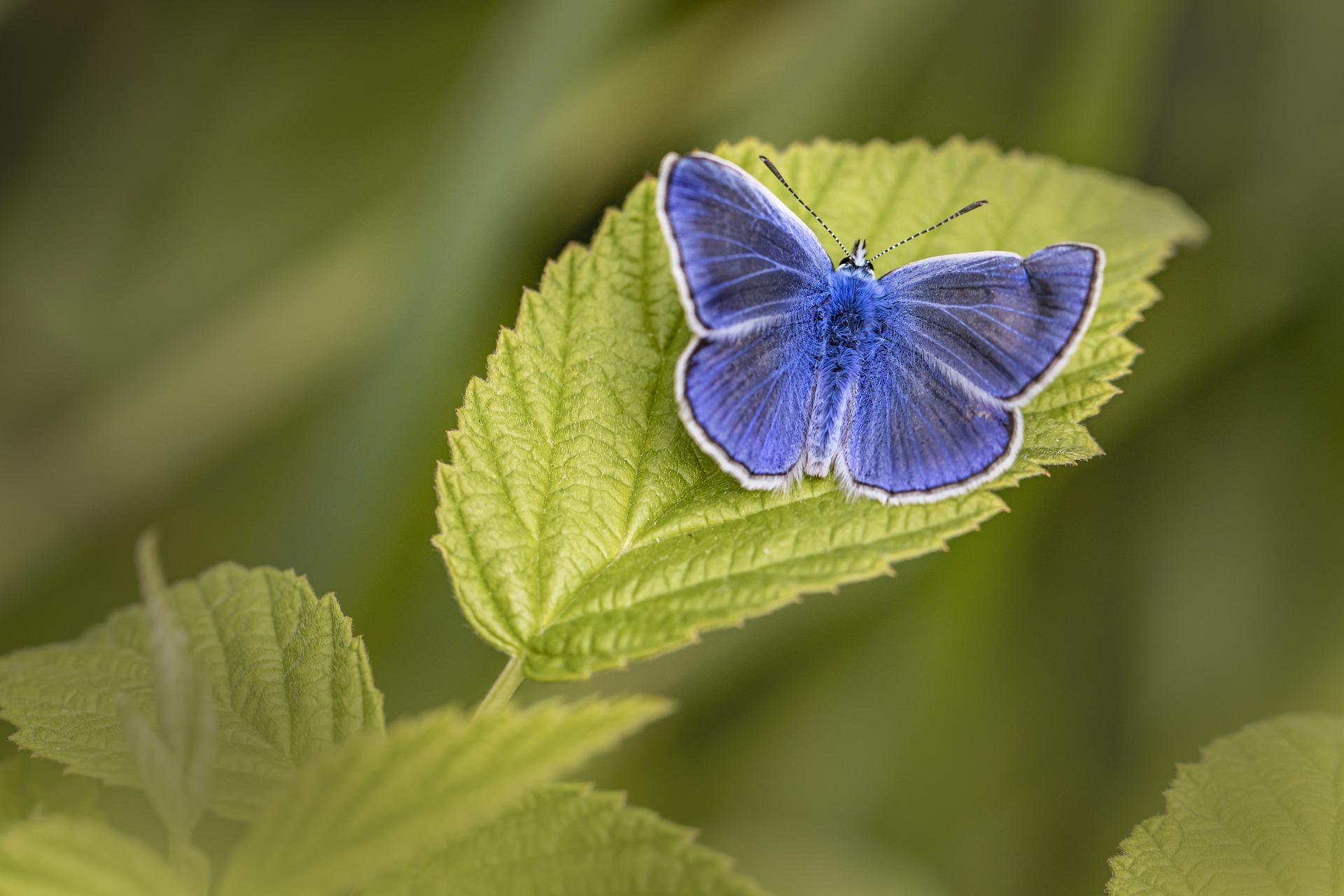
A Splash of Azure: The Enchanting World of the Common Blue (Polyommatus icarus)
Widely considered one of the most beautiful and easily recognizable butterflies in Europe, the Common Blue (Polyommatus icarus) is a vibrant jewel of our meadows. Though it may be “common” by name, its striking colors and complex life cycle make it anything but ordinary.
A Tale of Two Colors
The Common Blue is a classic example of sexual dimorphism—where males and females look strikingly different:
- The Radiant Male: Dressed in a bright, sky-blue upper wing with a delicate white fringe and a thin black border.
- The Subtle Female: Typically brown with orange “crescents” along the edges. However, look closely—females often have a dusting of iridescent blue near their bodies, a variation that makes every individual unique.
On the underside, both sexes share a complex “leopard-print” pattern of black and orange spots on a grey-brown background, providing perfect camouflage when resting with their wings closed.
Where to Find the “Little Blue”
This adaptable butterfly can be found across Europe, North Africa, and temperate Asia. It isn’t picky about its real estate, thriving in:
- Lush meadows and grasslands
- Coastal dunes and roadsides
- Sunny gardens and parks
They are most active on warm, sunny days from April through October. If you see a tiny blue flash patrolling low over the grass, it’s likely a male searching for a mate.
The Secret Alliance: Butterflies and Ants
One of the most fascinating secrets of the Common Blue happens on the ground. Its caterpillars have a mutualistic relationship with ants.
The larvae produce a sweet, sugary secretion that ants love. In exchange for this “honey,” the ants act as personal bodyguards, protecting the caterpillars from predators like spiders and parasitic wasps.
Why They Matter
Beyond their beauty, Common Blues are vital players in our ecosystem:
- Pollinators: As they flit from flower to flower, they help pollinate wildflowers like clover, buttercups, and bird’s-foot-trefoil.
- Bio-indicators: Because they rely on specific habitats, their presence is a good sign of a healthy, biodiverse environment.
Photography Tips for the Common Blue
For wildlife photographers, the Common Blue is a rewarding subject.
- Golden Hour: Visit meadows in the early morning or late evening when they are less active and “roosting” on grass stems.
- Macro Focus: Focus on the intricate eye spots on the underside of the wings; they create stunning abstract patterns.
- Low Angle: Get down to their level to capture the brilliant blue of the males against a soft, green background.
Views: 1655
Subscribe to the newsletter: