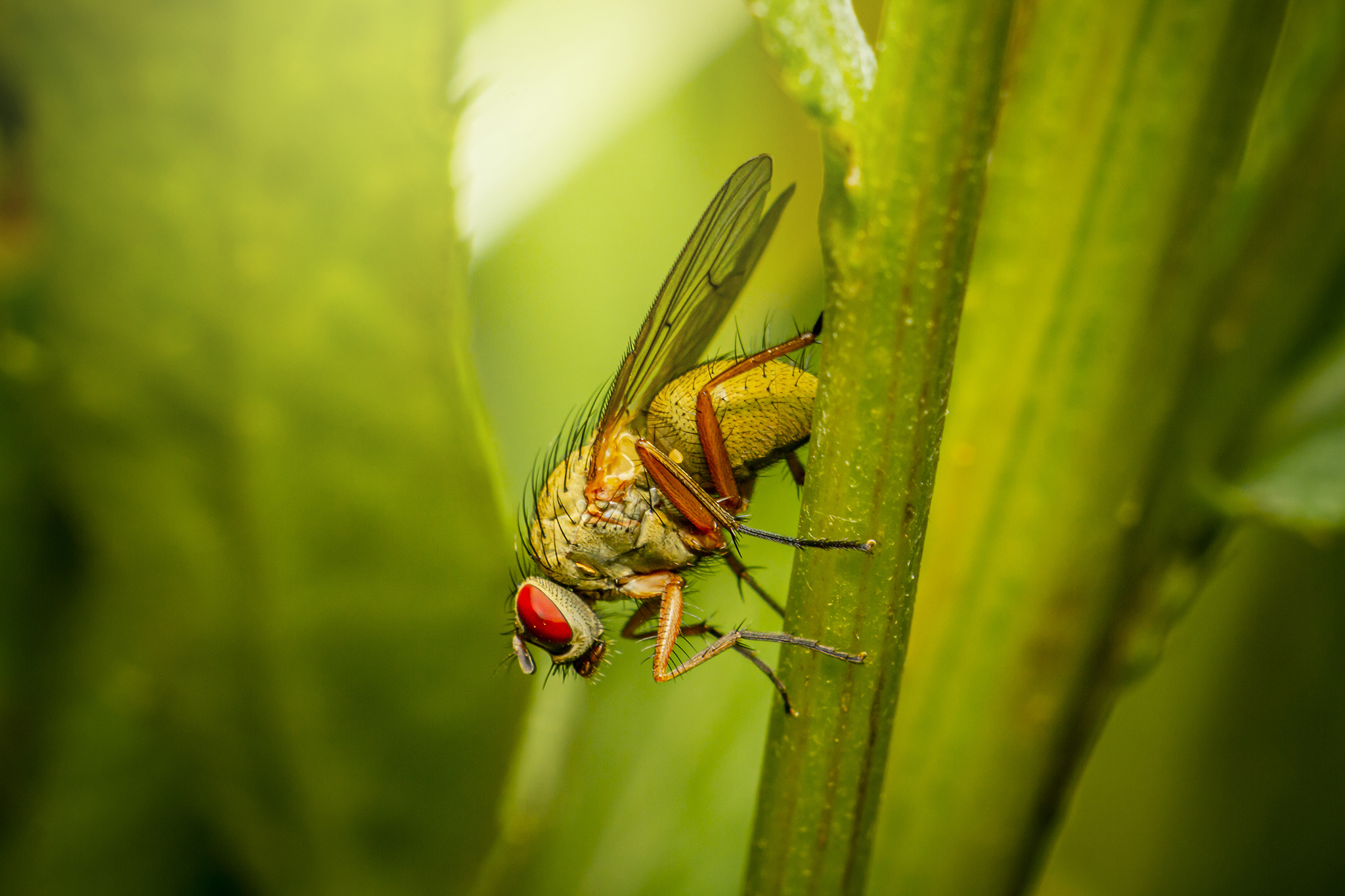

The Elegant Outlier: Understanding the House Fly (Phaonia angelicae)
When we hear the term “House Fly,” we usually think of a domestic pest. However, Phaonia angelicae is a far more refined relative. Often called the “Wild House Fly,” this species avoids the kitchen and instead spends its time in meadows, gardens, and woodlands. It is a striking example of the beauty found in the often-overlooked world of Muscidae.
A Fly of the Forest, Not the Pantry
Unlike the common Musca domestica, which thrives on human waste, Phaonia angelicae is a flower-visitor. It is a vital part of the natural ecosystem, acting as a pollinator for various wild blossoms.
- The “Raking” Behavior: This fly has a unique way of feeding. Instead of just lapping up nectar, it uses its front legs to “rake” pollen toward its mouthparts—a fascinating behavior to watch through a macro lens.
How to Identify Phaonia angelicae
While they share the general “fly” shape, Phaonia angelicae has a subtle, elegant palette:
- Size: Relatively large for a house fly, reaching 7.5 to 10 mm.
- Coloration: Males feature a warm, beige-brown thorax and abdomen, while females are slightly darker and sturdier.
- The Eyes: Like most muscid flies, they possess large, reddish-brown compound eyes that take up most of the head.
The Predatory Secret
One of the most surprising facts about Phaonia angelicae is its childhood. While adult flies are peaceful nectar-feeders, their larvae are predators. Living in decaying leaf litter or wood mould, the larvae hunt other small insects and larvae. This predatory role makes them an essential check-and-balance in the soil ecosystem.
📸 Photographer’s Perspective: Macro Mastery
Flies are often the first subjects macro photographers practice on, but Phaonia angelicae offers a great opportunity for high-detail portraiture.
- Compound Eye Detail: To capture the “honeycomb” texture of the eyes, you need to be perfectly parallel to the fly’s face. If your angle is off even by a few degrees, the curve of the eye will fall out of the thin depth of field.
- Wing Venation: For scientific identification and aesthetic appeal, try to get a shot of the wings from directly above. The pattern of the veins is unique to the genus and looks like delicate stained glass.
- The Morning Advantage: Because these flies are active in natural habitats, they are very susceptible to the cold. In the early morning, they are often sluggish and will allow a much closer approach than they would in the heat of the afternoon.
- Shadow Management: Flies have nearly 360-degree vision. If your lens or your body casts a shadow over them, they will be gone in a split second. Always keep the sun in front of you or to the side, never directly behind your back.
Quick Facts Table
| Feature | Detail |
| Scientific Name | Phaonia angelicae |
| Size | 7.5 – 10 mm |
| Active Season | May to October |
| Adult Diet | Nectar and Pollen (Apiaceae, Thistles) |
| Larval Diet | Predatory (eats other larvae in leaf litter) |
| Habitat | Meadows, Woodland Edges, Gardens |
Views: 1449
Subscribe to the newsletter: