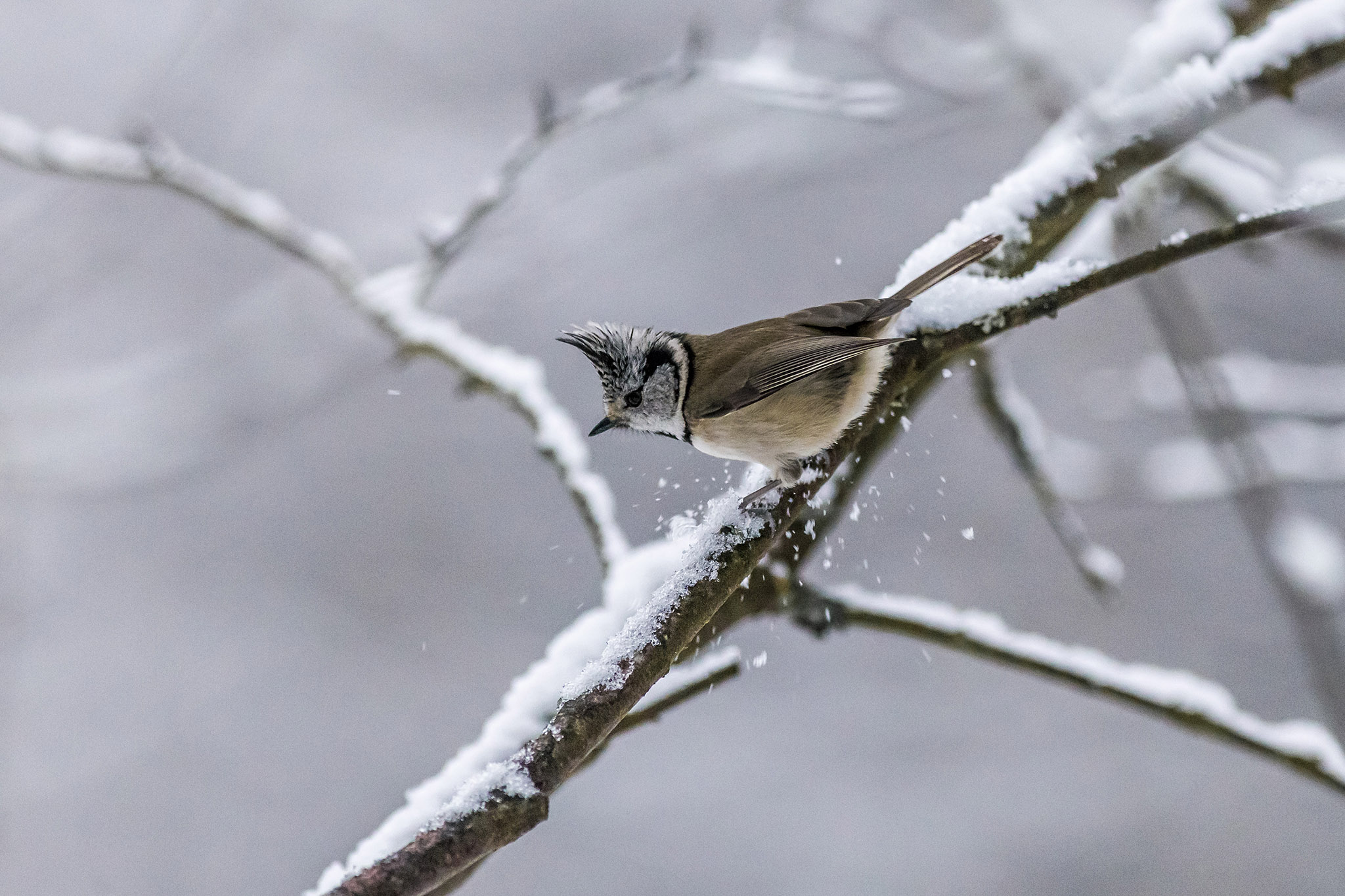

The Punk of the Pine: Discovering the European Crested Tit (Lophophanes cristatus)
Deep within the ancient, mossy coniferous forests of Europe lives a small bird with a big personality. The European Crested Tit (Lophophanes cristatus) is instantly recognizable by its “punk rock” hairstyle—a pointed, black-and-white speckled crest that it can raise or lower depending on its mood.
A Crowned Specialist
The Crested Tit is a specialist of the old-growth forest. While other tits are happy in gardens and parks, the “Crestie” is most at home among ancient Scots pines and Norway spruces.
- The Crest: The erectile feathers are its most famous feature. When excited, territorial, or displaying for a mate, the crest stands tall and recurves forward.
- The Red Eye: Unlike many small passerines with simple black eyes, adults possess a striking reddish-orange iris that glows with intensity in the right light.
- The Facial Mask: A delicate black “bridle” pattern circles its pale cheeks, giving it an elegant, almost regal expression.
Master of the Winter Hoard
Survival in the freezing northern forests requires planning. The Crested Tit is an industrious hoarder:
- Autumn Harvest: During the fall, they spend their days collecting moth larvae and spiders, tucking them into crevices in tree bark.
- Spring Seeds: They are also expert at extracting seeds from pine cones, which they store to see them through the late winter when insects are scarce.
- The “Memory” Game: Like other corvids and tits, they possess an incredible spatial memory, allowing them to relocate hundreds of tiny hidden snacks months later.
A Distinctive Voice
If you are walking through a quiet pine forest, listen for a soft, purring trill—often described as a “referee’s whistle” muffled by a blanket. This unique sound is very different from the sharp, metallic calls of Great Tits or Blue Tits, making it easy to identify even when the bird is hidden high in the canopy.
📸 Photographer’s Perspective: The Fast-Moving Subject
Capturing a clear shot of a Crested Tit is a badge of honor for wildlife photographers. They are hyperactive, social, and rarely sit still for more than a second.
- Focus on the Eye: Because they have such a distinct red iris, ensuring the eye is in sharp focus is the difference between a “snapshot” and a “portrait.”
- The “Crest” Moment: Wait for the bird to look toward you or react to a sound. This is when they are most likely to raise their crest, giving you the classic silhouette.
- Lighting Challenges: Dense pine forests are notoriously dark. You will often need to push your ISO higher (1600–3200) to maintain a fast shutter speed (at least 1/1000s) to freeze their constant hopping.
- Feeder Strategy: In winter, they are much easier to photograph if you use a feeder. Use a natural-looking perch—like a lichen-covered pine branch—placed near the food to get authentic “wild” shots.
Quick Facts Table
| Feature | Detail |
| Weight | 10–13 grams |
| Wingspan | 17–20 cm |
| Habitat | Old-growth coniferous forests |
| Nesting | Cavities in rotting stumps (often self-excavated) |
| Lifespan | 2–5 years on average |
| Status | Green (UK) / Least Concern (IUCN) |
Views: 1575
Subscribe to the newsletter: