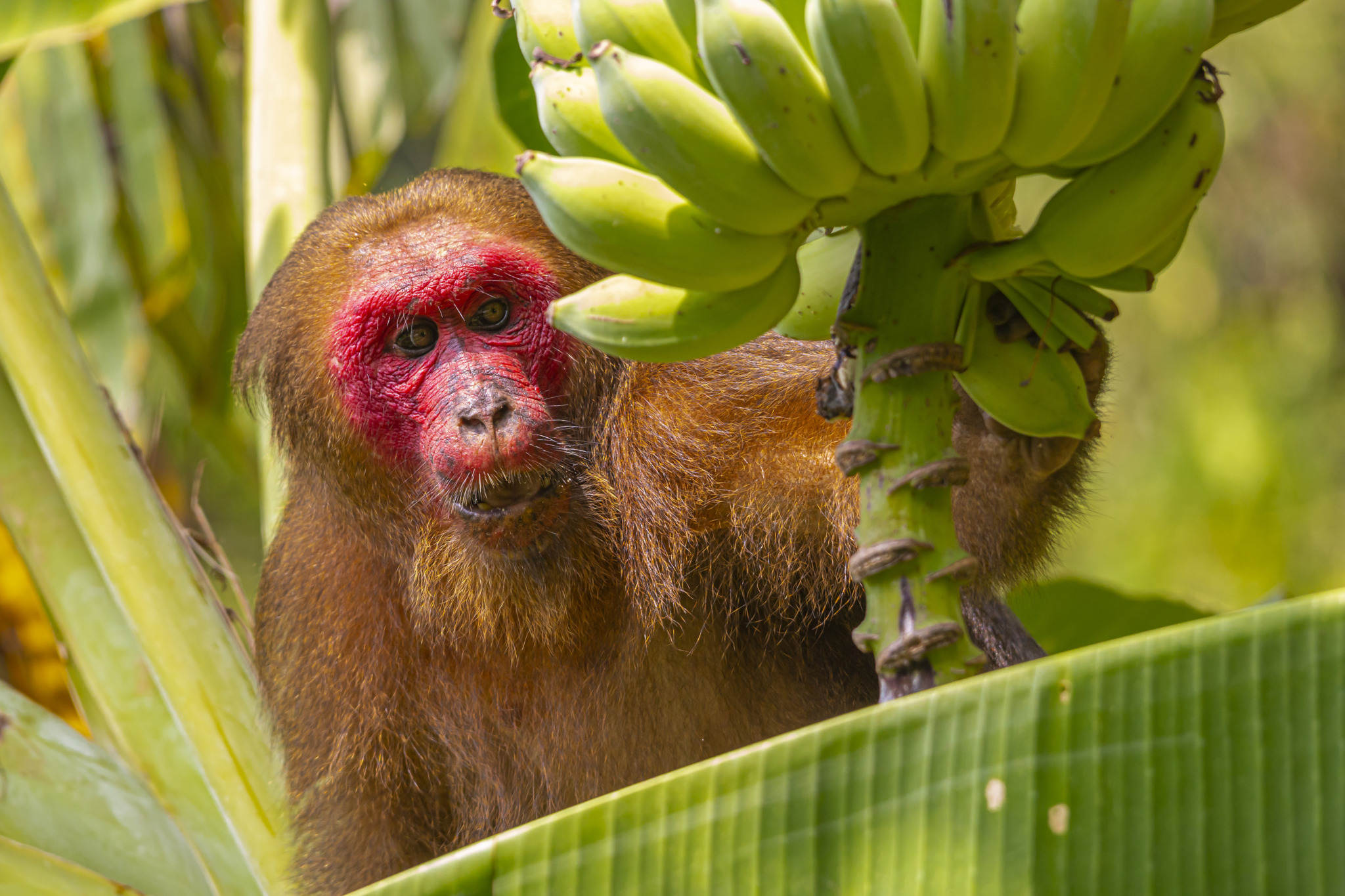
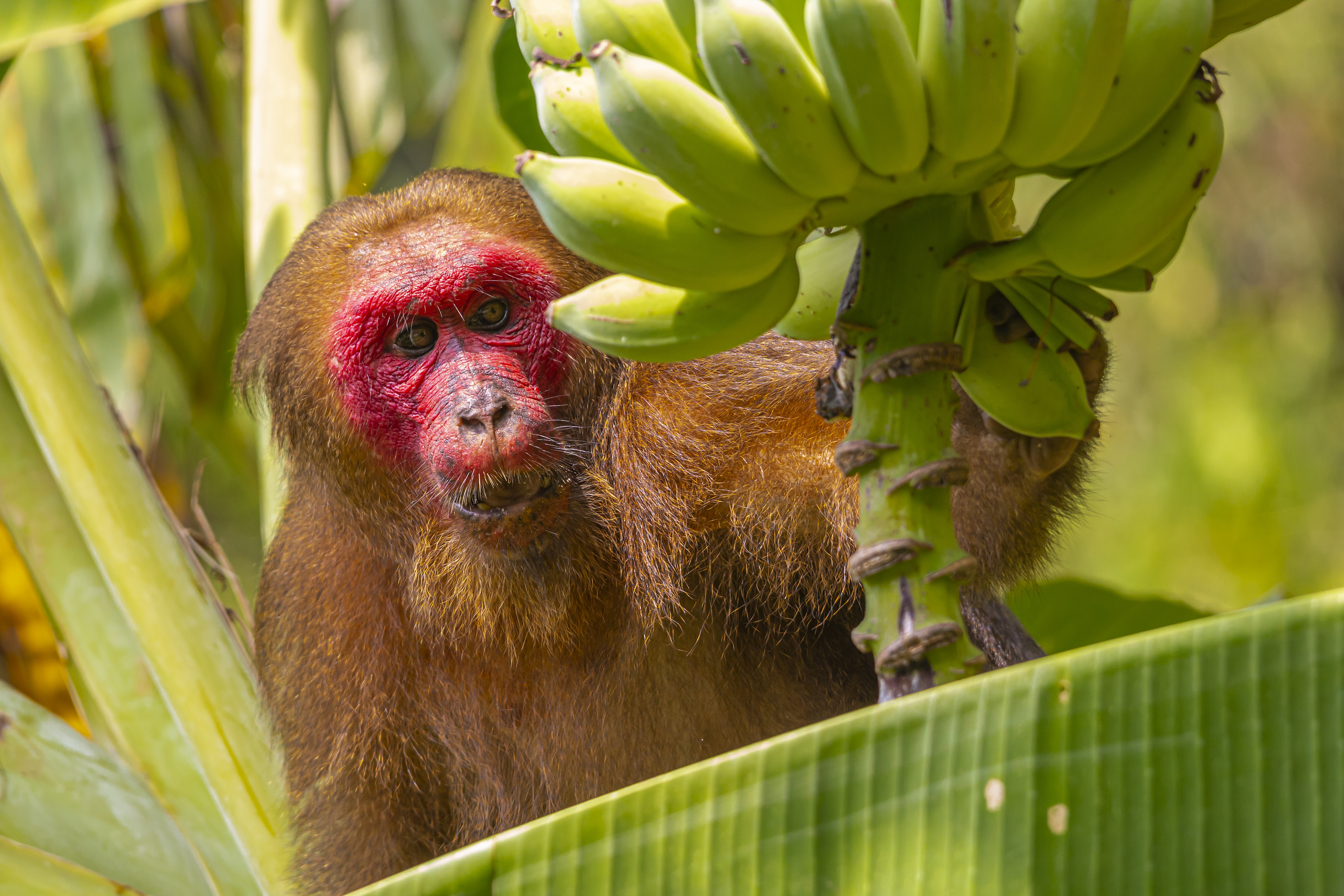
The Stump-tailed macaque (Macaca arctoides)—also known as the Bear macaque—is one of the most expressive and physically distinct primates of Southeast Asia. Often found in the dense evergreen forests of countries like Thailand and Malaysia, they are known for their thick, shaggy fur and incredibly human-like facial expressions.
Based on the photography and reflections from karits.eu, here is a profile of this fascinating primate.
1. The “Bear” of the Primate World
The Stump-tailed macaque gets its alternative name, the Bear macaque, from its robust build and thick, dark-brown fur that protects it from the cooler temperatures of high-altitude forests.
- The “Stump” Tail: Unlike many other macaques with long, balancing tails, this species has a tiny, hairless “stump” tail measuring only 3 to 10 centimeters. Because they are primarily terrestrial (spending most of their time on the ground), they don’t need a long tail for balance in the trees.
- The “Red Face”: Their faces are hairless and range from pink to deep red. Interestingly, the color darkens with age and exposure to sunlight—a biological “suntan.”
2. Human-Like Aging (Alopecia)
One of the most striking features of the Stump-tailed macaque is its pattern of hair loss. Just like humans, both males and females of this species experience frontal balding as they age. This “receding hairline,” combined with their deep-set eyes and thoughtful expressions, often gives them an uncanny, sage-like appearance that is a favorite for portrait photographers.
3. Peace-Making and Social Intelligence
Macaque societies are often thought of as aggressive, but the Stump-tailed macaque is known for its sophisticated “conflict resolution” skills.
- The “Teeth-Chatter”: To show submissiveness or to de-escalate a tense situation, they use a specific facial gesture involving bared teeth and rhythmic lip-smacking.
- Reconciliation: They are famous in the world of primatology for their high rates of “making up” after a fight. They use grooming and unique vocalizations to ensure the group remains cohesive.
📸 Photographer’s Perspective: “Born to be Wild”
Capturing Stump-tailed macaques requires a balance of patience and a deep respect for their social boundaries.
- Focus on the Eyes: These macaques have incredibly soulful, amber-colored eyes. In wildlife portraiture, getting the focus tack-sharp on the eye nearest to the camera is essential to convey the animal’s personality and intelligence.
- Capture the Social Fabric: Some of the best shots at karits.eu highlight family dynamics—mothers cradling infants or juveniles playing. These moments provide a narrative that single-subject portraits often lack.
- The Low-Angle Rule: Since they spend most of their time on the forest floor, get down to their level. Shooting from a low angle makes the primate appear more heroic and puts the viewer directly into their world.
- Safe Distance: Never forget these are wild animals with formidable canine teeth. Use a long telephoto lens (300mm–600mm) to capture intimate moments without invading their personal space or triggering defensive behavior.
Quick Facts Table
| Feature | Detail |
| Scientific Name | Macaca arctoides |
| Weight | 6–13 kg (Males are significantly larger) |
| Habitat | Subtropical and tropical evergreen forests |
| Diet | Omnivorous (Seeds, fruits, roots, insects, and small animals) |
| Status | Vulnerable (IUCN) due to habitat loss and hunting |
| Lifespan | Up to 30 years in the wild |
Explore more primate portraits and the stories behind the lens at karits.eu.
Views: 1601
Subscribe to the newsletter: