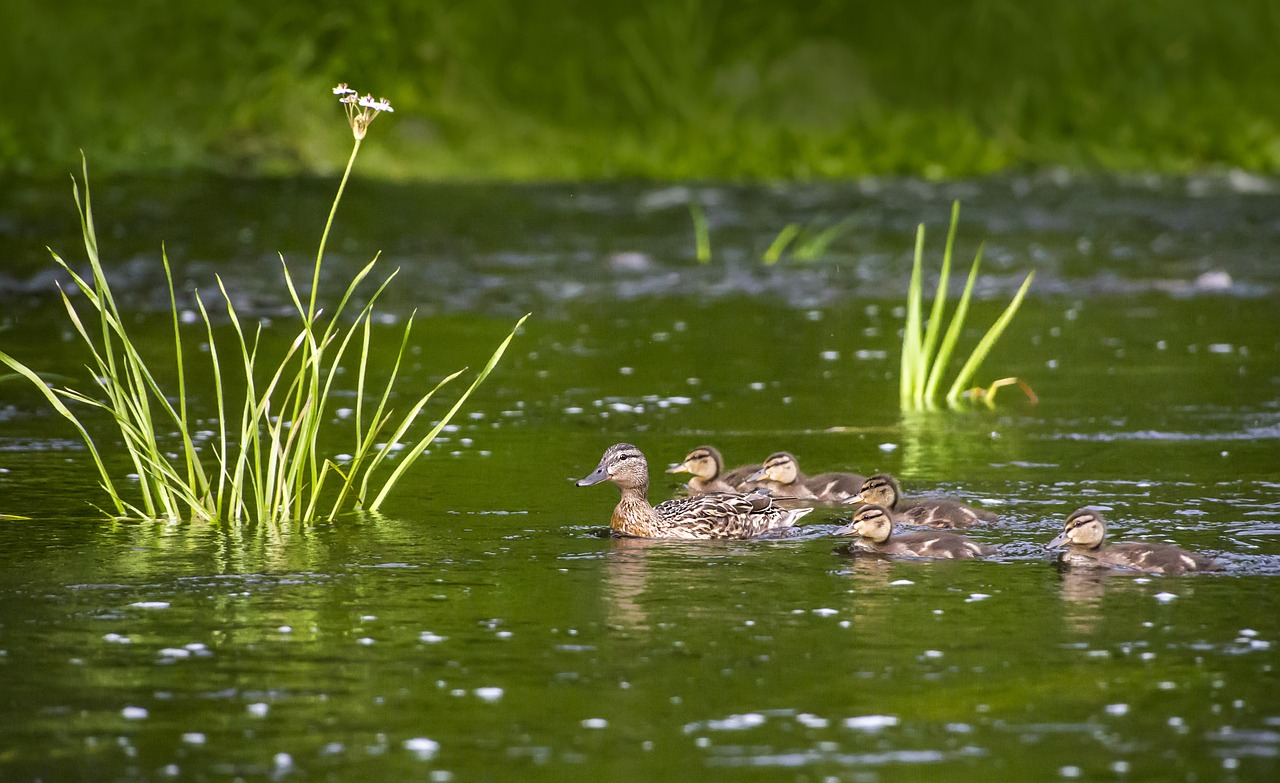
The Mallard (Anas platyrhynchos)—known in Estonia as the Sinikael-part (Blue-necked duck)—is the ancestor of almost all domestic ducks and the undisputed king of the world’s wetlands. While they are so common we often overlook them, a close look through a macro or telephoto lens reveals a bird of incredible color and sophisticated social structure.
Based on the wildlife galleries at karits.eu, here is a profile of this ubiquitous yet beautiful waterfowl.
1. The Science of the “Green” Head
The most iconic feature of the male (drake) Mallard is its shimmering emerald-green head.
- Structural Color: That green isn’t caused by green pigment. Much like the Cuckoo Wasp, it is structural coloration. Microscopic structures in the feathers refract light, meaning the head can shift from deep black to brilliant lime green or even purple depending on the angle of the sun.
- The “Speculum” Mirror: Both males and females carry a “secret” patch of iridescent blue-purple feathers on their wings, bordered by white. This is called the speculum and is used as a signal to other ducks during flight.
2. The “Dabbler” Lifestyle
Mallards belong to the group known as dabbling ducks.
- Tipping Up: Instead of diving completely underwater like a Tufted Duck, Mallards “tip up.” They plunge their heads underwater and point their tails toward the sky to reach aquatic plants, larvae, and small crustaceans in shallow water.
- Adaptable Diet: They are the ultimate opportunists. In the wild, they eat seeds and insects; in Tallinn’s parks or city canals, they have famously adapted to human-provided food (though they much prefer oats or peas over bread!).
3. The Master of Camouflage: The Hen
While the male is designed to stand out, the female (hen) is a masterpiece of camouflage.
- Mottled Protection: Her brown, streaked plumage is designed to make her invisible while she sits on her nest, which is often hidden in tall grass or even in hollow trees.
- Vocal Authority: If you hear a loud, stereotypical “quack,” you are listening to a female. Males do not quack; they produce a much softer, rasping “rab-rab” sound.
📸 Photographer’s Perspective: More Than “Just a Duck”
Because Mallards are often “tame” in urban environments, they are the perfect subjects for practicing advanced wildlife techniques.
- Capturing the Catchlight: Because of the dark, iridescent feathers on the drake’s head, getting a “sparkle” or catchlight in the eye is vital. Without it, the head can look like a flat, black silhouette.
- The Low-Angle Glide: For the most professional look, get your camera as close to the water level as possible. Shooting from a “duck’s-eye view” creates a beautiful foreground blur and makes the bird look much more majestic.
- Freezing the Splash: Mallards are heavy birds and create a lot of drama when they take off. Use a shutter speed of at least 1/2000s to freeze the individual water droplets flying off their orange webs.
- Golden Hour Reflections: The best time to shoot Mallards is during the “Golden Hour.” The low sun hits the iridescent head and the blue speculum perfectly, and the calm evening water creates a mirror-like reflection that doubles the impact of your composition.
Quick Facts Table
| Feature | Detail |
| Scientific Name | Anas platyrhynchos |
| Estonian Name | Sinikael-part |
| Wingspan | 81–98 cm |
| Weight | 0.7–1.6 kg |
| Flight Speed | Can reach up to 90 km/h (55 mph) |
| Lifespan | 5–10 years in the wild (Record: 27 years) |
Explore the full collection of Mallard behaviors and download high-resolution CC0 images at karits.eu.
Views: 1325
Subscribe to the newsletter: