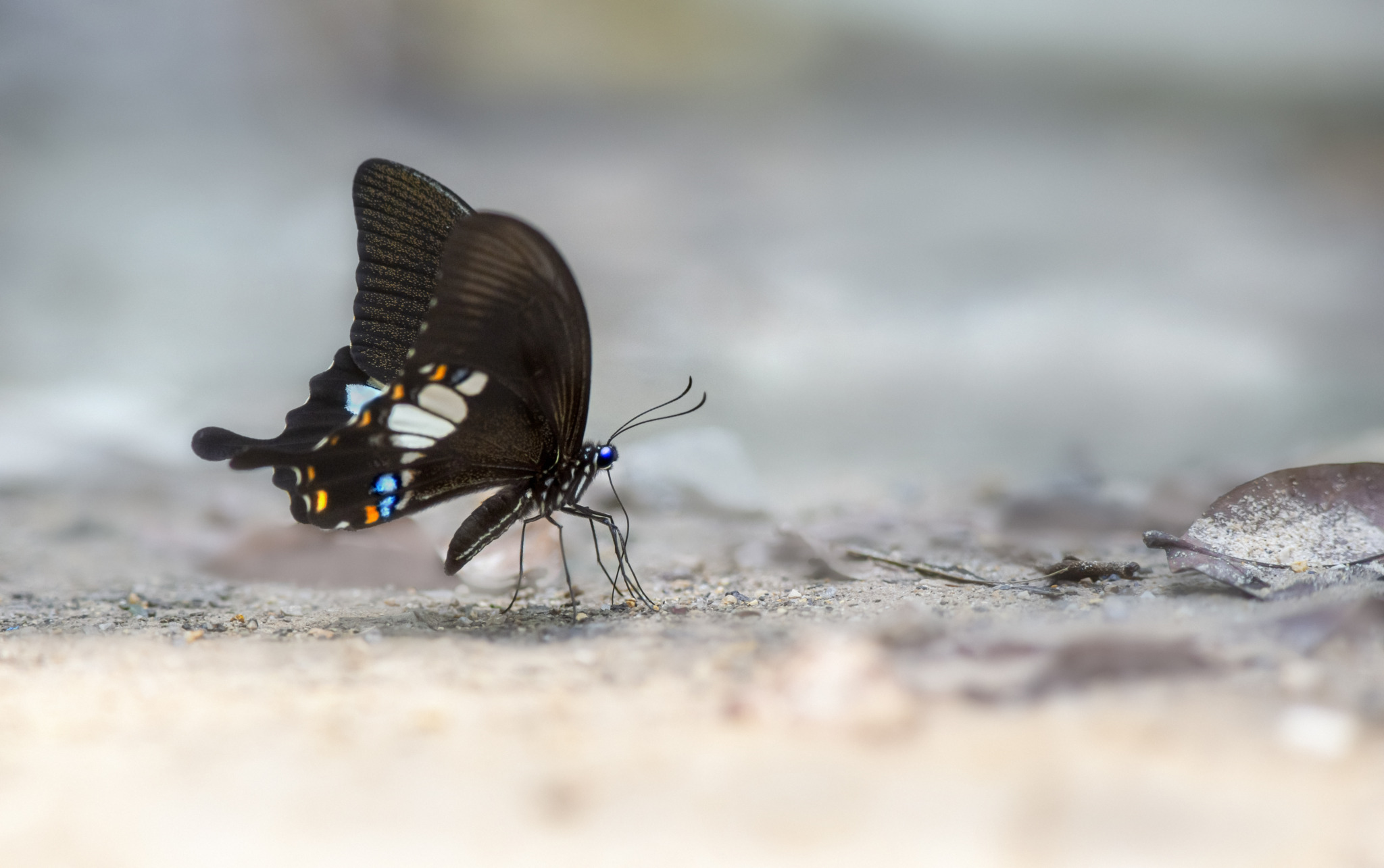
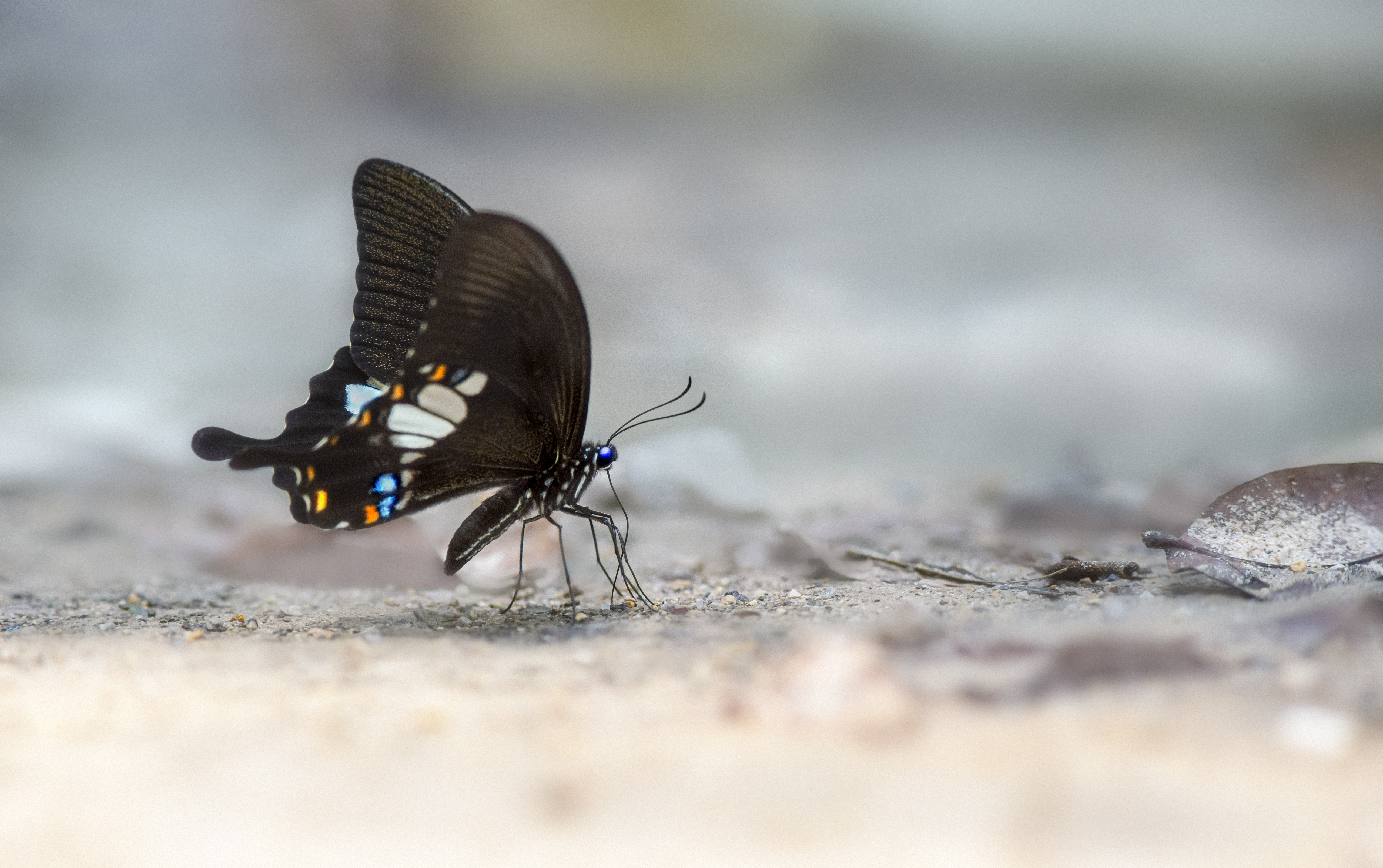
The Common Mormon (Papilio polytes) is the ultimate master of deception in the butterfly world. While the male remains a classic black-and-white swallowtail, the females have evolved into one of nature’s most sophisticated “liars,” using multiple disguises to avoid becoming a bird’s lunch.
Based on the wildlife galleries at karits.eu, here is a profile of this fascinating Asian resident.
1. The “Polygamy” Name
The common name is a bit of 19th-century scientific humor. Naturalists in India named it the “Mormon” because the single male form appeared to have multiple “wives”—referring to the three distinct and wildly different-looking forms of the female.
2. Batesian Mimicry: The Three Faces of the Female
In most of its range, the Common Mormon is a textbook example of Batesian mimicry, where a harmless (palatable) species imitates a toxic (unpalatable) one.
- Form cyrus (The Basic): This form mimics the male. It is black with a white band across the hindwings.
- Form stichius (The Rose): This form is a dead ringer for the Common Rose (Pachliopta aristolochiae), which is toxic to birds. It features large white patches and red spots on the hindwings.
- Form romulus (The Crimson): This form mimics the Crimson Rose (Pachliopta hector). It is darker and more heavily marked with red, providing a convincing disguise against predators that have learned to avoid the bright warning colors of the Crimson Rose.
3. The “Doublesex” Supergene
Recent genetic research (including studies released in 2025 and early 2026) has revealed that this entire complex disguise is controlled by a single gene called doublesex (dsx).
- In the mimetic females, a segment of the DNA is actually flipped upside down (an inversion).
- This inversion prevents the gene from “shuffling” during reproduction, ensuring that the complex pattern of red spots and white patches is inherited as a single, perfect package rather than a messy mix that wouldn’t fool anyone.
📸 Photographer’s Perspective: Behavioral Mimicry
When shooting the Common Mormon, you aren’t just capturing a color pattern; you’re capturing a performance.
- Flight Speed: To make the disguise work, the mimetic females actually change how they fly. While males and cyrus females fly in a fast, erratic zigzag to escape predators, the stichius and romulus females fly slowly and deliberately, mimicking the unhurried, confident flight of the toxic butterflies they are imitating. Use a shutter speed of 1/1000s for the fast males, but you can go slightly lower for the “acting” females.
- Mud-Puddling Parties: Males are social drinkers. They often congregate on damp ground to suck up minerals (mud-puddling). This is the best time for high-detail group shots as they are less likely to fly away.
- The Caterpillar “Poop” Trick: If you find the larvae on a Citrus tree, look for the early instars. They mimic fresh bird droppings—shiny, black, and white. As they grow, they transform into a brilliant green “mini-snake” with eye-spots and a smelly, forked organ (the osmeterium) that pops out when they are annoyed.
Quick ID Table
| Feature | Male / Form cyrus | Form stichius (Mimic) |
| Primary Mimicry | None / Self | Common Rose |
| Hindwing Pattern | Simple white band | Large white patch + red spots |
| Abdomen Color | Always Black | Black (unlike the red model) |
| Flight Style | Fast and Erratic | Slow and Graceful |
Explore high-resolution captures of all three female forms and download CC0 images at karits.eu.
Views: 1684
Subscribe to the newsletter: