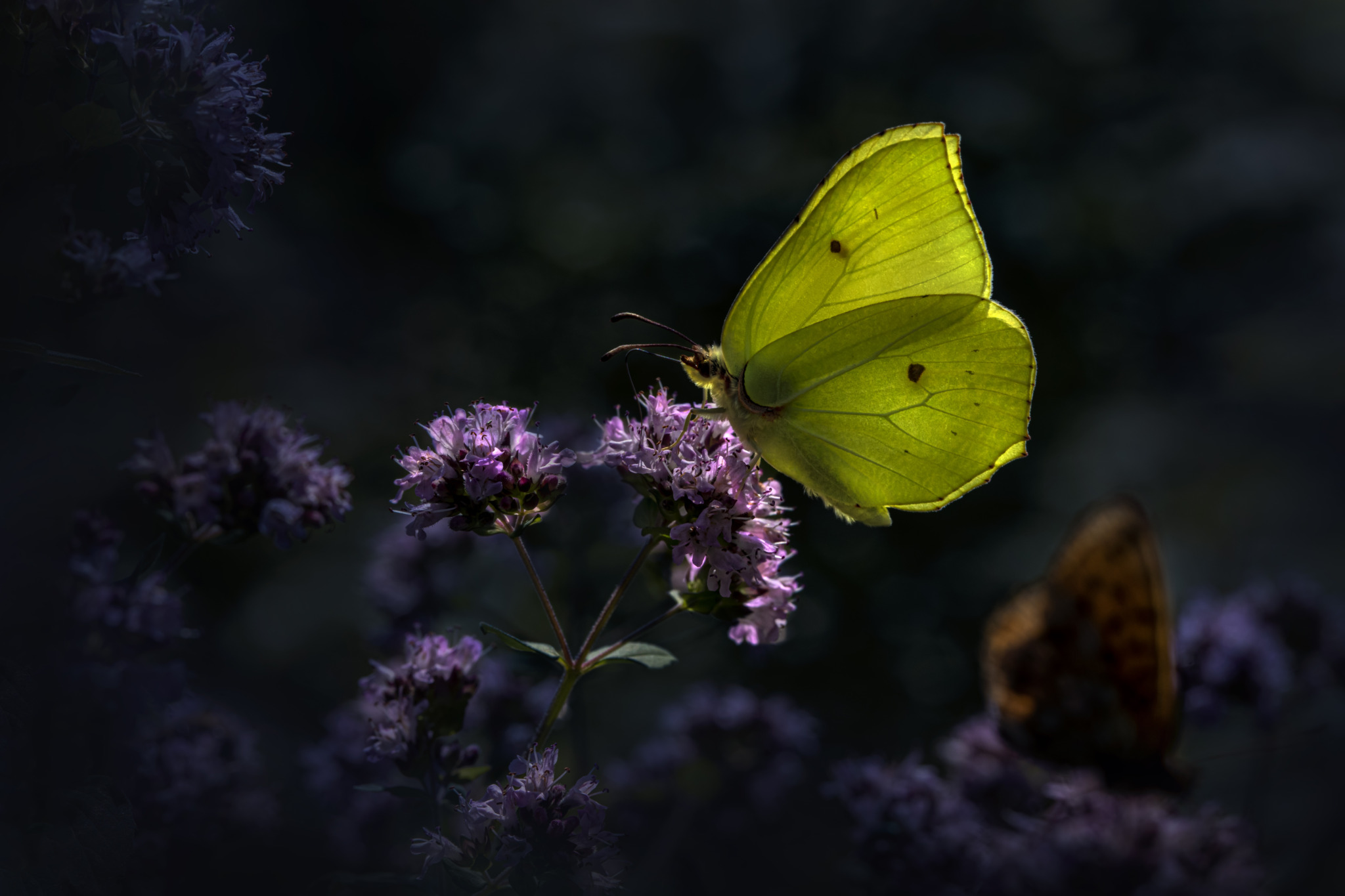
The Common Brimstone (Gonepteryx rhamni)—known in Estonia as the Lapsuliblikas—is the true herald of spring. In the forests and gardens of Northern Europe, the sight of a flickering yellow wing in March is often the first proof that winter has finally lost its grip.
It is also, quite literally, the original “butter-colored fly” that many believe gave the entire butterfly family its name.
1. The Master of Camouflage: The “Living Leaf”
The Brimstone has evolved one of the most effective disguises in the insect world.
- Leaf Mimicry: When the wings are closed, the shape perfectly mimics a leaf, complete with “veins” and a hooked tip that looks like a leaf stalk.
- The Underside Rule: You will almost never see a Brimstone with its wings open while resting. They are “obligate underside-showers,” meaning as soon as they land, they snap their wings shut to disappear against the foliage.
- Central Jewels: Look for the tiny, single orange-brown spot in the center of each wing—a subtle detail that breaks up their silhouette just enough to look like a spot of leaf decay.
2. A Tale of Two Colors (Sexual Dimorphism)
This is a species where the sexes are easily confused with entirely different families.
- The Male: A vibrant, saturated sulfur-yellow. This is the “Brimstone” color that stands out against the bare brown branches of early spring.
- The Female: A much paler, greenish-white. To the untrained eye, she is frequently mistaken for a Large White (Pieris brassicae), but her unique hooked wing shape always gives her away.
3. The Marathon Runner of Butterflies
The Common Brimstone is one of the longest-lived butterflies in Europe, with an adult lifespan of up to 10–12 months.
- The Winter Sleep: While most butterflies spend winter as an egg or pupa, the Brimstone hibernates as an adult. They don’t hide in attics or caves; they simply crawl into a clump of ivy or a dense holly bush and stay there, unprotected, through the snow and sub-zero temperatures.
- The “Antifreeze” Strategy: They produce a form of “biological antifreeze” (glycerol and sorbitol) in their blood that prevents their cells from bursting when the temperature drops.
📸 Photographer’s Perspective: The March Challenge
Capturing a Brimstone is a rite of passage for nature photographers every spring.
- The “First Flight” Rush: In early spring, they are often too busy searching for mates to sit still. Your best bet is to find a patch of early nectar sources like Coltsfoot (Paiseleht) or Willow catkins.
- Managing the “Yellow Blowout”: Like the Yellow Wagtail, the male’s wings are highly reflective. To avoid losing the delicate vein detail, underexpose by -0.3 to -1.0 EV.
- The Macro “Side-On”: Since they never open their wings, focus entirely on the lateral (side) profile. Try to get the camera sensor perfectly parallel to the wing to keep the “veins” sharp from the base to the hooked tip.
- Catching the “Hook”: Ensure your composition highlights the unique, pointed “hook” on the forewings—this is the diagnostic feature that separates them from any other yellow or white butterfly.
Quick Facts Table
| Feature | Detail |
| Scientific Name | Gonepteryx rhamni |
| Estonian Name | Lapsuliblikas |
| Wingspan | 60–74 mm |
| Flight Period | March–May (overwintered) & July–August (new brood) |
| Host Plants | Buckthorn (Rhamnus cathartica) & Alder Buckthorn (Frangula alnus) |
| Longevity | Up to 1 year as an adult |
Explore more “spring herald” portraits and download high-resolution CC0 images at karits.eu.
Views: 1318
Subscribe to the newsletter: