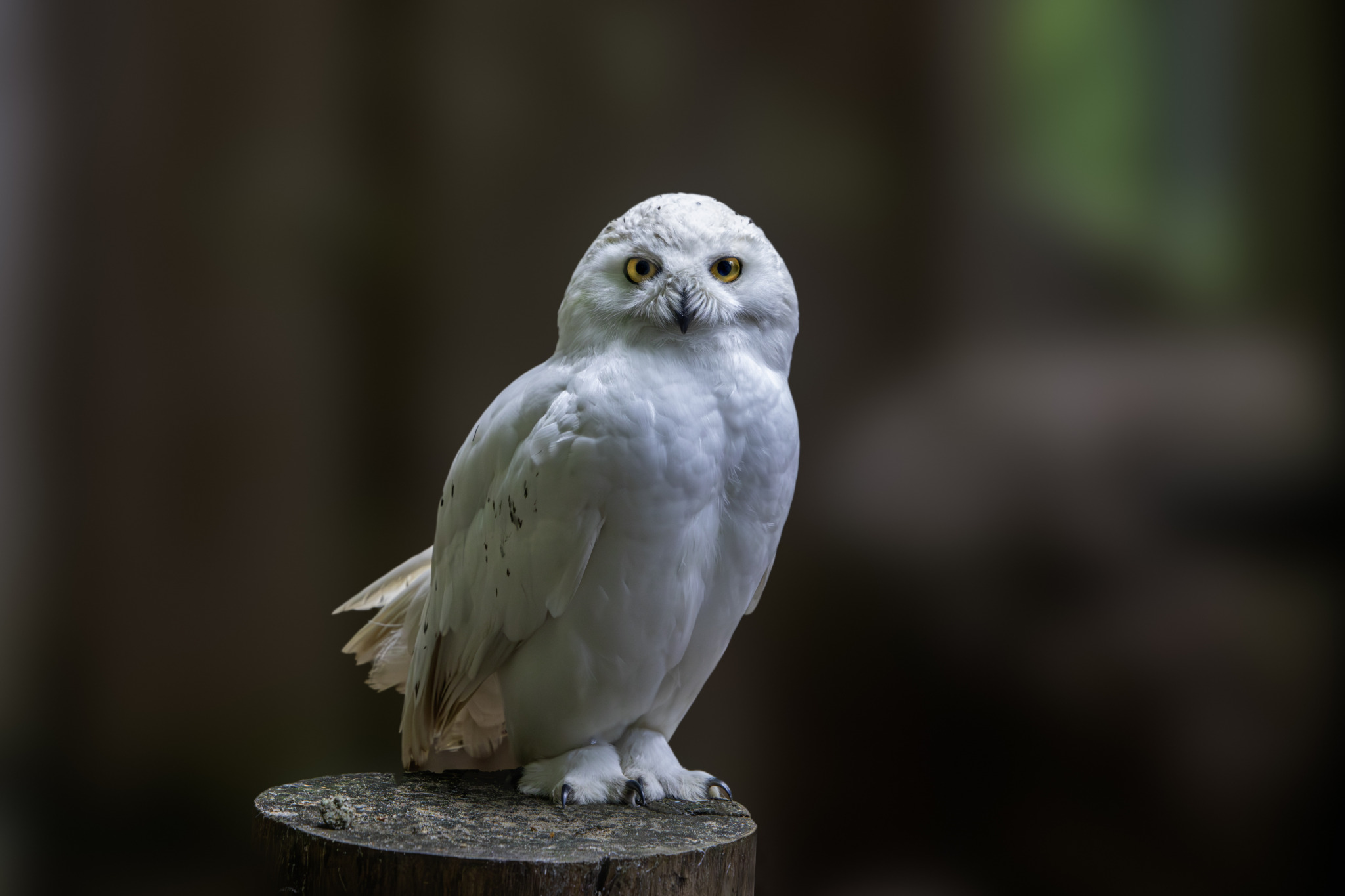
❄️ Deep Review: Snowy Owl (Bubo scandiacus)
The Snowy Owl is an icon of the high Arctic—a master of survival in one of the planet’s harshest environments. Unlike most owls, which are masters of the nocturnal shadows, the Snowy Owl is a creature of the midnight sun, uniquely adapted to hunt during the long daylight hours of the Arctic summer.
📏 Physical Characteristics: The Ghost of the Tundra
The Snowy Owl is built to survive extreme cold and blend into a world of endless white.
- Plumage: Their feathers are dense and heavily insulated. Males are often almost pure white, while females and juveniles have dark brown spotting or “barring” (which helps provide camouflage while they sit on the nest).
- The “Snowshoes”: They are among the few birds with fully feathered feet and toes. This provides crucial insulation against the frozen tundra and acts like snowshoes, helping them move easily across snowdrifts.
- Eyes: Brilliant, piercing yellow. They are fixed in their sockets, meaning the owl must turn its entire head to track movement, but they provide exceptional vision for spotting prey against the snow from vast distances.
| Feature | Measurement |
| Length | 52–71 cm |
| Wingspan | 125–150 cm |
| Weight | 1.6–3.0 kg (Females are larger and heavier) |
🏹 Hunting: The “Vole-Seeker”
The life cycle of the Snowy Owl is intrinsically tied to the Lemming.
- The Lemming Cycle: Snowy Owl populations track lemming population booms and busts. In years where lemmings are abundant, the owls will produce large clutches of eggs. In “bust” years, they may not breed at all.
- Hunting Style: They are “ground-based” hunters compared to forest owls. They use high vantage points—a hummock, a rock, or a post—to survey the tundra. They hunt by sight and sound, swooping down with incredible speed to snatch prey from the surface.
- Opportunistic Diet: When lemmings are scarce, they are highly adaptable. They have been known to hunt rabbits, hares, fish, and other birds, including ducks and even smaller owls.
🏠 The Arctic Home and “Irruptions”
- Habitat: They breed in the open, treeless Arctic tundra, from Northern Canada and Greenland to Scandinavia and Siberia.
- The Irruption Phenomenon: Occasionally, you will see reports of Snowy Owls appearing as far south as the northern United States or Central Europe. These “irruptions” are usually not signs of a population crisis, but rather a population boom. When lemming populations are high, more chicks survive and fledge; once the winter hits, the surplus of young, inexperienced owls head south in search of food.
🛡️ Survival Strategies
- Thermoregulation: Their plumage is thicker than almost any other owl. When temperatures drop, they can trap warm air near their skin by fluffing their feathers.
- Territorial Aggression: They are fearless defenders of their nest. Like the Ural Owl, the Snowy Owl will actively drive away predators—including foxes, wolves, and even other birds of prey—that venture too close to their chicks.
⚠️ Conservation Status
- IUCN Status: Vulnerable.
- The Climate Challenge: Their biggest threat is the rapid warming of the Arctic. As the climate changes, the timing of lemming breeding cycles is shifting, and the loss of permafrost is altering the tundra landscape. They are a “sentinel species”—their health is a direct barometer for the health of the entire Arctic ecosystem.
Fun Fact: Because Snowy Owls live in an environment where the sun doesn’t set in the summer, they have become “day-active.” Unlike their forest-dwelling relatives, they have no specialized adaptations for true darkness; instead, they have evolved to hunt in the bright, constant light of the Arctic day.
Views: 1825
Subscribe to the newsletter: