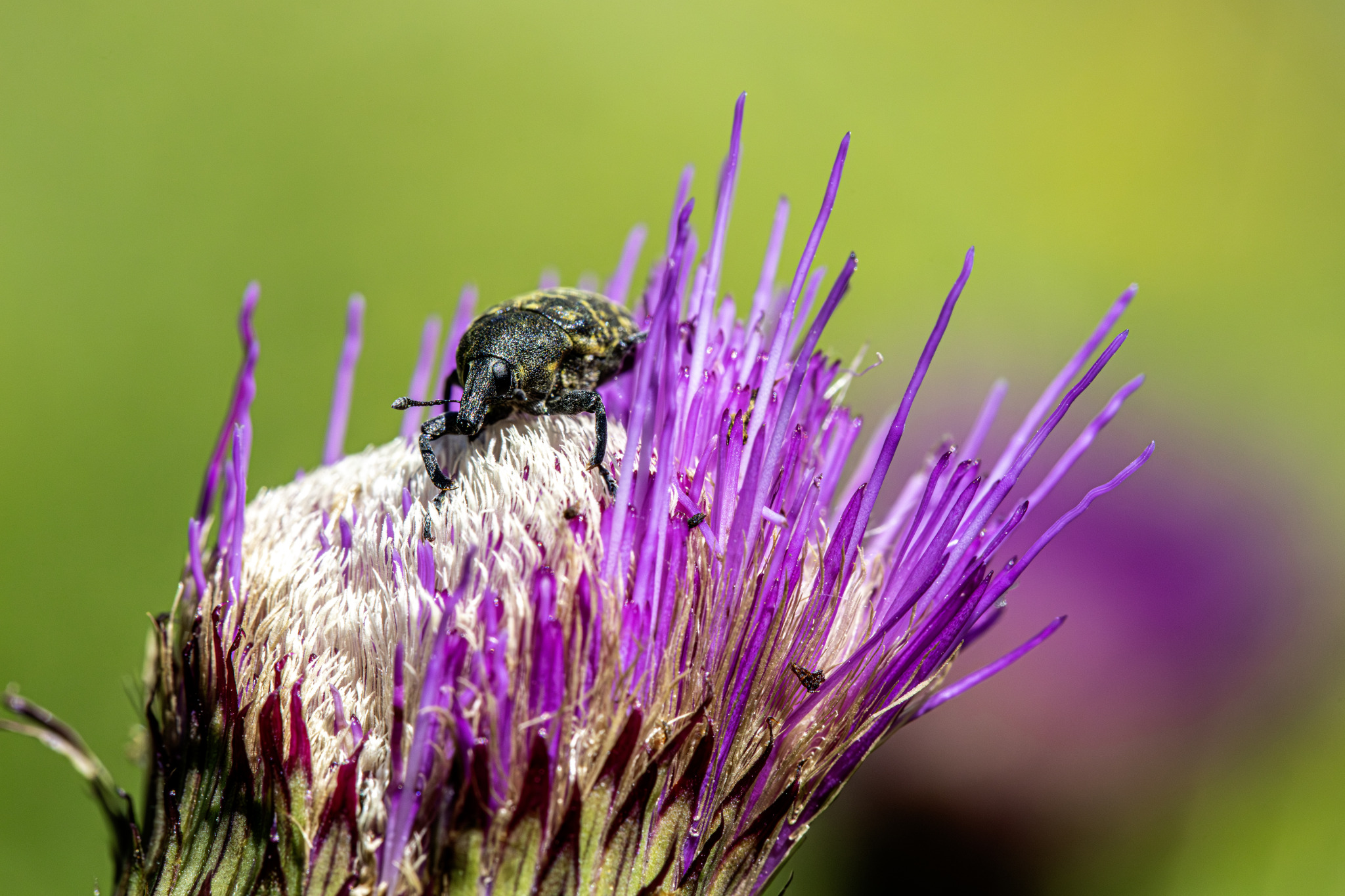
🌻 Deep Review: Turbine Cylindrical Weevil (Larinus turbinatus)
The Turbine Cylindrical Weevil (Larinus turbinatus) is a masterclass in natural geometry. It is a robust, fascinating beetle belonging to the true weevil family (Curculionidae), and it plays a critical—and sometimes beneficial—role in the ecosystem regarding how it interacts with wild thistles.
📏 Physical Characteristics: The Armored Cylinder
- The “Turbine” Shape: True to its specific epithet (turbinatus, meaning cone-shaped or top-shaped), its body has a distinct, stout, cylindrical profile that tapers neatly toward the rear.
- Textured Armor: Its elytra (wing covers) are densely covered in punctures and short, yellowish-grey hairs or scales, giving it a somewhat dusty, matte texture that provides exceptional camouflage against dry flower heads.
- The Snout: It features a thick, sturdy, slightly curved rostrum (snout) equipped with strong mandibles, perfectly engineered for boring into tough plant tissue.
- Size: They are medium-to-large for weevils, typically measuring between 8 to 13 mm in length.
🥗 Diet and Specialized Host Plants
While many insects are generalists, Larinus turbinatus is deeply tied to the Asteraceae (daisy) family, specifically favoring thistles.
- Favorite Menu Items: You will almost exclusively find them on thistles belonging to the genera Cirsium and Carduus, such as the Melancholy Thistle (Cirsium heterophyllum) and the Bull Thistle (Cirsium vulgare).
- The Adult Feast: Adults feed on the leaves, stems, and especially the developing flower buds of the thistle.
- The Larval Niche: This is where their life cycle gets fascinating. The female lays her eggs directly inside the developing flower head of the thistle. When the larvae hatch, they burrow right into the heart of the flower bud, feeding on the developing seeds and receptacle tissue.
🌍 Habitat and Distribution
- Environment: They thrive in open, sun-drenched habitats where thistles grow unchecked—think rough grasslands, roadside verges, forest clearings, and abandoned agricultural fields.
- Range: Widely distributed across Europe, North Africa, and parts of Central Asia. In Estonia and the wider Baltic region, they are a regular mid-summer fixture wherever large thistle stands are established.
- Seasonality: Peak activity aligns with the height of summer, making July the absolute best month to spot them as they feast and mate on blooming thistle heads.
🛡️ Defensive Behavior
Like many of its relatives, Larinus turbinatus doesn’t try to outrun predators.
- Thanatosis (Playing Dead): If a shadow passes overhead or the thistle stem is jostled, the weevil immediately locks its legs against its cylindrical body and drops straight down into the vegetation below.
- The Armor Defense: If picked up, its chitinous exoskeleton is remarkably tough, acting like a tiny, living tank that can withstand being accidentally squeezed by a foraging bird or small mammal.
🌿 Ecological Impact: Friend or Foe?
- Weed Control: Because they target thistles—which can easily overtake pastures and native meadows if left unchecked—Larinus species are often viewed by ecologists as natural allies. By destroying the seeds inside the flower heads, they act as a biological check on the rapid spread of aggressive thistles without the need for chemical herbicides.
- Agricultural Perspective: They pose zero threat to cultivated crops or gardens, confining their appetite strictly to wild composites.
Observation Tip for July: If you spot a patch of tall thistles in full bloom, look closely at the purple flower heads rather than the leaves. Larinus turbinatus loves to sit right on top of or immediately beneath the flower buds, where its greyish-brown body blends seamlessly into the downy fuzz of the plant.
Views: 150
Subscribe to the newsletter: