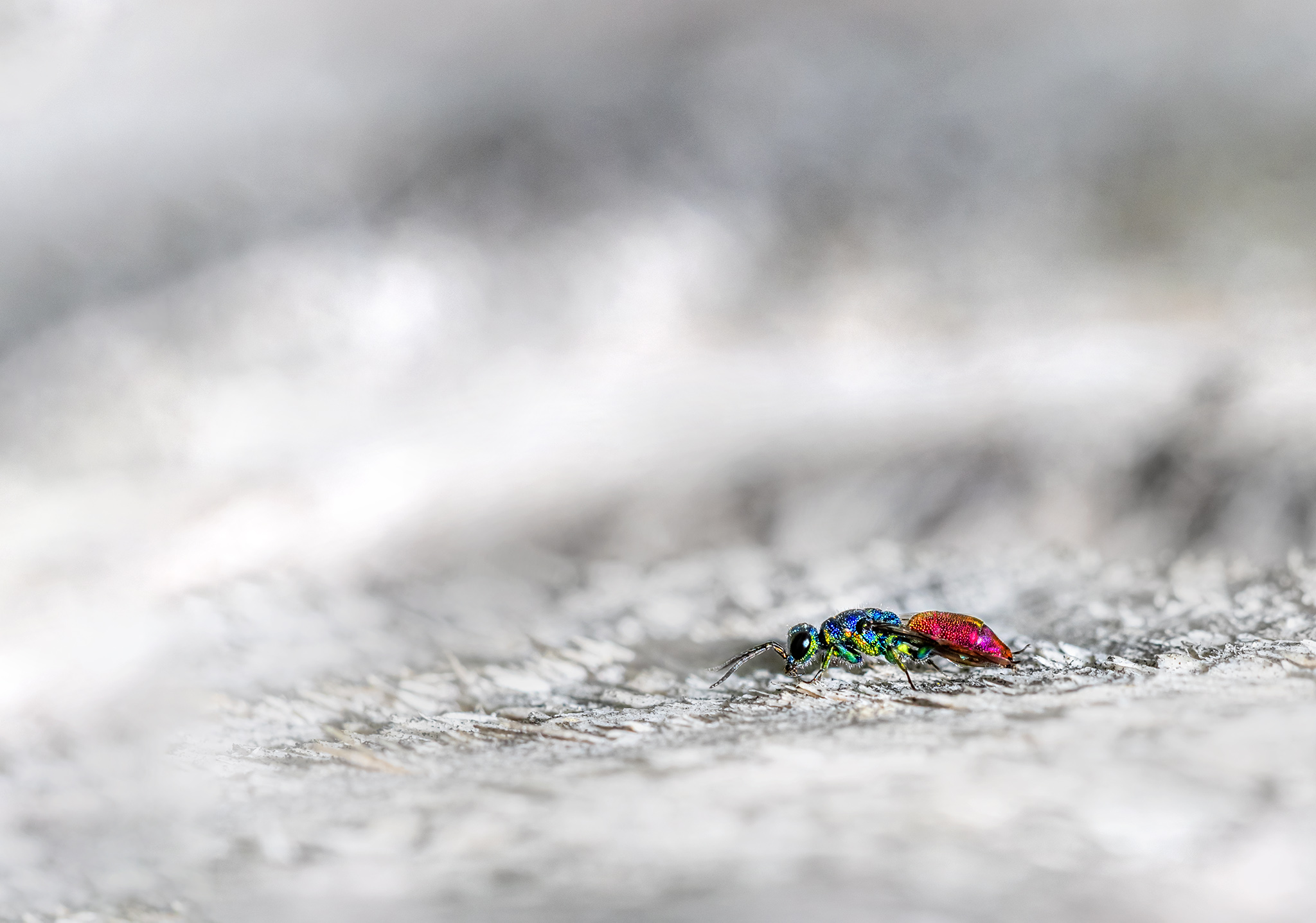
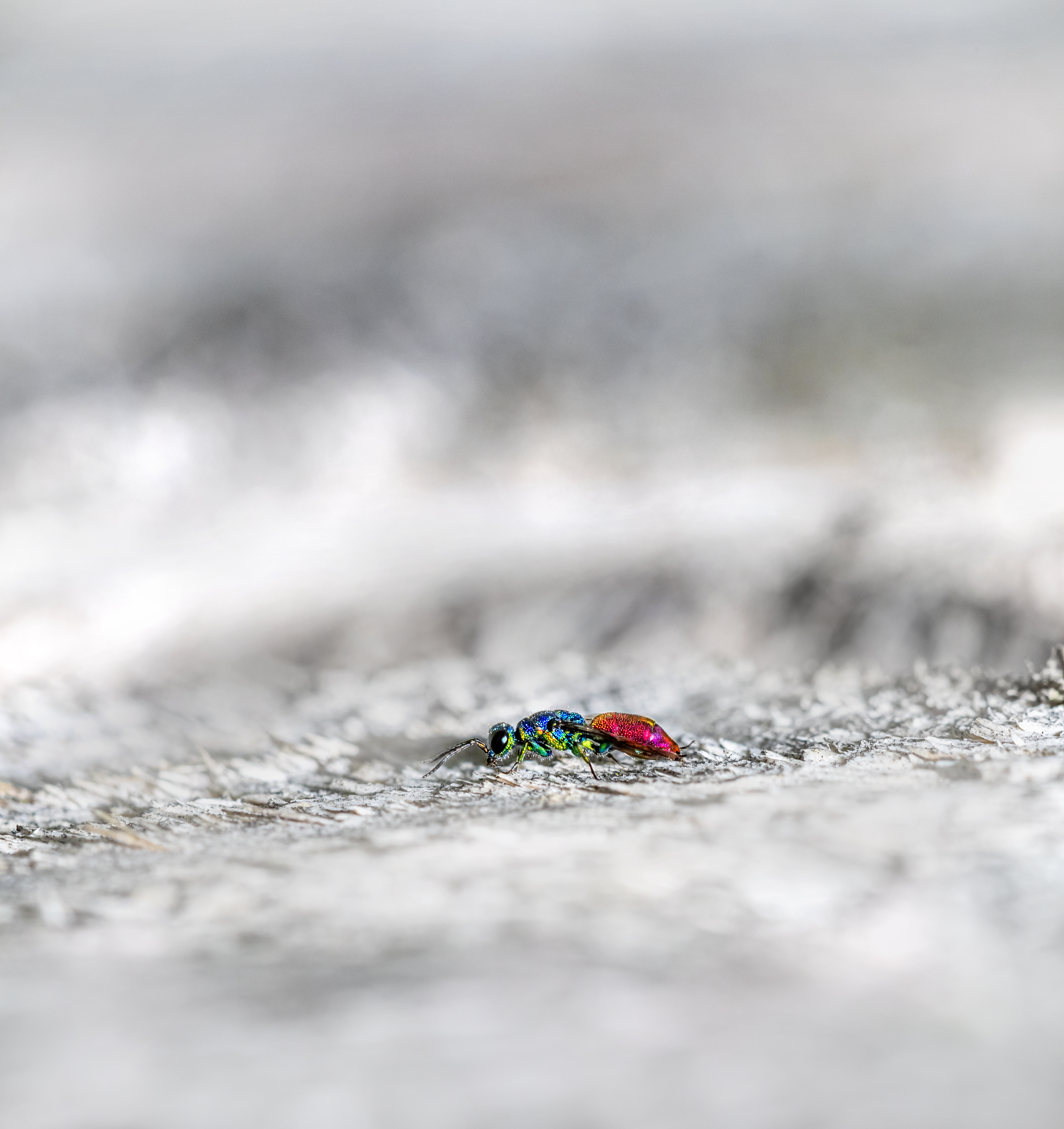
💎 Deep Review: Cuckoo Wasp (Chrysis species)
If you have ever spotted a flash of iridescent metallic emerald-green or ruby-red buzzing around a sun-baked wooden wall or a brick crevice, you have likely crossed paths with a Cuckoo Wasp of the genus Chrysis. Belonging to the family Chrysididae, these stunning insects are often called “jewel wasps” because of their dazzling, gem-like coloration, but their beauty masks a life of stealth, espionage, and ruthless parasitism.
📏 Physical Characteristics: The Living Jewel
Cuckoo wasps are unmistakable once you see their striking colors up close, though their anatomy is specialized for a very specific lifestyle.
- Metallic Armor: Their exoskeletons shine with brilliant, shifting hues of metallic green, blue, gold, and ruby-red. This metallic sheen isn’t just for show; it acts as a tough, protective shield against the stings and bites of angry host insects.
- The “Roll-Up” Defense: If captured or threatened, a cuckoo wasp can roll itself into a tight, armored ball—tucking its head and legs beneath its concave abdomen. In this posture, its hard, punctate shell makes it completely impenetrable to the jaws or stingers of defensive host bees and wasps.
- Size: They are relatively small, compact insects, typically measuring between 6 and 12 mm in length.
🕵️ The Cuckoo Strategy: Cleptoparasitism
True to their common name, cuckoo wasps practice cleptoparasitism (egg-theft and resource-stealing), much like cuckoo birds. They do not build their own nests or provision food for their young.
- The Target: Adult females actively hunt for the nests of solitary bees and other wasps (such as mason bees, potter wasps, and digger wasps) that nest in hollow stems, mud tubes, or tiny holes in wood and stone.
- The Stealthy Insertion: Finding an unguarded nest is a high-stakes game. When the host mother is away gathering pollen, the cuckoo wasp slips inside, uses her telescoping, needle-like ovipositor to pierce an existing egg cell, and lays her own egg inside.
- The Fatal Rivalry: When the cuckoo wasp larva hatches, it does something ruthless: it either consumes the host’s egg or young directly, or rapidly devours the pollen store left behind by the host mother, starving the host’s own offspring to death.
🥗 Diet: From Nectar to Nectar
- Adult Diet: While their larvae are parasitic freeloaders, adult cuckoo wasps live a peaceful, sun-loving life. You will frequently find them visiting open, nectar-rich flowers—especially umbellifers like hogweed, wild carrot, and yarrow—basking in the heat of midday.
- Energy Source: They require high-energy nectar to fuel their rapid, darting flight as they patrol walls, logs, and sandy banks in search of host nests.
🌍 Habitat and Distribution
- Environment: They thrive in warm, open, sun-drenched habitats where host bees and wasps are abundant. Look for them around south-facing wooden fences, dry-stone walls, sandy banks, garden bee hotels, and sparse meadows.
- Range: Widely distributed across the globe, with a massive diversity of species found throughout Europe, Asia, and North America. In Estonia and the wider Baltic region, they are active during the warm summer months.
⚠️ Conservation Status
- Status: Generally categorized as Least Concern globally, but individual species can be highly localized.
- Ecological Sensitivity: Because cuckoo wasps rely entirely on healthy populations of solitary bees and wasps, any environmental pressure that declines local bee populations (such as habitat loss or heavy pesticide use) will directly threaten them as well. They sit at the top of a specialized micro-ecosystem.
Field Tip: If you have a “bee hotel” in your garden or notice solitary bees and wasps darting into holes in a wooden fence during the summer, stand quietly nearby and watch the sunlit wood. If you see a small, glowing emerald-and-ruby insect creeping stealthily around the entrances like a tiny, metallic burglar, you are witnessing the masterclass espionage of the cuckoo wasp!
Views: 1551
Subscribe to the newsletter: