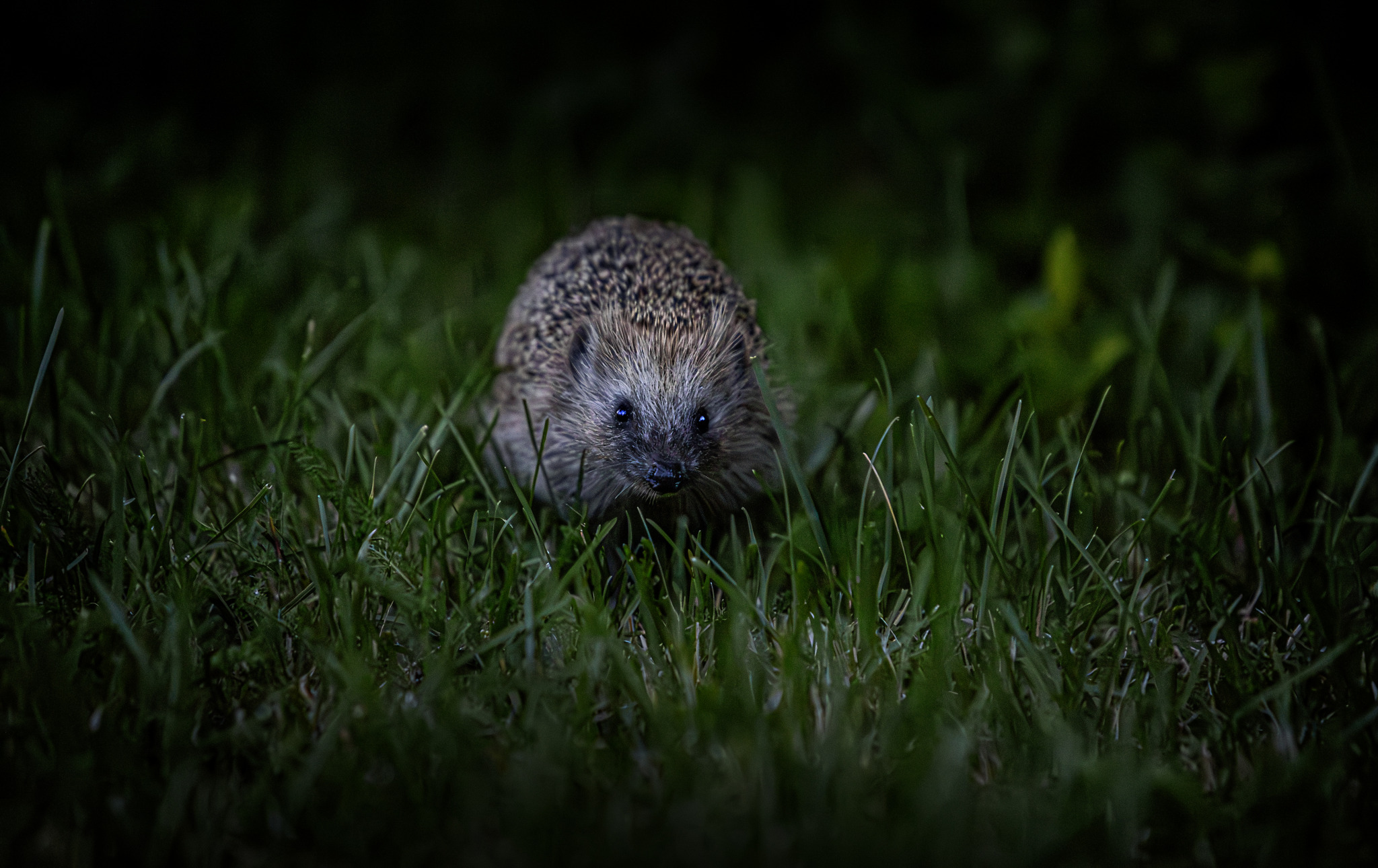
The European hedgehog (Erinaceus europaeus) is perhaps the most iconic “garden friend” in Western Europe. While they are often viewed as cute and clumsy, they are actually highly specialized nocturnal survivors with a lineage that has remained largely unchanged for millions of years.
As of late 2024, their conservation status was officially downgraded to Near Threatened, making a “deep review” of their ecology more relevant than ever.
1. Physical Profile
The hedgehog’s primary feature is its armor: a coat of roughly 5,000 to 7,000 spines.
- The Spines: These are modified hairs made of keratin. They are hollow and reinforced by internal ridges, making them lightweight but incredibly strong. Unlike porcupine quills, they do not detach.
- The “Drawstring” Muscle: Hedgehogs have a powerful muscle called the panniculus carnosus that acts like a drawstring, allowing them to tuck their head, legs, and tail inside a tight ball of spikes.
- Dimensions: * Length: 20–30 cm.
- Weight: 600g to 1.5kg (reaching their peak in late autumn before hibernation).
- Self-Anointing: A bizarre behavior where, upon smelling a new or pungent scent, they produce a frothy saliva and smear it over their spines. The exact reason is unknown, but theories suggest it may be for parasite control or scent masking.
2. Behavior & Diet: The Generalist Hunter
Hedgehogs are “generalist insectivores.” While they are often called “the gardener’s friend” for eating pests, their diet is broad:
- Primary Diet: Earthworms, beetles, caterpillars, earwigs, and millipedes.
- Opportunistic Diet: They will occasionally eat carrion, fallen fruit, bird eggs, and even small frogs or lizards.
- Solitary Life: They are not social animals. They wander large “home ranges” (up to 20–30 hectares for males) and only interact to mate. They are non-territorial, meaning they don’t fight over space, but they will avoid each other to prevent conflict.
3. The Hibernation Cycle
The European hedgehog is one of only three British mammals that truly hibernates (alongside bats and dormice).
- Timing: Generally from November to March/April, depending on the severity of the winter.
- Hibernacula: They build “winter nests” out of compacted leaves, grass, and twigs, usually under log piles, sheds, or thick hedges.
- The 600g Rule: For a hedgehog to survive the winter without food, it must ideally weigh at least 600g before entering hibernation. Juveniles born late in the year (late litters) often fail to reach this weight and are the most vulnerable.
4. Conservation Status & Modern Threats
Once considered common, the European hedgehog is now in a steep decline across much of its range, particularly in the UK and Scandinavia.
| Threat | Impact | Why? |
| Habitat Fragmentation | High | Fences and walls block their nightly foraging routes (they can travel 2km in one night). |
| Road Traffic | Severe | Hedgehogs’ defense mechanism (curling into a ball) is fatal when facing a vehicle. |
| Intensive Farming | High | Loss of hedgerows and the use of pesticides reduces their insect food source. |
| Robotic Mowers | Emerging | Quiet, automated mowers can cause horrific injuries to hedgehogs resting in grass. |
| Slug Pellets | High | Can lead to secondary poisoning or eliminate a primary food source. |
Quick Comparison: European vs. White-breasted
In Eastern Europe, the European hedgehog overlaps with its look-alike cousin.
| Feature | European (E. europaeus) | Northern White-breasted (E. roumanicus) |
| Chest Color | Generally brown/mottled | Distinctive, bright white patch on the chest |
| Face | Darker “mask” around eyes | Paler face overall |
| Range | Western/Northern Europe | Eastern Europe / Russia |
Conservation Tip: You can help by creating a “Hedgehog Highway”—a small 13cm x 13cm hole at the base of your garden fence to allow them to pass through safely.
Views: 1560
Subscribe to the newsletter: