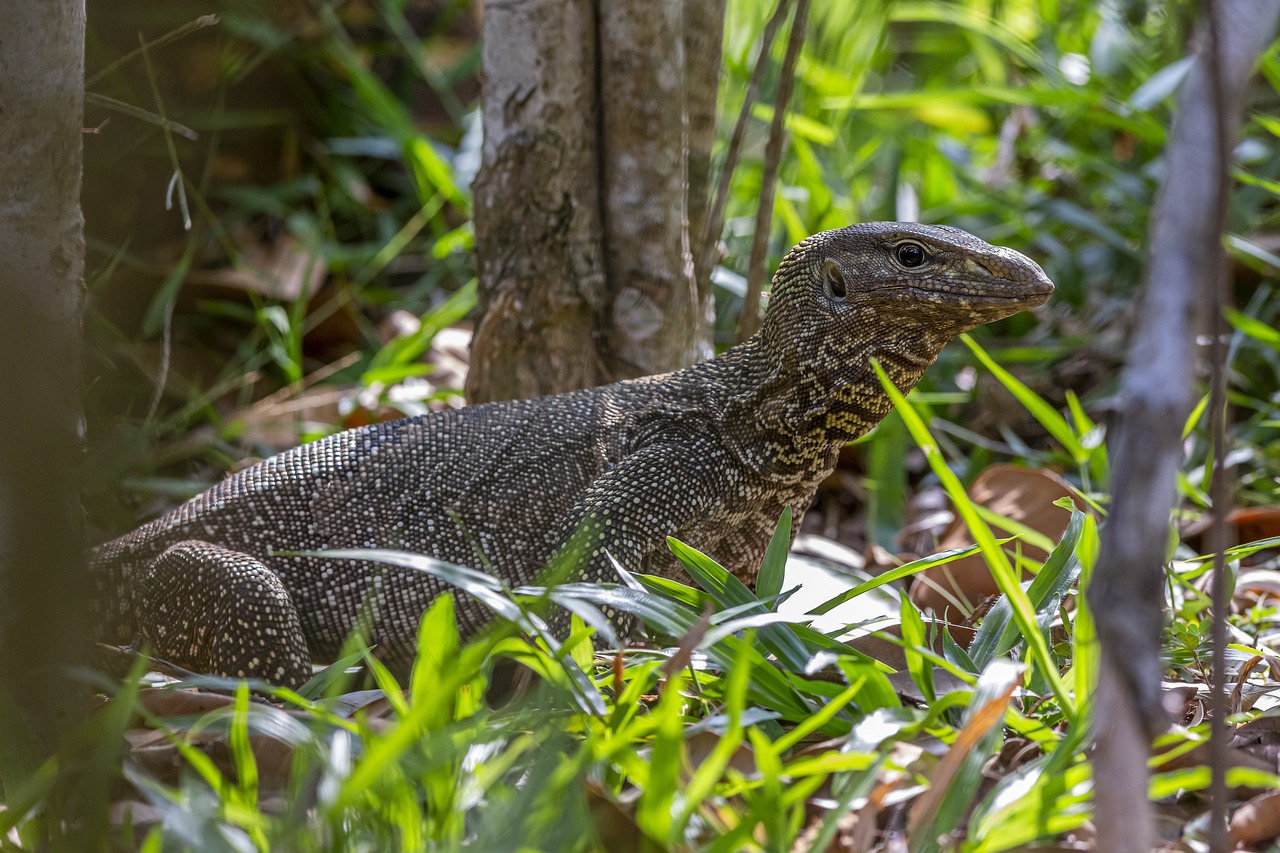
The Giant of the Wetlands: Discovering the Asian Water Monitor (Varanus salvator)
The Asian Water Monitor (Varanus salvator) is one of the most impressive reptiles on the planet. Often looking like a modern-day dinosaur, this massive lizard is a master of both land and water, commanding respect wherever it roams throughout South and Southeast Asia.
A Modern-Day Leviathan
The Asian Water Monitor is among the largest lizard species in the world, second only to the Komodo Dragon in weight, but often surpassing it in length. These giants can grow up to 3 meters (10 feet) long. Their muscular bodies are typically a dark, mahogany brown or black, adorned with distinctive golden-yellow spots and bands that act as perfect camouflage in the dappled light of the jungle.
Masters of the Water
As their name suggests, these monitors are semi-aquatic experts. You will most commonly find them near rivers, lakes, and mangrove swamps. They use their powerful, whip-like tails as rudders, allowing them to swim with incredible speed and grace. On land, they move with a steady, powerful crawl, using their sharp claws to climb trees or dig burrows with ease.
A Ruthless and Efficient Predator
In the wild, the Asian Water Monitor is a top-tier carnivore. While some might view their hunting methods as “cruel,” they are simply highly efficient survivors. Their diet is incredibly diverse, including:
- Fish and amphibians
- Small mammals and birds
- Reptiles and eggs
- Carrion (acting as nature’s clean-up crew)
Equipped with a forked tongue to “scent” the air and sharp teeth to grip prey, they are the ultimate opportunists of the tropical wetlands.
Range and Adaptability: From Thailand to Australia
While they are most famous for their presence in Thailand—where they can even be spotted in urban parks like Bangkok’s Lumpini Park—their reach is vast. They thrive in tropical climates, needing the warmth and humidity to regulate their cold-blooded systems.
Interestingly, while native to Asia, they have been introduced to parts of Northern Australia. In these new environments, they are often considered an invasive species, as their dominant predatory nature can disrupt local ecosystems that aren’t prepared for such a formidable reptile.
Conservation Status
Currently, the Asian Water Monitor is not listed as an endangered species. However, they face constant pressure from:
- Habitat Loss: Urbanization and the clearing of mangroves.
- The Leather Trade: Their beautiful skins are often sought after for luxury goods.
- The Pet Trade: Despite their massive size, they remain popular (though challenging) animals for reptile enthusiasts.
Photographer’s Note
Capturing a Varanus salvator in the wild requires patience. Whether they are basking on a riverbank or stealthily swimming through a swamp, they offer a glimpse into a prehistoric world. Their scales, sharp eyes, and powerful movements make them one of the most photogenic reptiles in the animal kingdom.
Views: 948
Subscribe to the newsletter: