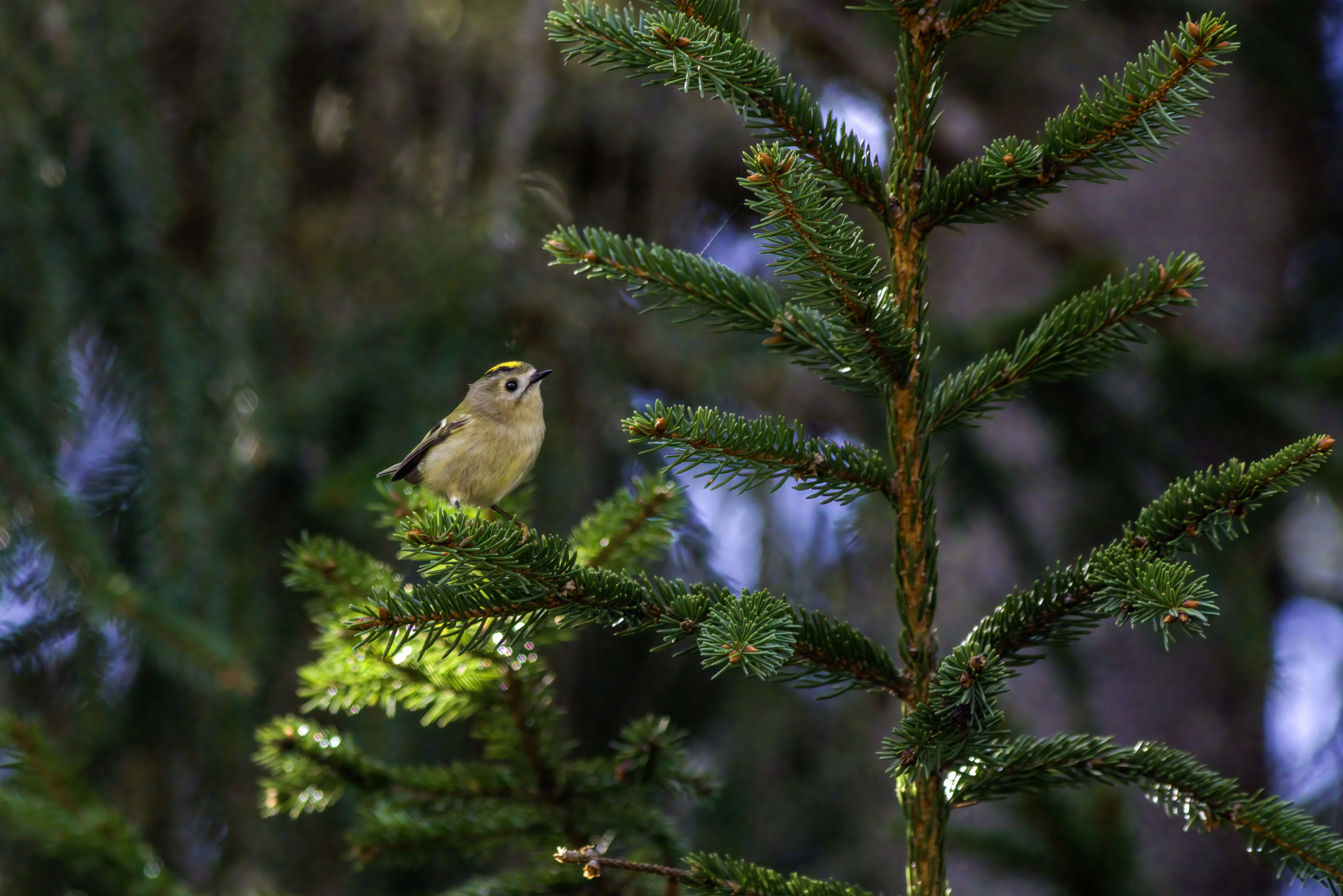
Meet the lightweight champion of the bird world. The Goldcrest (Regulus regulus) is officially the smallest bird in Europe, weighing a mere 5 to 6 grams—about the same as a single 20-cent coin. Despite its diminutive size, this “woodland fairy” possesses a regal spirit and a crown to match.
The “Petty King” of Folklore
The Goldcrest’s scientific name, Regulus, literally means “little king” or “prince.” According to European folklore, the Goldcrest won the title of King of the Birds by outsmarting the Eagle. During a contest to see who could fly the highest, the tiny bird hid in the Eagle’s feathers and, just as the giant reached its peak, hopped out to fly a few inches higher.
How to Identify Europe’s Smallest Resident
While they are often heard before they are seen, look for these key features:
- The Crown: A vibrant yellow stripe on the head, which reveals a fiery orange center in males when they are excited or courting.
- The Build: A round, almost “neckless” body with olive-green plumage and two distinct white wing bars.
- The Face: A pale face with a large, dark eye that gives it a permanently surprised and endearing expression.
A Life of Constant Motion
Goldcrests have an incredibly high metabolism. In the winter, they must feed for nearly 90% of the daylight hours just to stay alive. You will find them performing acrobatic feats in coniferous forests, often hanging upside down to pick spiders and moth eggs from the underside of pine needles.
Did You Know? Because they are so light, it was once believed that Goldcrests couldn’t fly across the sea on their own and instead “hitched a ride” on the backs of migrating Woodcocks!
📸 Photographer’s Perspective: Capturing the “Green Blur”
For wildlife photographers, the Goldcrest is one of the ultimate “level-up” challenges.
- High Shutter Speed is Mandatory: Because they are hyperactive and never sit still for more than a second, you’ll need a shutter speed of at least 1/2000s to freeze their movement.
- Focus on the Eye: Their large, black eyes are their most expressive feature. Use animal eye-tracking AF if your camera supports it, as their erratic hopping makes manual tracking nearly impossible.
- Listen for the “Tsee-Tsee”: Their call is so high-pitched that some adults can’t hear it! If you can, follow the sound to the outer branches of spruce or fir trees where they love to forage.
Quick Facts Table
| Feature | Detail |
| Weight | 5–6 grams (Weight of a paperclip) |
| Length | 8.5–9.5 cm |
| Habitat | Coniferous & Mixed Woodlands |
| Diet | Small spiders, moth eggs, and insects |
| Conservation | Least Concern (IUCN) |
Would you like me to help you draft a similar “Photographer’s Guide” for another species in your gallery, such as the Firecrest?
Hardest bird to photograph?
This video provides a first-hand look at the immense patience and technical skill required to capture clear images of a Goldcrest in its natural forest habitat.
Views: 216
Subscribe to the newsletter: