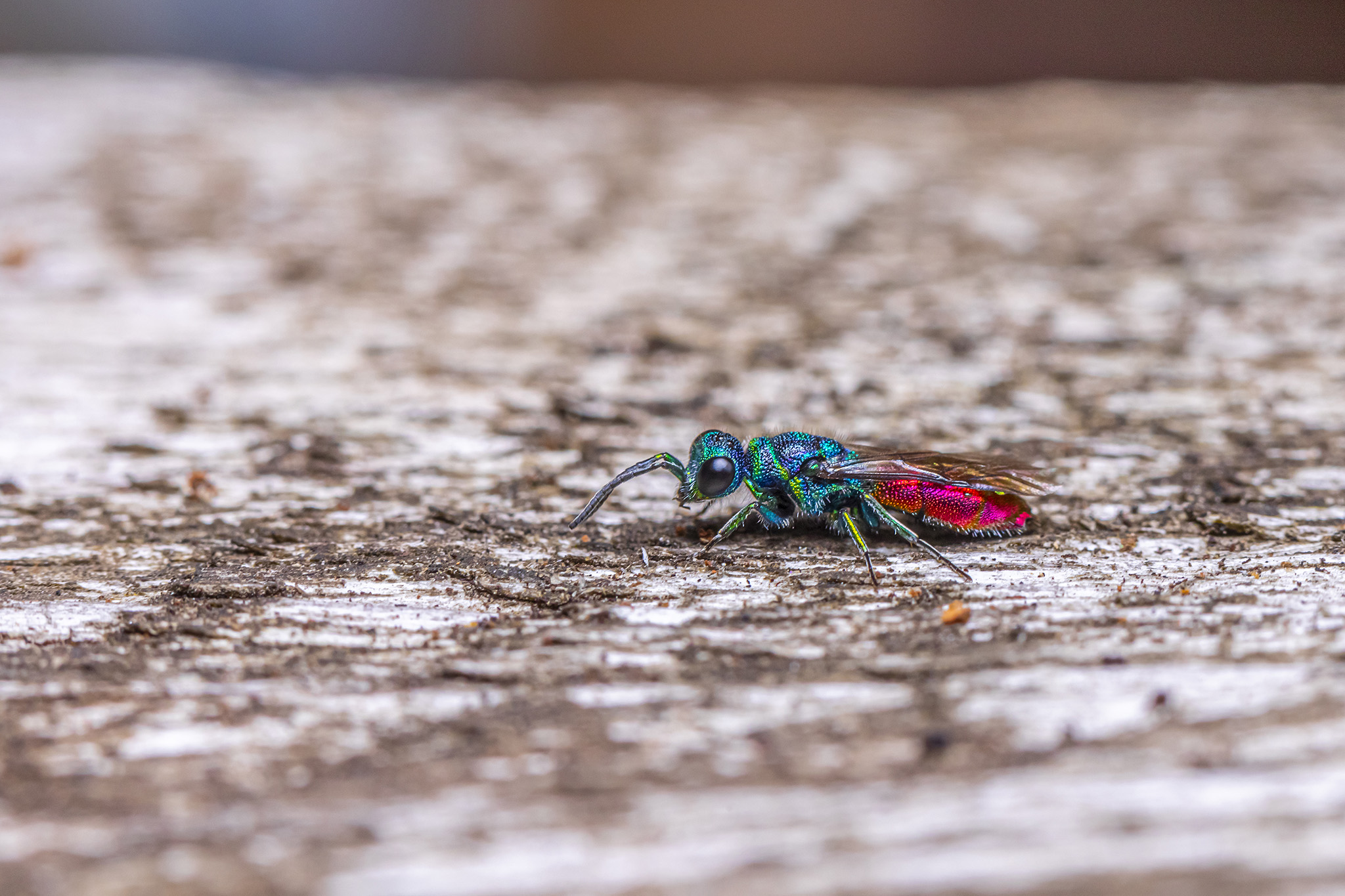

The Cuckoo wasp (genus Crysis) is one of the most stunning subjects for any macro photographer. Often called “Jewel Wasps” or “Emerald Wasps,” these tiny insects look more like handcrafted jewelry than living creatures.
Below is an enhanced look at these fascinating wasps, combining biological wonders with tips for capturing them through the lens.
1. Nature’s Living Gems
The most striking feature of the Cuckoo wasp is its metallic iridescence. Unlike many insects that use pigments for color, the Cuckoo wasp’s shimmer is structural. Light refracts through multiple microscopic layers of its exoskeleton, creating deep, shifting hues of emerald green, sapphire blue, and ruby red.
2. The “Tank” of the Insect World
Don’t let their beauty fool you; these wasps are built for battle.
- Bulletproof Armor: Their exoskeleton is incredibly hard and covered in tiny pits (punctures), making it nearly impossible for a host bee or wasp to sting or bite through.
- The “Armadillo” Defense: If caught sneaking into a host’s nest, the Cuckoo wasp doesn’t fight back—it tucks its legs into its concave abdomen and rolls into a tight, impenetrable ball. The attacker is left trying to bite a marble, eventually giving up and throwing the “ball” out of the nest, which is exactly what the Cuckoo wasp wants.
3. The Master of Disguise
Like the cuckoo bird they are named after, these wasps are kleptoparasites.
- Chemical Cloaking: Recent studies suggest they can mimic the scent of their hosts (often mud daubers or mason bees), allowing them to slip into a nest “invisible” to the host’s nose.
- The Strategy: Once inside, the female uses a long, telescoping tube (an ovipositor, not a stinger) to lay an egg. When the larva hatches, it either eats the host’s food supply or the host’s own larvae.
📸 Photographer’s Perspective: Capturing the Shine
Photographing a Crysis wasp is a rewarding challenge due to its reflective “jewel” surface.
- Diffused Flash is Key: Direct flash will create harsh “hot spots” on their metallic bodies. Use a large DIY or commercial diffuser to soften the light and reveal the intricate pitting on the exoskeleton.
- Manage the Reflections: Because they are so reflective, they often pick up the color of their surroundings. Shooting them on a white flower (like wild carrot) can help keep their colors pure and vibrant.
- Focus on the Eyes: Their compound eyes are often a deep, contrasting color. Nailing the focus on the eye at a 1:1 or higher magnification makes the image feel personal.
- The “Early Bird” Rule: Cuckoo wasps are incredibly fast and erratic in the heat of the day. For the best shots, find them early in the morning when they are still warming up and moving slowly.
Quick Facts Table
| Feature | Detail |
| Scientific Name | Crysis (Family: Chrysididae) |
| Common Names | Cuckoo Wasp, Jewel Wasp, Ruby-tailed Wasp |
| Size | Typically 6–12 mm |
| Defense | Rolling into a ball (Volvation) |
| Habitat | Flower-rich gardens, old wooden walls, and sandy banks |
| Main Food | Nectar and aphid honeydew (Adults) |
See more of my Cuckoo wasp captures and download full-size stock images at karits.eu.
Views: 152
Subscribe to the newsletter: