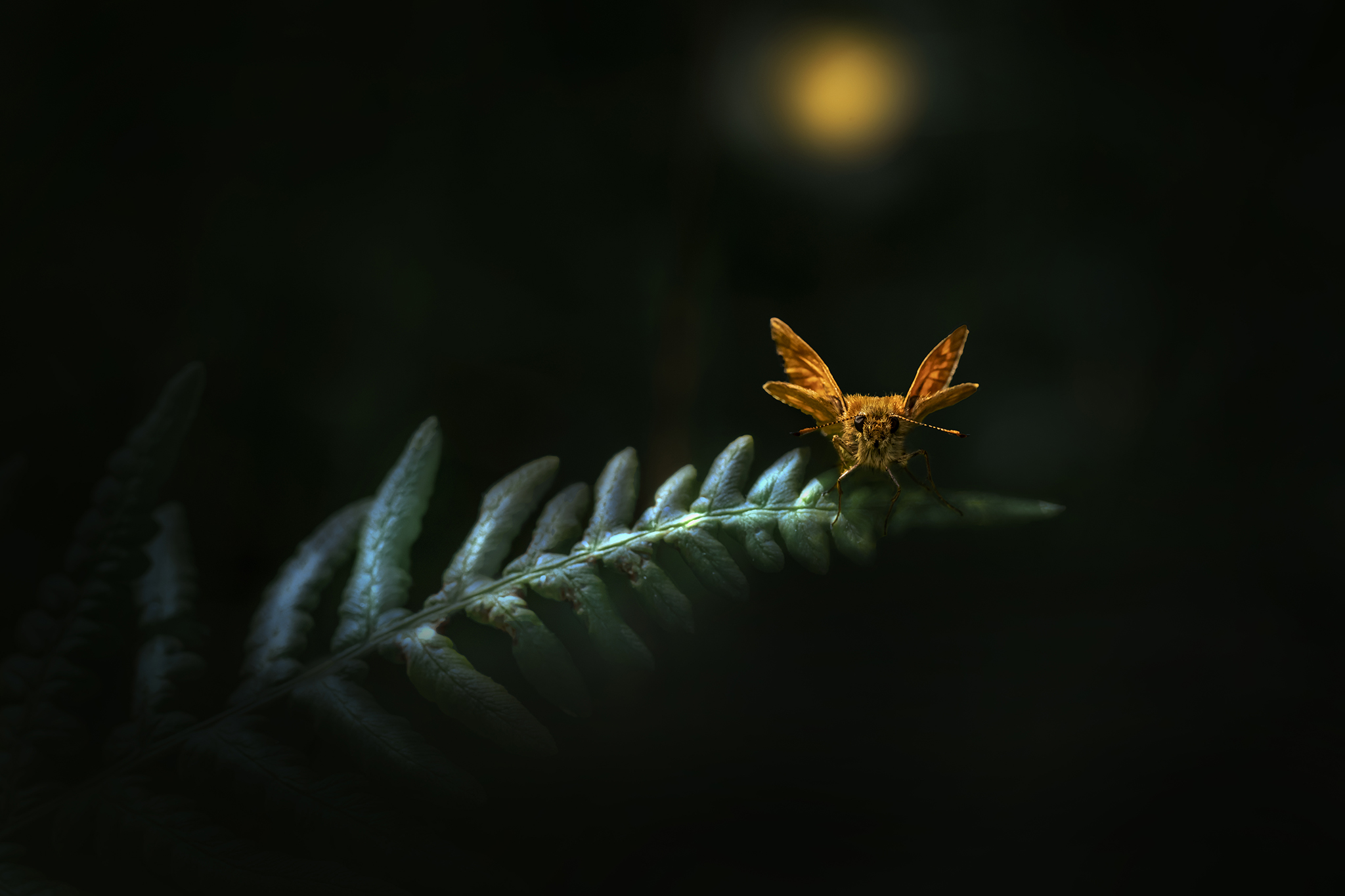

The Chequered skipper (Carterocephalus palaemon)—or Täpik-punnpea in Estonian—is a small but vibrant butterfly that brings a touch of gold to damp woodland clearings in late spring. While it is rare and highly protected in some parts of Europe (like the UK), it is a classic sight in the lush, unmanaged edges of Estonian forests.
Based on the photography and field details from karits.eu, here is a closer look at this “checkerboard” specialist.
1. A Study in Gold and Chocolate
The Chequered skipper is easily distinguished from other skippers by its bold pattern. Unlike the uniform orange or brown of its relatives, its wings are a deep chocolate brown decorated with large, rectangular gold spots.
- The Underside Detail: When resting with its wings closed, the underside reveals a beautiful “inverted” pattern—creamy yellow spots outlined in dark brown, providing excellent camouflage against dappled sunlight.
- The “Northern” Look-alike: In Estonia, it is often seen alongside the Northern Chequered skipper (C. silvicola). The easiest way to tell them apart? The male Northern skipper has much more uniform yellow on the upper forewings, whereas our C. palaemon always maintains its distinct dark brown “chequered” borders.
2. The “Drunk” Flight Pattern
Watching a Chequered skipper in flight is a unique experience. While most butterflies glide or flutter, skippers are named for their rapid, “skipping” motion.
- The “Sleepy” Fly: In Estonia, its relative Heteropterus morpheus is called the “Uneliblikas” (Sleepy Butterfly) because of its bobbing flight, but the Chequered skipper follows a similar erratic path. It appears to bounce off invisible layers of air as it moves between perches.
- Territorial Aggression: Don’t let the small size fool you. Males are fiercely territorial. They sit on sunlit leaves (often at head height) and will “dogfight” with any other insect that enters their airspace, including much larger butterflies, before returning to the exact same leaf.
3. The Grass-Tube Architect
The life of a Chequered skipper is tied intimately to specific grasses like Purple Moor-grass or False-brome.
- Silk Engineering: The caterpillar is a tiny engineer. It uses silk to pull the edges of a grass blade together, creating a protective tube. It lives inside this shelter, only venturing out to eat the grass above and below its “front door.”
- Winter in the Straw: As winter approaches, the caterpillar turns from green to a straw-like yellow to match the dead grass. It hibernates inside its silken tube through the freezing Estonian winter, only pupating when the warmth of May returns.
📸 Photographer’s Perspective: Capturing the Checkers
The Chequered skipper is a challenging subject due to its small size and high-speed behavior.
- The “Throne” Strategy: Because males are territorial, they have favorite perches. If you find one, stay still. If it flies off to chase a rival, it will likely return to the same leaf within 30 seconds, allowing you to set up your shot.
- Eye-Level Perspective: To truly capture the “chequered” wing pattern, you need to get down into the tall grass. A low-angle shot with a wide aperture (e.g., $f/2.8$ or $f/4$) creates a creamy background that makes the gold spots pop.
- Morning Dew: Early morning is the best time. The butterflies are sluggish and often covered in tiny dew droplets, which act like magnifying glasses for the intricate scales on their wings.
- Wait for the “Basking” Pose: Unlike many skippers that keep their wings in a “stealth bomber” $V$-shape, the Chequered skipper often spreads its wings completely flat when basking in the sun—the perfect moment for a top-down macro shot.
Quick Facts Table
| Feature | Detail |
| Scientific Name | Carterocephalus palaemon |
| Estonian Name | Täpik-punnpea |
| Wingspan | 29–31 mm |
| Flight Period | Late May to June (Peak in early June) |
| Larval Foodplant | Grasses (e.g., Molinia caerulea, Brachypodium) |
| Conservation | Common in Estonia; highly rare/reintroduced in UK |
Explore the full gallery and download full-size, CC0-licensed images of this species at karits.eu.
Views: 176
Subscribe to the newsletter: