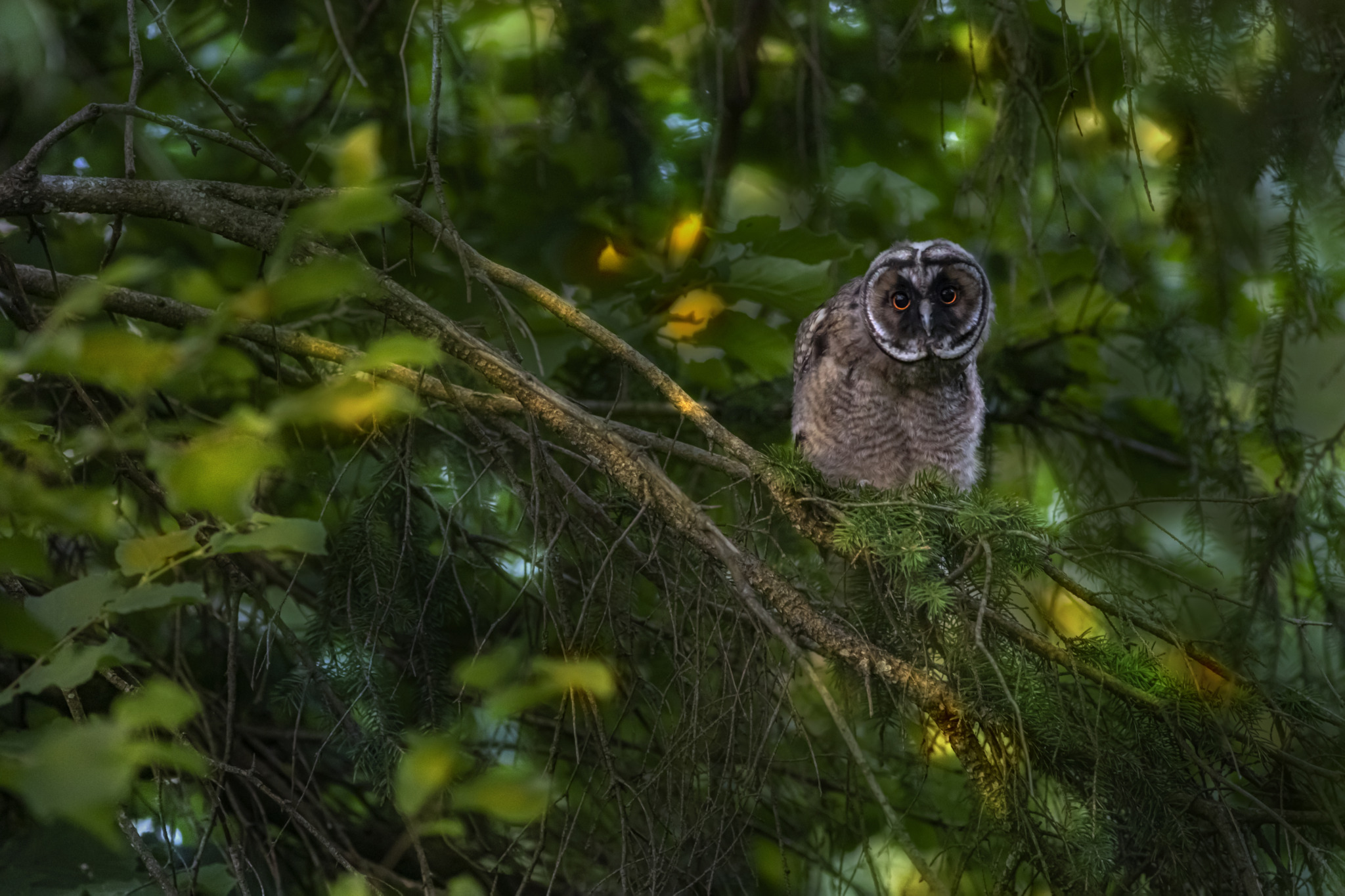
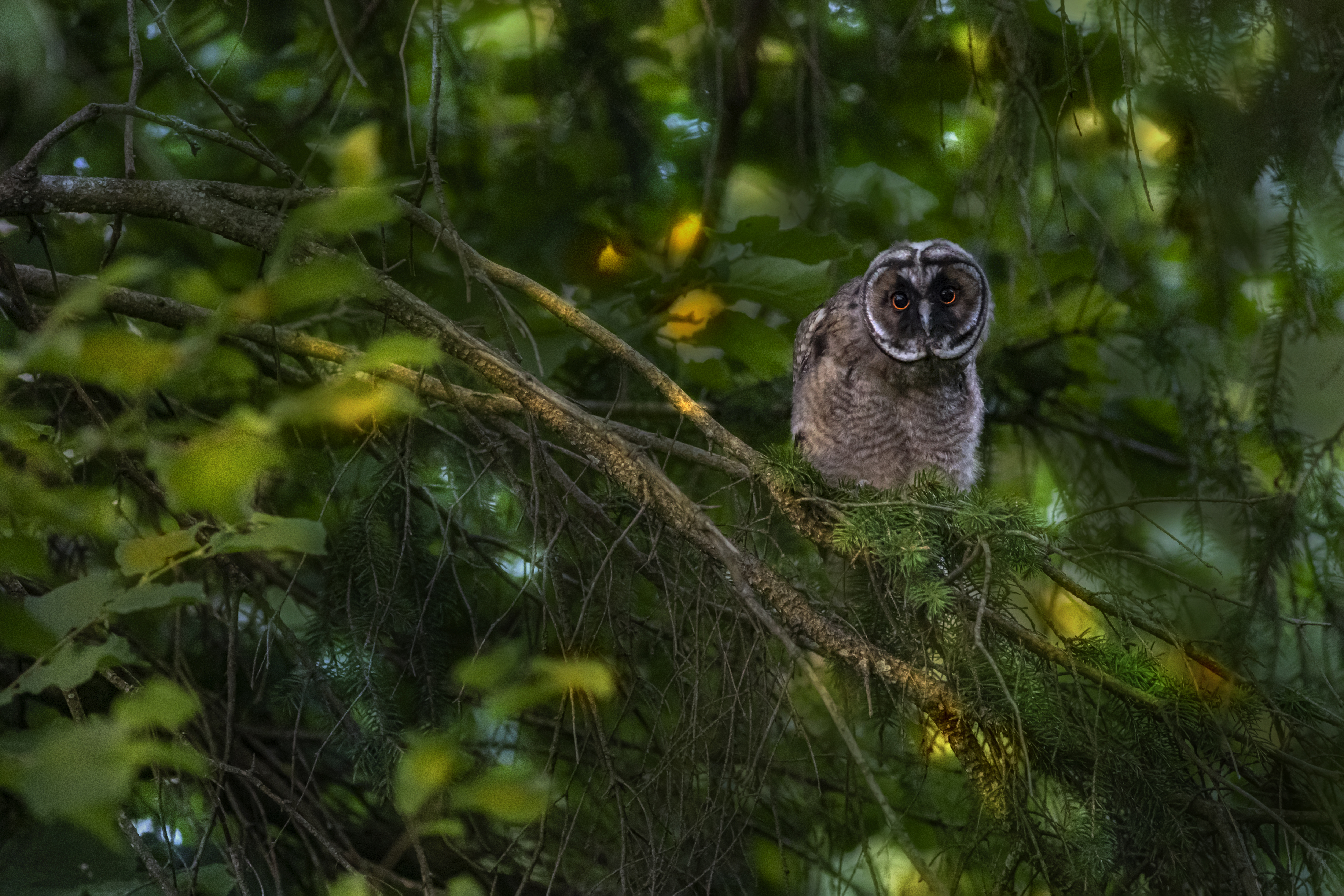
The Long-eared owl (Asio otus)—known in Estonian as the Kõrvukräts—is perhaps the most enigmatic of our nocturnal predators. A master of disguise and a master of the hunt, it spends its days stretched thin against tree trunks, perfectly mimicking a broken branch, only to transform into a silent, orange-eyed ghost as soon as the sun dips below the horizon.
Based on the wildlife photography and field details from karits.eu, here is a look at this secretive forest dweller.
1. The “Ear” Illusion
The most striking feature of the Long-eared owl is its namesake “ears.” However, these long, feathery tufts have nothing to do with hearing.
- Mood Indicators: The tufts are used for communication and display. When the owl is relaxed, they may be flat; when it is alarmed or alert, it raises them high to break up the round silhouette of its head.
- True Hearing: Its actual ears are asymmetrical slits hidden beneath the feathers on the sides of its head. This asymmetry allows the owl to triangulate the exact location of a vole moving under deep snow or thick grass purely by sound.
2. The “Tall-Thin” Defense
If you are lucky enough to spot a Long-eared owl during the day, it will likely be in its “tall-thin” posture.
- The Vanishing Act: When it feels a threat (or a photographer) approaching, it elongates its entire body, pulls its feathers in tight, and squint-closes its eyes.
- The Bark Mimic: Combined with its incredibly complex pattern of buff, brown, and grey feathers, this pose makes the owl look like a vertical piece of bark or a snapped-off branch. It is a defense mechanism designed to hide them from larger predators like Goshawks or Great Horned Owls.
3. The Winter Commune
Unlike many other owls that are strictly solitary, Long-eared owls have a fascinating social side during the winter.
- Communal Roosts: In the colder months, they often gather in “roosts,” where up to 20 or even 50 owls may spend the day in a single group of dense conifers or thickets (often in cemeteries or parks).
- Safety in Numbers: This behavior is thought to provide better protection against predators and help the birds locate food sources in a harsh landscape.
📸 Photographer’s Perspective: Respecting the Ghost
Photographing a Long-eared owl is a privilege that comes with a high responsibility to minimize disturbance.
- Keep Your Distance: Because of their “tall-thin” defense, it is easy to think you aren’t bothering the bird because it isn’t flying away. In reality, if the owl is stretched thin and staring at you, it is stressed. Use a long telephoto lens (500mm+) to stay well back.
- Focus on the Orange Iris: The eyes of the Long-eared owl are a deep, fiery orange, contrasting beautifully with its facial disc. Try to capture the moment they open their eyes slightly; the color “pops” against the muted tones of the winter forest.
- High ISO and Low Light: Being strictly nocturnal, your best shots will often occur during the “blue hour.” Modern mirrorless cameras with excellent high-ISO performance are essential for capturing detail in these low-light conditions without using a flash (which should be avoided as it can disorient the bird).
- Search for the “Sign”: Don’t look for the owl first; look for the “whitewash” (bird droppings) and pellets at the base of dense spruce or cedar trees. If you find a pile of grey, furry pellets, look directly up—you might just see a pair of orange eyes looking back.
Quick Facts Table
| Feature | Detail |
| Scientific Name | Asio otus |
| Estonian Name | Kõrvukräts |
| Wingspan | 86–100 cm |
| Eye Color | Bright Orange / Amber |
| Diet | Primarily Voles (90%), small birds, and mice |
| Habitat | Open country with nearby dense conifer thickets |
| Status | Protected (Estonian Category III) |
Explore more intimate portraits of the Long-eared owl and other birds of prey at karits.eu.
Views: 256
Subscribe to the newsletter: