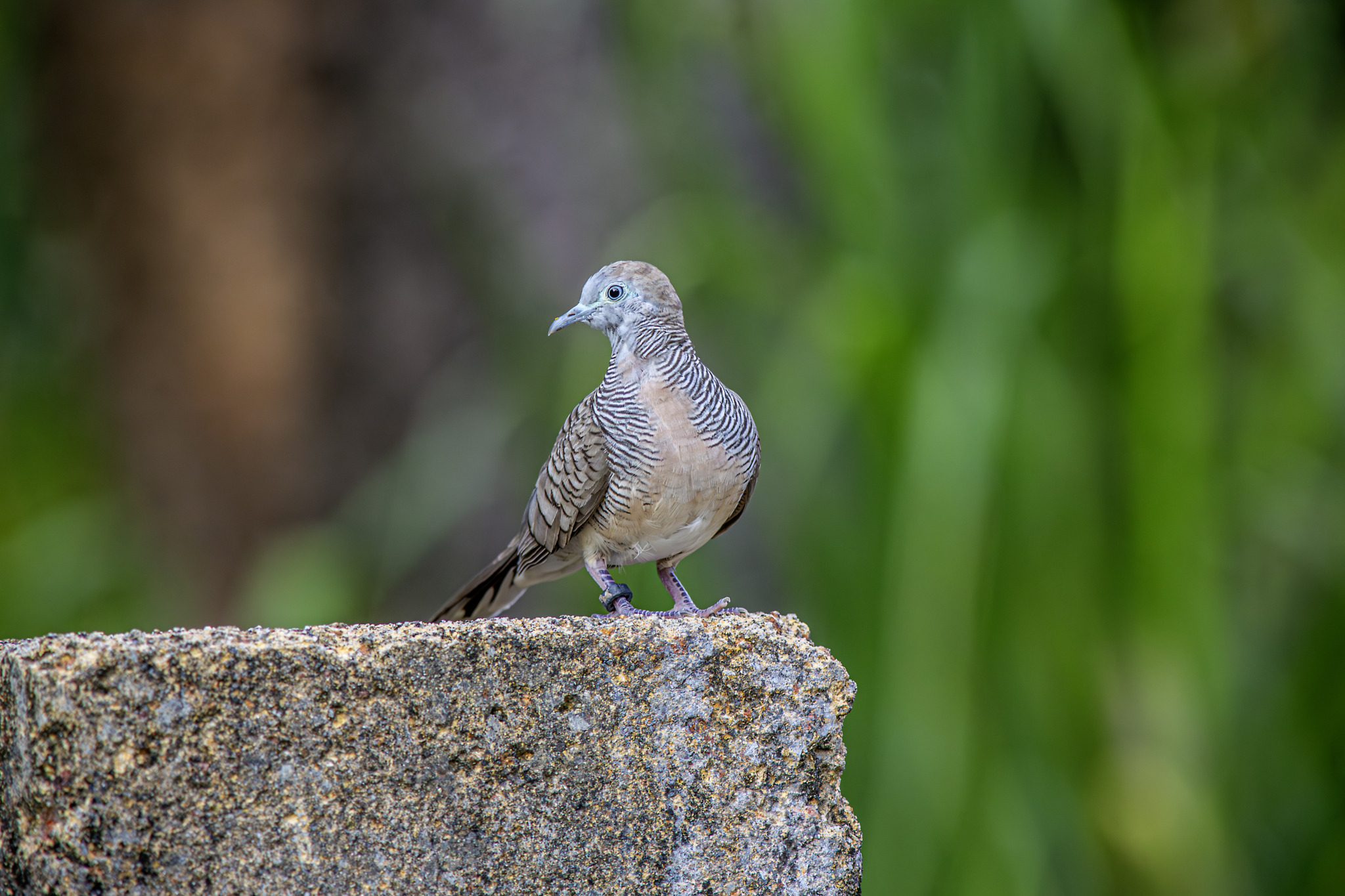
The Zebra Dove (Geopelia striata) is a masterclass in subtle, geometric beauty. While it lacks the flamboyant colors of a parrot or a kingfisher, its intricate, barred plumage makes it a favorite for photographers who appreciate fine detail. Often found throughout Southeast Asia, it has become a staple of tropical gardens and parks, moving with a delicate, rhythmic grace.
Based on the photography and field notes from karits.eu, here is a profile of this pint-sized peacekeeper.
1. A Pattern of Precision
The Zebra Dove gets its name from the heavy black-and-white barring on its neck and sides.
- The Monochrome Aesthetic: Unlike the common pigeon, the Zebra Dove features a soft, brownish-grey body that transitions into a pale, pinkish belly. This neutral palette makes the “zebra” stripes on its neck pop, especially when captured in high-detail macro shots.
- The “Electric” Eye: Look closely at its face. It sports a distinctive patch of bare, blue-grey skin around its eyes, giving it a somewhat surprised and modern look compared to its more traditional-looking relatives.
2. Staccato Serenity: The “Coo”
If you’ve spent time in Southeast Asia, the sound of the Zebra Dove is likely the soundtrack to your mornings.
- The Rhythm: Its call is a series of soft, staccato, rhythmic coos: “doo-do-do, doo-do-do.”
- Competition Grade: In places like Thailand and Malaysia, these birds are so prized for their voices that “singing competitions” are held. Owners keep them in elaborate, towering cages, and the birds are judged on the melody, pitch, and “roundness” of their coos.
3. Ground-Level Life
Zebra Doves are primarily ground feeders. You’ll rarely see them soaring high above the canopy; instead, they prefer to trot through short grass or across sandy paths.
- The Diet: They are specialized seed-eaters, using their small, refined beaks to pick up tiny weed seeds and grains.
- The “Nod”: As they walk, they exhibit the classic columbid “head-bob,” which scientists believe helps them stabilize their vision while moving on the ground to spot tiny food items or lurking predators.
📸 Photographer’s Perspective: Capturing the Minimalist
The Zebra Dove is often quite approachable, but capturing its “essence” requires attention to light and texture.
- Focus on the Barring: To truly do justice to this bird, you need to nail the focus on the neck feathers. Use a narrow aperture (around $f/6.3$ to $f/8$) to ensure the depth of field covers the entire curve of the neck, revealing the individual “zebra” lines.
- Soft Light is Key: Because their plumage is so subtle, harsh midday sun can “wash out” the delicate brown and pink tones. Shoot during the early morning or in open shade to bring out the saturated greys and the soft blue of the eye-ring.
- Bokeh and Grounding: Since they spend so much time on the ground, use a low shooting angle (get down on your knees or belly!). This creates a beautiful, creamy foreground and background blur (bokeh), making the bird stand out from the busy texture of grass or gravel.
- Anticipate the “Fan”: When these doves land or display, they often fan out their tails, revealing white outer feathers. Use a high shutter speed (1/1000s or faster) to freeze this brief moment of flair.
Quick Facts Table
| Feature | Detail |
| Scientific Name | Geopelia striata |
| Size | 20–23 cm (Small and slender) |
| Weight | 50–60 grams |
| Habitat | Open country, gardens, parks, and scrubland |
| Diet | Small seeds and occasionally tiny insects |
| Status | Common / Least Concern |
Explore the high-resolution texture of the Zebra Dove’s plumage and download CC0 images at karits.eu.
Views: 161
Subscribe to the newsletter: