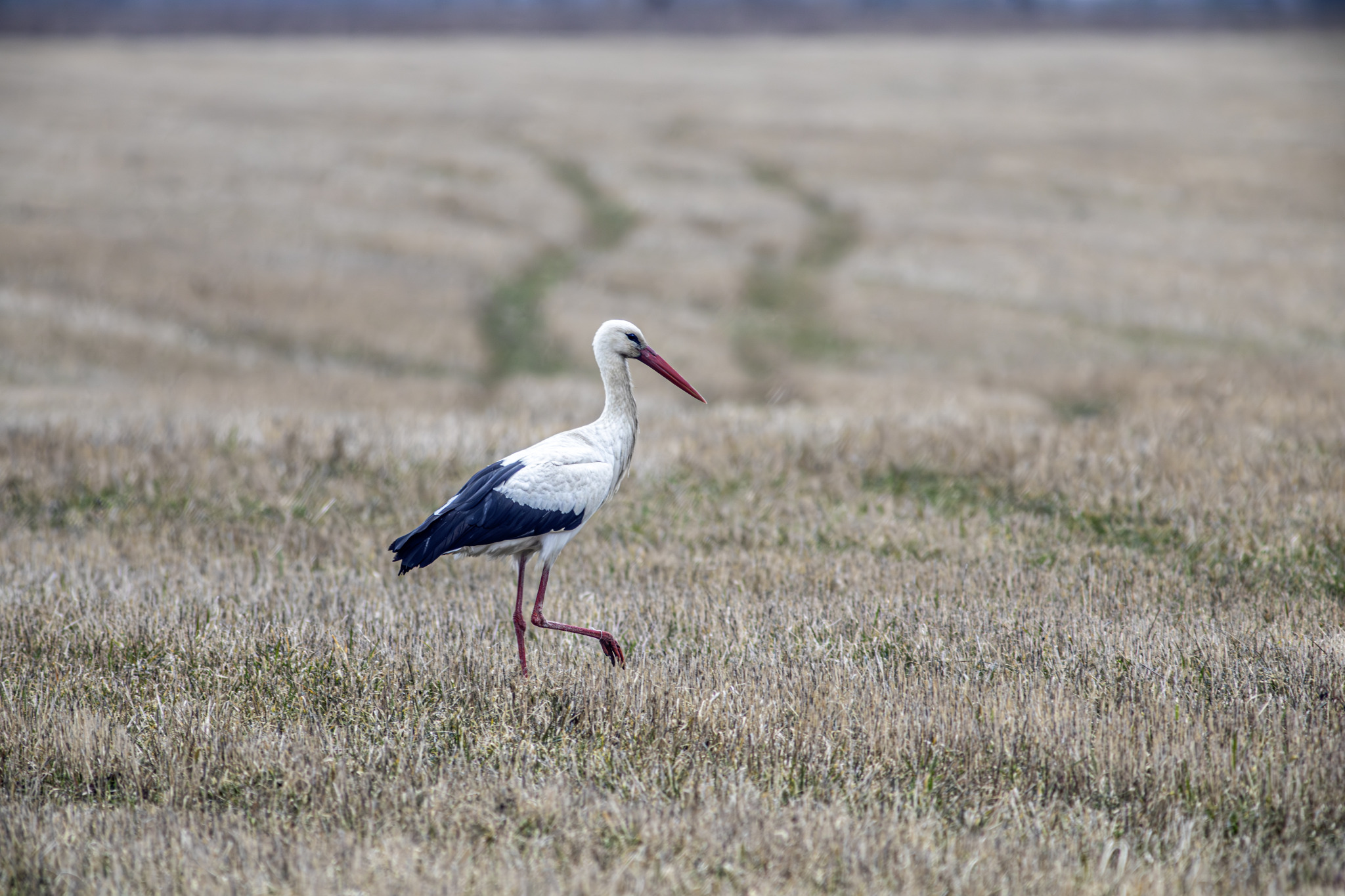
🦢 Deep Review:
The White Stork is perhaps one of the most culturally significant birds in the world. Famous for the myth of “delivering babies,” this large, graceful wading bird is a master of the skies and a symbol of good luck, fertility, and the changing of seasons across Europe and Africa.
📏 Physical Characteristics
- Coloration: They have a striking, clean appearance with almost entirely white plumage, contrasted sharply by black flight feathers on their wings.
- Distinctive Features: Their most recognizable traits are their long, bright red legs and a long, straight, pointed red beak.
- Size: They are large birds, built for efficient long-distance flight.
- Length: 100–115 cm.
- Wingspan: An impressive 155–215 cm (over 7 feet in some cases).
- Weight: Typically between 2.3 and 4.5 kg.
- Silence is Golden: Unlike many birds, White Storks lack a functional syrinx (voice box). They are virtually silent, communicating instead through rhythmic bill-clattering, which sounds like a wooden percussion instrument.
🌍 Habitat and Range
- Geographic Range: They breed across Europe (from Portugal to Estonia and Russia), parts of North Africa, and Western Asia. They are famous for their long-distance migration, wintering in Sub-Saharan Africa.
- Preferred Habitat: They love open areas like wet grasslands, marshes, swamps, and agricultural fields. They are highly “synanthropic,” meaning they have adapted well to living near humans, often nesting on rooftops, chimneys, and specialized platforms.
✈️ The Great Migration
The White Stork is the “poster child” for migration. Because they rely on thermals (rising columns of warm air) to soar and save energy, they avoid crossing large bodies of water like the Mediterranean Sea where thermals don’t form.
- The Two Routes:
- Western Route: Over the Strait of Gibraltar.
- Eastern Route: Over the Bosphorus in Turkey (the more popular route for Eastern European populations).
- Travel Distance: They can cover up to 49,000 km in a round trip, flying about 200–300 km per day.
🍴 Diet and Hunting
Despite their peaceful image, White Storks are efficient opportunistic carnivores. They walk slowly through fields and shallow water, striking quickly at anything they can swallow.
- Menu: Large insects (especially grasshoppers and beetles), frogs, toads, fish, lizards, snakes, small mammals (like voles and mice), and bird eggs.
- The “Farmer’s Friend”: They are often seen following tractors during plowing, as the machinery flushes out insects and small rodents from the soil.
🏠 Nesting and Social Behavior
- The Massive Nest: Storks build enormous stick nests that they reuse and add to every year. A long-used nest can eventually weigh several hundred kilograms and become a massive “apartment complex” where smaller birds like sparrows build their own nests in the gaps.
- Monogamy (with a twist): They are “seasonally monogamous.” They don’t necessarily stay with the same partner for life, but they are incredibly loyal to the nest site. The male usually arrives first to defend the “property,” and the same pair often reunites simply because they both returned to the same home.
- Brood Reduction: In years where food is scarce, parents may practice infanticide (killing the weakest chick) to ensure the survival of the others—a harsh reality of nature.
⚠️ Conservation and Threats
- IUCN Status: Least Concern. Populations in Western Europe have made a dramatic recovery thanks to reintroduction programs and the ban on certain pesticides.
- Modern Threats:
- Electrocution: Collision with power lines is a major cause of death during migration.
- Habitat Loss: The drainage of wetlands for agriculture reduces their primary hunting grounds.
- Climate Change: Changes in weather patterns can disrupt migration timing and food availability.
The “Baby” Legend: The myth that storks bring babies likely originated in Northern Europe. Because storks return from migration exactly nine months after the Summer Solstice (a traditional time for weddings and celebrations), their arrival became associated with the birth of children.
Views: 259
Subscribe to the newsletter: