🦋 Deep Review:
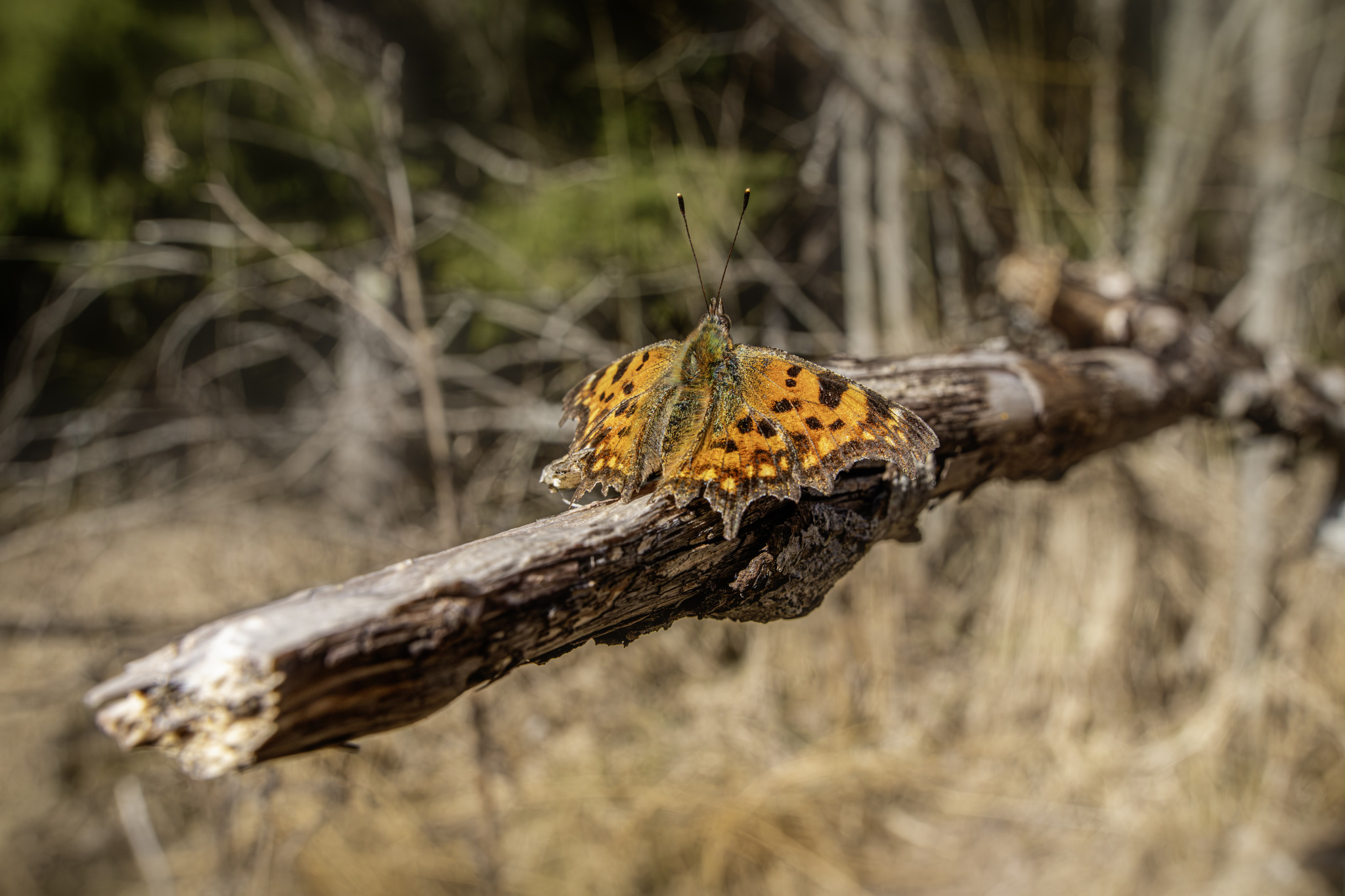
The Comma butterfly is one of nature’s most impressive masters of disguise. Found across Europe and temperate Asia, it is a member of the Nymphalidae family. It’s a butterfly that looks like a tattered leaf when resting but reveals a vibrant, fiery display when it takes flight.
📏 Physical Characteristics
- The “Ragged” Look: The most striking feature is the irregular, scalloped edges of its wings. To a predator, this makes the butterfly look like a torn or decaying leaf rather than a tasty insect.
- Upper Side: When open, the wings are a bright, warm orange or tawny color, decorated with dark brown spots and a dark border.
- Under Side: This is where the magic happens. The underside is a mottled, dark brown/grey. When the wings are closed, it is almost indistinguishable from a dead leaf.
- The Namesake: In the center of the hindwing underside, there is a tiny, bright white “C” or comma-shaped mark. This pearly white spot stands out sharply against the dark background and gives the species its name.
- Wingspan: Typically ranges between 45–64 mm.
🌗 A Tale of Two Generations (Polymorphism)
The Comma has a fascinating biological quirk where it produces two different-looking forms depending on the length of the days when the larvae are developing:
- Form hutchinsoni: These are the “summer” brood. They are lighter and brighter in color and have less indented wing edges. They breed immediately and die before winter.
- The Standard Form: These hatch later in the year. They are darker on the underside and much more “ragged.” These individuals do not breed immediately; instead, they hibernate (overwinter) as adults.
🍎 Habitat and Diet
- Habitat: They are lovers of the “edge” – you’ll find them in woodland clearings, country lanes, hedgerows, and increasingly in suburban gardens.
- Host Plants: The caterpillars are quite picky. Their primary food source is the Stinging Nettle (Urtica dioica), but they also utilize Hops, Currants, and occasionally Elms.
- Adult Diet: * Spring/Summer: Nectar from flowers like thistles, knapweeds, and brambles.
- Autumn: They have a real “sweet tooth” for rotting fruit. You’ll often see them on fallen plums or blackberries, bulking up on sugar for their long winter sleep.
🌙 Behavior and Life Cycle
- Hibernation: Unlike many butterflies that spend winter as eggs or pupae, the Comma overwinters as an adult. They tuck themselves into thick ivy, hollow trees, or woodpiles. Their cryptic underside allows them to blend in perfectly with bark and dried leaves.
- Territorial Males: Male Commas are known for being quite feisty. They will pick a sunlit “perch” on a leaf and dart out to investigate—or chase away—anything that flies past, hoping to find a mate.
- Caterpillar Appearance: The caterpillar is as well-disguised as the adult. It is black and orange but features a large white patch on its back, making it look exactly like a bird dropping to any hungry bird passing by.
📈 Conservation and Climate Success
While many butterfly species are in decline, the Comma is actually a success story, particularly in Northern Europe.
- Range Expansion: In the early 20th century, the Comma almost went extinct in the UK, retreating to a small area in the West. Since then, it has staged a massive comeback, moving steadily northward.
- Climate Change: Rising temperatures have benefited the Comma, allowing it to move into areas that were previously too cold for its larvae to develop effectively.
- IUCN Status: Least Concern. It is currently widespread and its population is considered stable.
Pro-Tip for Gardeners: If you want to attract these masters of disguise, leave some fallen fruit (like bruised pears or plums) in a sunny spot during late August and September. It’s like an energy-drink station for them before they head into hibernation.
Views: 411
Subscribe to the newsletter: