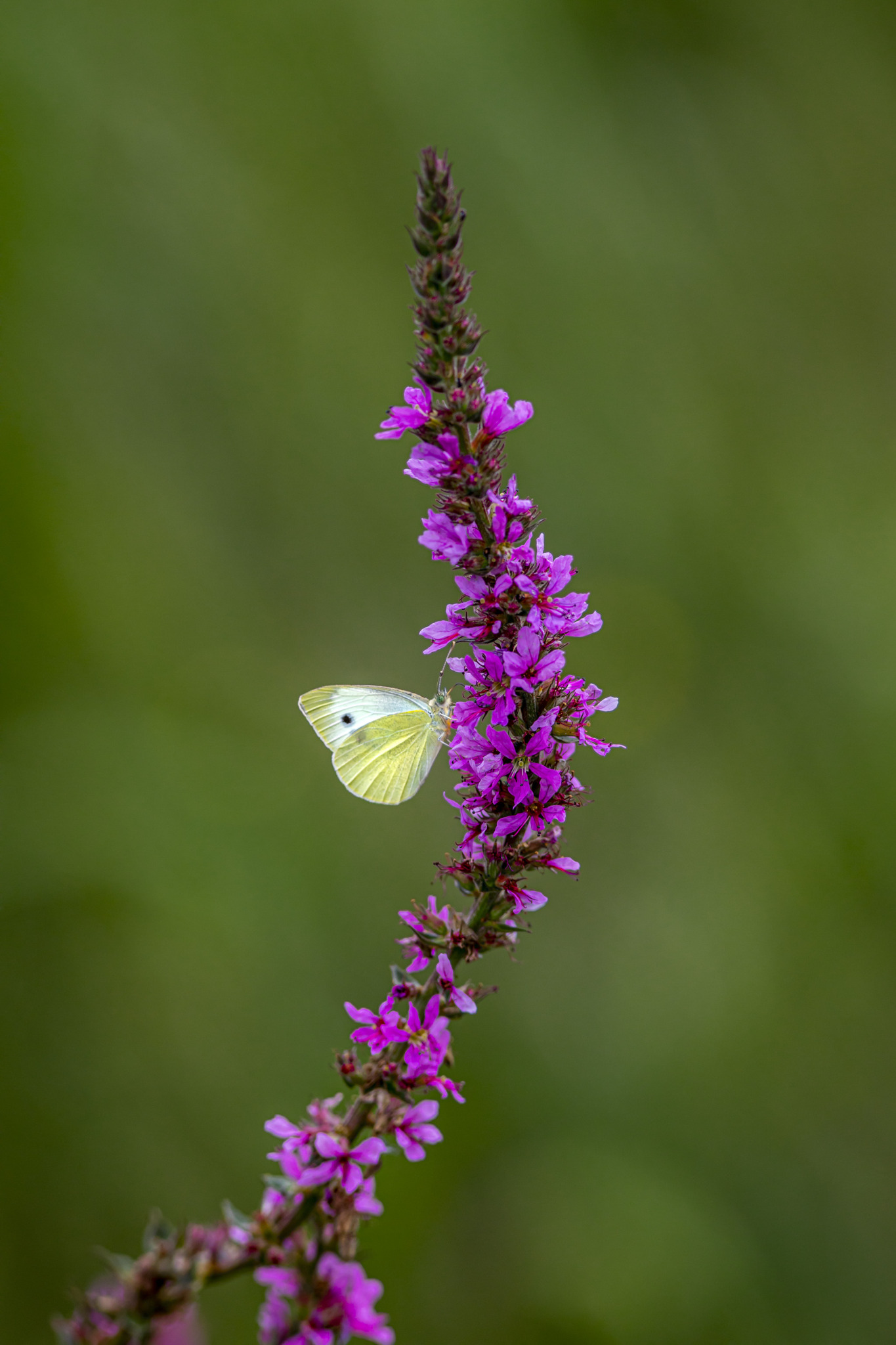

🦋 Deep Review: Green-veined White (Pieris napi)
The Green-veined White is the “quiet cousin” of the butterfly world. While its relatives, the Large and Small Whites, are notorious for pillaging cabbage patches, the Green-veined White is a far more refined character. It prefers the damp, dappled shade of woodland edges and riverbanks over the chaos of a vegetable garden.
📏 Physical Characteristics: The Veined Beauty
At first glance, it looks like just another “white butterfly,” but a closer look reveals a masterclass in subtle detail.
- The Underside (The Key): The most defining feature is on the underside of the hindwings. The veins are heavily dusted with dark scales (a mix of yellow and black), giving them a distinct “greenish” appearance.
- The Upper Side: White with black tips on the forewings.
- Males: Usually have one black spot on each forewing.
- Females: Usually have two black spots and a more prominent dusting of dark scales along the veins.
- Size: Medium-sized, with a wingspan of 40–52 mm.
- The “Secret” Scent: If you were to (very gently) handle a male, you might notice a faint, pleasant smell. They produce pheromones that humans often describe as smelling like lemon or lemon verbena to attract mates.
🥗 Diet and the “Cabbage” Myth (The Candor Part)
Let’s clear the name of this poor butterfly: The Green-veined White is NOT a garden pest.
- Host Plants: Unlike its “cabbage white” cousins, Pieris napi larvae almost never eat cultivated brassicas (cabbage, kale, broccoli). Instead, they feed on wild crucifers, specifically:
- Garlic Mustard (Alliaria petiolata)
- Cuckoo Flower (Cardamine pratensis)
- Hedge Mustard
- Adult Diet: They are frequent visitors to damp mud (puddling) to gain minerals and nectar from a wide variety of wild flowers, including bugle, bluebells, and ragwort.
🏠 Habitat and Distribution
- Environment: They are the “woodland whites.” They love damp, sheltered spots—think forest glades, hedgerows, lush meadows, and garden corners that are a bit “wild” and overgrown.
- Range: Extremely widespread across Europe and temperate Asia, reaching all the way to North America (though some taxonomists consider the American version a separate species, Pieris oleracea).
- Adaptability: They are very hardy and can be found from sea level up to high mountain pastures.
🔄 Seasonal Broods: A Shape-Shifter
The Green-veined White usually has two (sometimes three, depending on how warm the 2026 summer gets) broods per year. They look surprisingly different depending on when they hatch:
| Feature | Spring Brood (April–May) | Summer Brood (July–August) |
| Vein Dusting | Very heavy and dark; high contrast. | Fainter, sometimes almost disappearing. |
| Upper Side | Paler, with smaller black spots. | Bolder, darker markings; larger spots. |
| Size | Often slightly smaller. | Often slightly larger. |
This variation helps with thermoregulation; the darker veins in spring help the butterfly absorb more heat from the weak early-season sun.
🌙 Behavior and Life Cycle
- The Egg: Beautiful, pale yellow, and shaped like a tiny bottle. They are laid singly on the underside of host leaves.
- The Caterpillar: A perfect shade of “leaf green” with tiny yellow spots. They are masters of camouflage, blending in seamlessly with the veins of their food plant.
- Hibernation: They spend the winter as a pupa (chrysalis). They are tough enough to survive freezing temperatures, tucked away on a plant stem or a fence post.
⚠️ Conservation Status
- IUCN Status: Least Concern.
- Trends: While many specialist butterflies are struggling, the Green-veined White remains one of the most common and stable species in Europe.
- Why? Because it isn’t a “picky eater.” As long as there are damp ditches and wild crucifers, this butterfly thrives. It has also benefited from the trend of “rewilding” and leaving road verges unmown until later in the season.
Peer Insight: If you’re trying to ID one in the field and it flies into a dark, shaded area under trees, it’s almost certainly a Green-veined White. Its cousins (the Large and Small Whites) much prefer the bright, open sun of a field or garden.
Views: 1017
Subscribe to the newsletter: