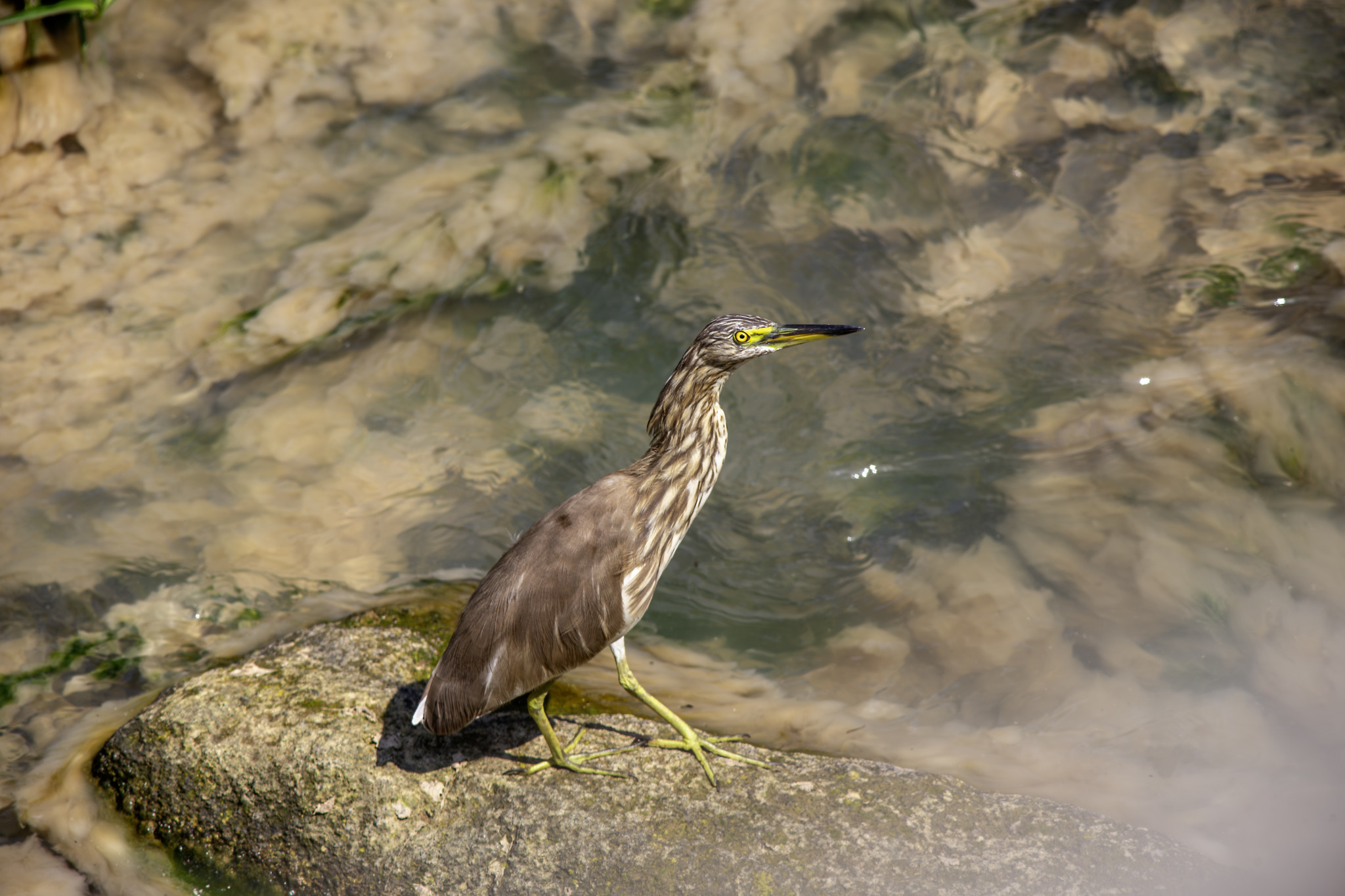
🐦 Deep Review: Indian Pond Heron (Ardeola grayii)
The Indian Pond Heron, affectionately known in many regions as the Paddybird, is a master of visual deception. If you’ve ever walked past a murky pond in South Asia and been startled by a sudden flash of white wings from what looked like a pile of mud, you’ve met this bird.
📏 Physical Characteristics: The “Transformer”
The most fascinating thing about the Pond Heron is its dual appearance. It is a small, stocky heron that looks completely different depending on whether it’s standing still or flying.
- At Rest: It is a drab, earthy streaked brown and buff. This “camo-mode” allows it to disappear perfectly against dried grass, muddy banks, or floating vegetation.
- In Flight: The moment it takes off, it reveals brilliant, snow-white wings and tail. This “white flash” often confuses predators (and birdwatchers) because the bird seems to transform mid-air.
- Breeding Plumage: During the mating season, they get a “glow-up.” The dull brown feathers on their back are replaced by long, deep maroon or burgundy feathers, and their legs can briefly turn a bright yellow or even reddish.
- Size:FeatureMeasurementLength42–46 cmWingspan75–90 cmWeight~230–270 grams
🌏 Habitat and Distribution
- Range: Primarily found across the Indian Subcontinent (India, Pakistan, Sri Lanka, Bangladesh) and extending into Myanmar and the Persian Gulf.
- The “Paddybird”: They are famously associated with rice paddies, but they are incredibly adaptable. You’ll find them in marshes, mangroves, lake edges, and—most impressively—urban ditches and open sewers. If there is shallow water and a few fish, they’re happy.
🍎 Diet and the “Statue” Strategy
The Indian Pond Heron is the personification of patience.
- Hunting Style: They stand motionless for incredibly long periods, neck hunched, eyes fixed on the water. They are far less active hunters than the larger Egrets. When prey ventures close, they strike with lightning speed.
- Menu: They are opportunistic carnivores.
- Main Course: Small fish, frogs, and tadpoles.
- Side Dishes: Aquatic insects, dragonflies, grasshoppers, and even small crustaceans.
- Fun Behavior: They have been observed using “bait fishing”—dropping a feather or a small insect on the water’s surface to lure fish within striking distance. It’s a high-IQ move for a bird that looks like it’s napping.
🏠 Social Life and Nesting
- Colonial Nesters: They aren’t solitary when it comes to family. They nest in colonies (called heronries), often sharing trees with other water birds like Cattle Egrets or Little Cormorants.
- The Nest: A somewhat messy, platform-like nest made of twigs, usually built over or near water.
- Parents: Both the male and female share the duties of incubating the eggs (usually 3–5 pale green ones) and feeding the chicks.
⚠️ Conservation and Status
- IUCN Status: Least Concern.
- Resilience: Unlike many specialist birds, the Indian Pond Heron is doing quite well. It has benefited from human-made irrigation systems and doesn’t mind human proximity.
- Threats: While not endangered, they are sensitive to pesticide runoff in agricultural fields (paddy fields) and the total drainage of urban wetlands, which are their primary “grocery stores.”
The “Squawk”: If you get too close, they emit a harsh, croaking wa-koot sound as they fly off. It’s essentially the bird’s version of “Hey! I’m walkin’ here!”
Visited 2,347 times, 32 visit(s) today
Views: 2516
Subscribe to the newsletter: