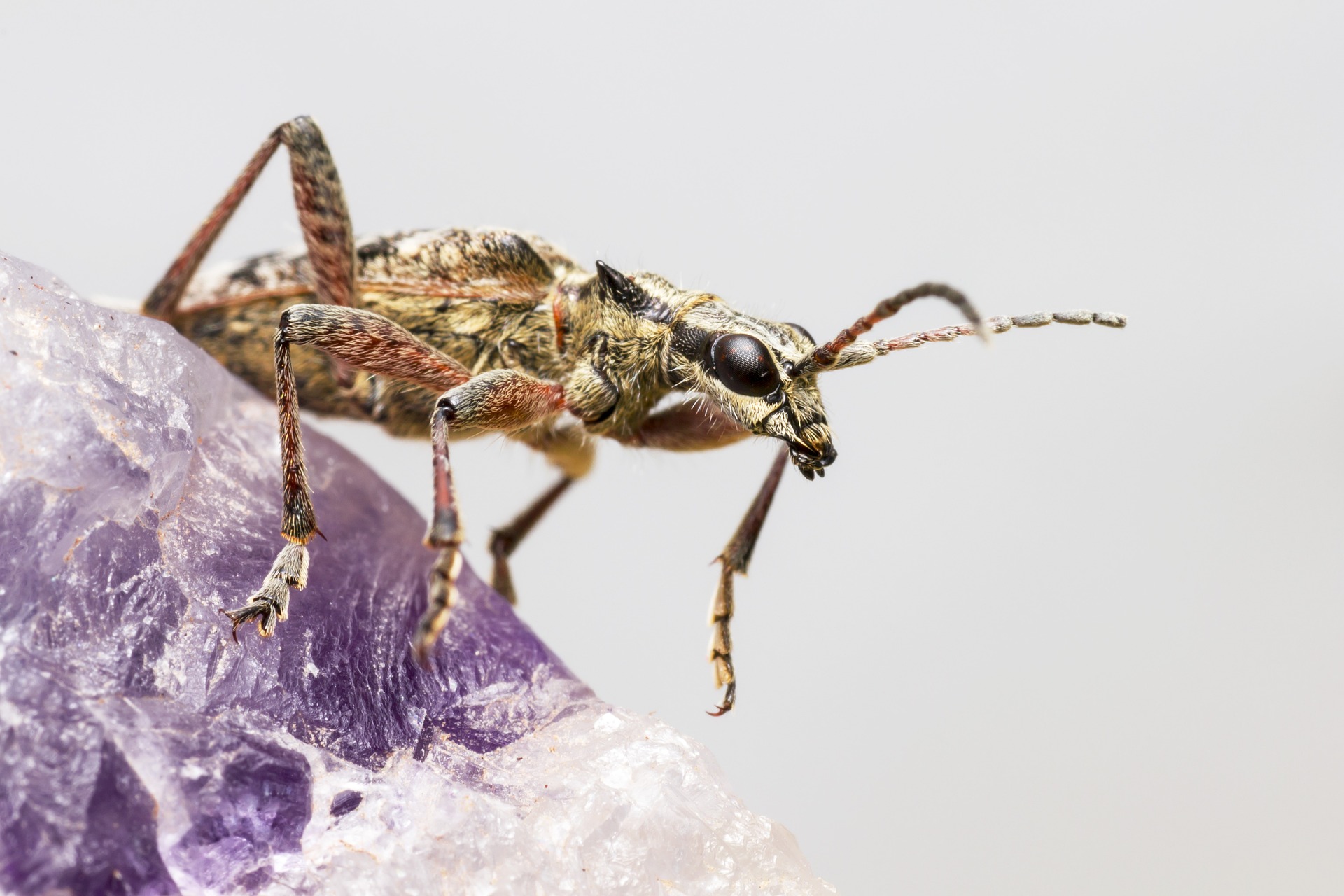
🪲 Deep Review: Black-Spotted Longhorn Beetle (Rhagium mordax)
As we transition into early autumn, the forest floor undergoes a quiet shift, but many fascinating invertebrates are still active or finishing their cycles. One of the most characterful and easily identifiable longhorn beetles you can encounter in European woodlands is the Black-Spotted Longhorn Beetle (Rhagium mordax). Belonging to the family Cerambycidae, this sturdy beetle is a widespread resident of damp, wooded landscapes.
📏 Physical Characteristics: The Robust Striper
Unlike the slender, cylindrical shape of the Large Poplar Borer, Rhagium mordax has a stocky, muscular build that makes it look like a heavyweight contender in the beetle world.
- The Coat and Pattern: Its wing covers (elytra) are heavily textured and feature a mottled pattern of grey, yellowish-brown, and black markings. Most notably, they are decorated with distinct, dark transverse bands and black spots (hence its common name).
- The Antennae: Unlike many longhorn beetles with absurdly sweeping antennae, Rhagium species possess relatively short, thick antennae that do not stretch far past the thorax, giving it a more compact, beetle-like silhouette.
- The “Neck”: The pronotum features a sharp spine on either side, adding to its rugged, armored appearance.
- Size: A medium-to-large beetle, typically measuring between 12 and 22 mm in length.
🪵 The Sub-Bark World: Larval Ecology
While adults are often found basking on flowers or logs, the true magic of Rhagium mordax happens beneath the surface of dead wood.
- Host Trees: The larvae are xylophagous, feeding exclusively on the dead or decaying wood of broadleaved trees (such as oak, birch, beech, alder, and hazel), and occasionally damp coniferous wood.
- The Wood-Munching Grub: After the female lays eggs in cracks of decaying logs or stumps, the robust, white larvae tunnel beneath the bark, creating wide, flattened galleries packed with coarse, sawdust-like frass.
- The Unique Pupal Cradle: One of the most remarkable features of the genus Rhagium is how the larva prepares for adulthood. Before pupating, it constructs a distinctive, oval “cradle” or nest made of wood fibers and chips right under the bark, which protects it through its transformation.
🥗 Diet: From Timber to Petals
- Adult Diet: Unlike their wood-boring larvae, adult beetles are peaceful visitors to the sunlit world. You will frequently find them resting on umbbelliferous flowers (like hogweed and cow parsley), tree sap, or flowering shrubs, where they feed on pollen, nectar, and plant juices.
- Seasonality: While adults peak in the warmth of late spring and summer (May to July), they can often be spotted lingering into the early autumn months as they finish their adult phase.
🌍 Habitat and Distribution
- Environment: They thrive in ancient deciduous or mixed woodlands, forest edges, clearings, and damp river valleys where standing dead wood, fallen trunks, and rotting stumps are left to cycle naturally.
- Range: Widespread and common across most of Europe, stretching east into Asia. In Estonia and the Baltic region, it is a regular and welcome component of the forest ecosystem.
🛡️ Defensive Strategy
- The Squeak: If picked up or handled, Rhagium mordax can produce a distinct, audible stridulation sound—a squeaking or clicking noise created by rubbing parts of its thorax together. Coupled with its tough exoskeleton, this startles potential predators like birds or small mammals into dropping it.
Field Tip: If you are exploring a woodland edge in autumn, keep an eye out for rotting broadleaf logs or stumps. If you gently peel back a loose piece of bark, you might stumble upon one of their famous wood-fiber pupal cradles or spot the stocky, black-and-grey mottled adult resting quietly, blending in effortlessly with the dark, damp timber.
Views: 1491
Subscribe to the newsletter: