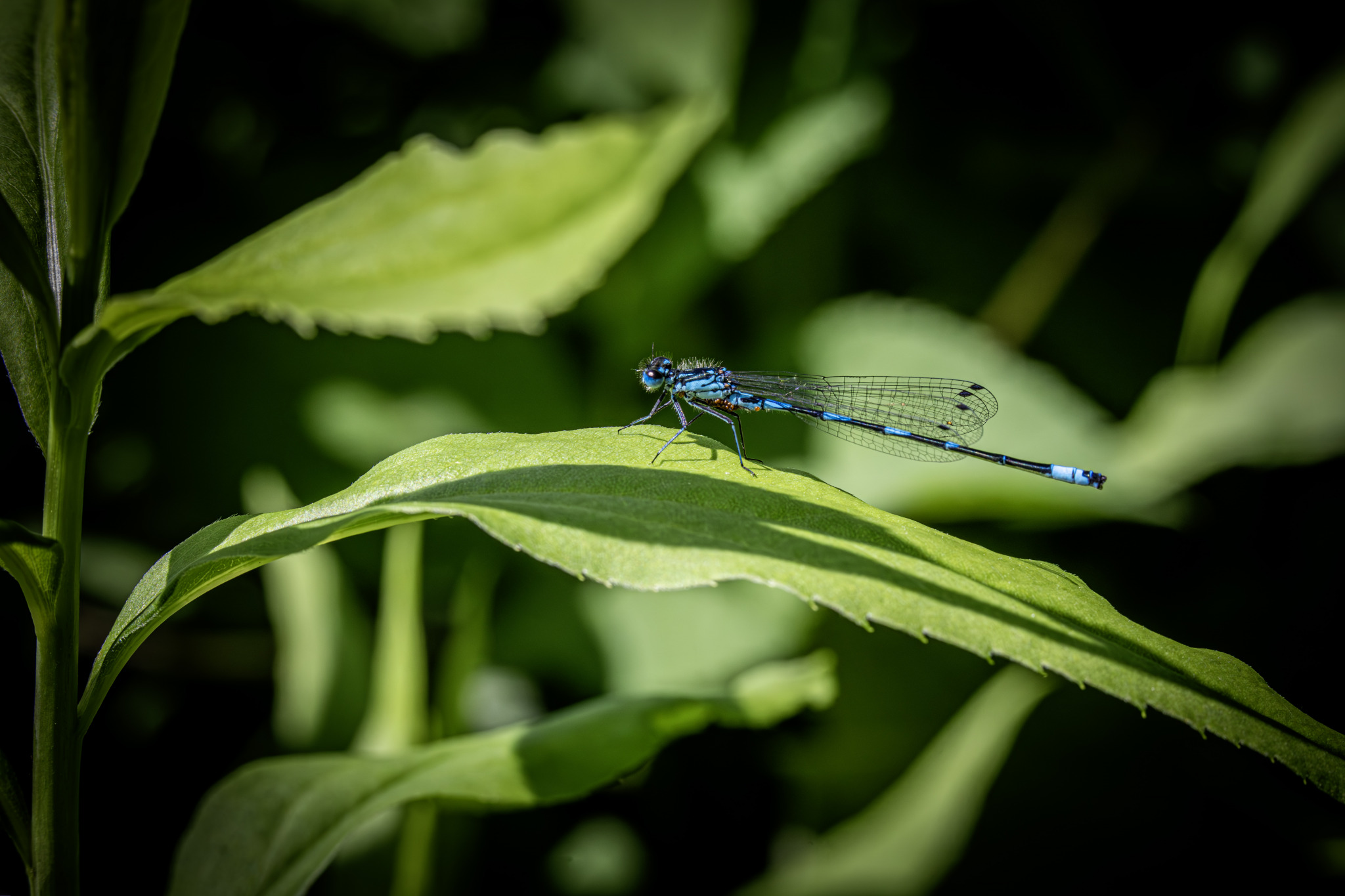
The Eurasian Bluets (genus Coenagrion) are the living neon signs of the wetland. These delicate damselflies, often called “Azure Damselflies,” are a masterclass in intricate pattern and vibrant color. While they may look fragile, they are actually highly efficient predators and one of the most successful insect groups across Europe and Asia.
Drawing from the macro photography and field observations at karits.eu, here is an exploration of these “blue needles.”
1. The “U” Mark: Cracking the Code
The genus Coenagrion contains several species that look nearly identical at first glance—most notably the Azure Damselfly (C. puella) and the Common Blue Damselfly (Enallagma cyathigerum).
- The Secret ID: To identify a male Eurasian Bluet (specifically the Azure), look at the second segment of the abdomen (just behind the thorax). It usually sports a distinct black “U” shape or a “mercury” symbol that is not connected to the black band below it.
- The Female Palette: While males are almost always a piercing “electric blue,” females come in a variety of color forms (polymorphism). You can find them in pale green, dull blue, or even a dark “melanic” form, which helps them avoid excessive attention from aggressive males.
2. The “Love Heart” and Tandem Flight
The reproductive behavior of Bluets is one of the most photographed phenomena in the insect world.
- The Wheel: When mating, the pair forms a closed loop known as a “mating wheel” or “copulatory heart.” This unique shape is the result of the male grabbing the female by the back of her head with special claspers, while she loops her abdomen forward.
- Tandem Egg-Laying: Unlike many other dragonflies, Eurasian Bluets often stay in “tandem” while laying eggs. The male remains attached to the female, acting as a “sentinel” to prevent other males from interfering while she injects eggs into aquatic vegetation.
3. Miniature Tigers
Don’t let the dainty appearance fool you. Both as larvae (nymphs) and adults, Bluets are ferocious hunters.
- The Larval Hook: Beneath the water, the nymphs have a “mask”—a hinged lower lip with hooks that shoots out to grab mosquito larvae and small crustaceans.
- Aerial Ambush: As adults, they have “raptorial” legs covered in spines, which they use to pluck flies and gnats right out of the air, often returning to a favorite reed to eat their prize.
📸 Photographer’s Perspective: Mastering the Blue Needle
Photographing Coenagrion is a lesson in geometry and light management.
- The Parallel Rule: Because damselflies are long and thin, your plane of focus is your biggest challenge. To get both the head and the tip of the tail sharp at a high magnification, your camera sensor must be perfectly parallel to the insect’s body. Even a slight tilt will result in a blurry tail.
- Diffusing the “Sheen”: The metallic blue of their bodies and the glass-like texture of their wings can create harsh specular highlights in direct sun. Shoot during the “Golden Hour” or use a small hand-held diffuser to soften the light.
- Focus on the Eyes: Damselflies have massive compound eyes. Nailing the focus on the facets of the eyes makes the image feel alive. Look for the “pseudopupil”—the dark spot in the eye that looks like it’s “watching” the camera.
- The Morning Chill: In the early morning, Bluets are often covered in dew and unable to fly until the sun warms them. This is the best time for high-magnification focus stacking, as the insect will remain perfectly still.
Quick Facts Table
| Feature | Detail |
| Scientific Name | Coenagrion species |
| Common Name | Eurasian Bluet / Azure Damselfly |
| Length | 33–35 mm |
| Flight Period | May to August (Peak in June/July) |
| Habitat | Ponds, lakes, and slow-moving streams with plenty of vegetation |
| Status | Common across most of Eurasia |
Explore more stunning macro captures of the Eurasian Bluets and download full-size CC0 images at karits.eu.
Views: 140
Subscribe to the newsletter: