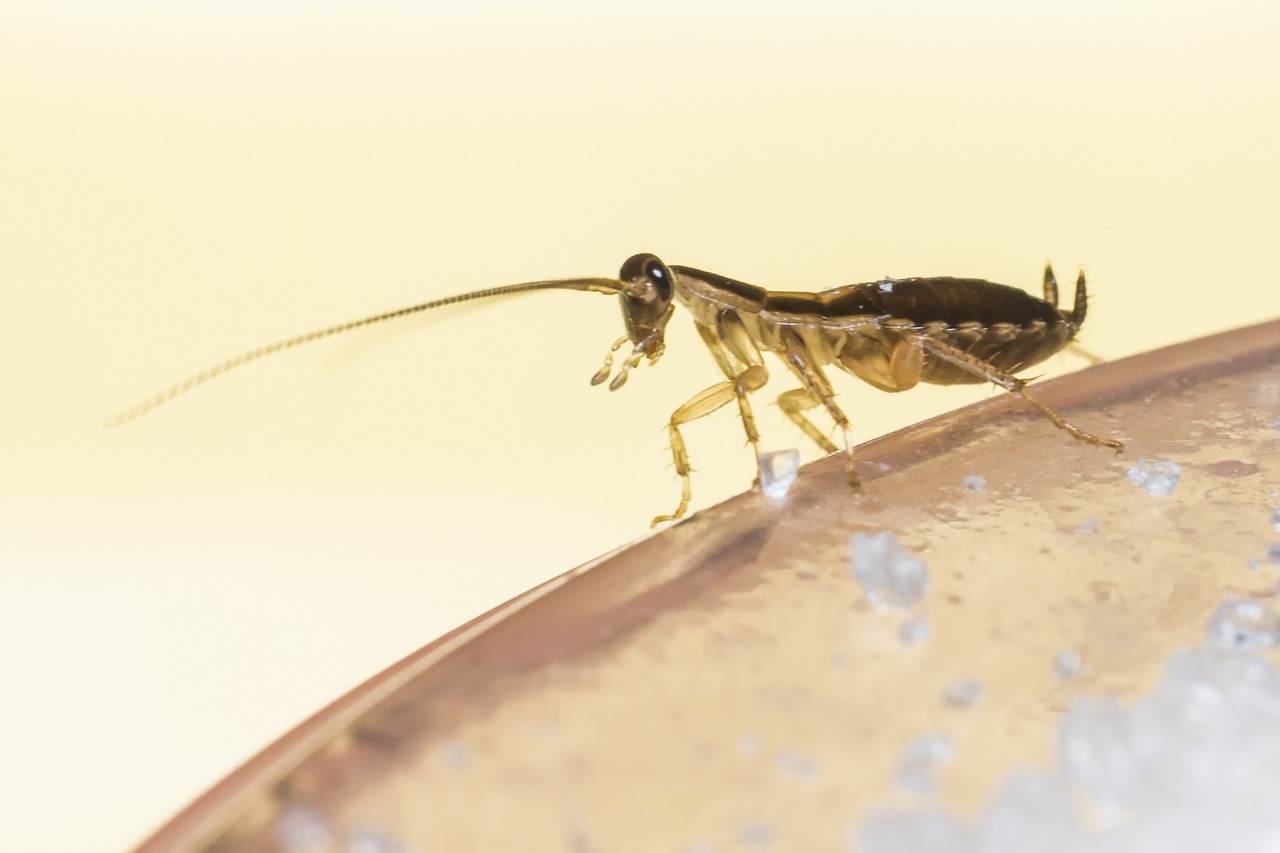
🪳 Deep Review: German Cockroach (Blattella germanica)
Shifting gears entirely from the meadows, wetlands, and forests of our previous wildlife reviews, we turn to the ultimate domestic survivor: the German Cockroach (Blattella germanica). Despite its scientific and common names pointing toward Europe, genetic evidence shows this species actually originated in South or Southeast Asia before hitching a ride on global trade routes to become the most widespread urban cockroach pest on Earth.
📏 Physical Characteristics: Built for the Cracks
The German cockroach is uniquely engineered to live in the hidden spaces behind your walls and appliances.
- Coloration:Pale tan to light brown, distinguished by two dark, parallel stripes running down its thorax from behind the head to the base of the wings.
- The Silhouette:Flattened, oval-shaped body designed to squeeze into microscopic gaps.While they possess fully developed wings, they cannot fly;instead, they rely on rapid running and incredible agility.
- Size:Relatively small compared to other pest roaches, typically measuring just 1.1 to 1.6 cm (about 0.4 to 0.6 inches) in length.
🍼 Hyper-Reproduction: The Math of an Infestation
The primary reason the German cockroach is such a formidable indoor pest is its staggering reproductive speed.
- The Ootheca (Egg Case): Unlike other roaches that drop their egg cases immediately, a female German cockroach carries her ootheca protruding from her abdomen until the eggs are just about to hatch, protecting them from many environmental hazards and predators.
- Rapid Turnaround: A single female can produce multiple egg cases in her lifetime, yielding hundreds of offspring. Under ideal indoor conditions, they can cycle from egg to reproductive adult in roughly 50 to 60 days.A single pair and their descendants can theoretically multiply into tens of thousands in a year if left unchecked.
🏠 Habitat and Behavior: The Indoor Obligate
- Zero Wilderness Presence: Unlike many insects that spill into homes from nearby fields, Blattella germanica is an indoor obligate. They cannot survive freezing outdoor temperatures and rely entirely on human-built, climate-controlled structures (homes, restaurants, hospitals, hotels, and ships).
- The Micro-Climate:They heavily favor warm, humid environments—which is why kitchens and bathrooms are ground zero.During the day, they practice thigmotaxis, meaning they prefer tight, confined spaces where their bodies touch surfaces on multiple sides (like the warm, dark motor cavities of refrigerators, behind backsplashes, or inside wall cracks).
- Omnivorous Scavengers: They are entirely non-selective eaters. While they love starches, fats, sugars, and meats, a lack of human food will cause them to consume paper, glue, book bindings, soap, toothpaste, or even resort to cannibalism (chewing on each other’s wings and legs).
⚠️ Public Health Significance
Beyond the psychological distress of an infestation, German cockroaches pose legitimate health risks:
- Allergen Triggers:Their cast-off skins, saliva, waste products, and decomposing bodies break down into potent airborne allergens. These can trigger severe asthma attacks, chronic rhinitis, and skin eczema, particularly in children living in multi-unit housing.
- Pathogen Vectors: Because they roam through unsanitary areas (like drains and garbage) before tracking across kitchen counters and food prep surfaces, they can mechanically transfer pathogenic bacteria, protozoans, and human illnesses.
Management Reality Check: Because of their small size, rapid breeding cycles, and a strong evolutionary capacity to develop resistance to standard chemical insecticides, DIY surface sprays often fail. Effective control requires targeted baiting systems, eliminating moisture sources, and meticulously sealing up the tiny cracks and crevices they use as daytime safehouses.
Views: 1285
Subscribe to the newsletter: