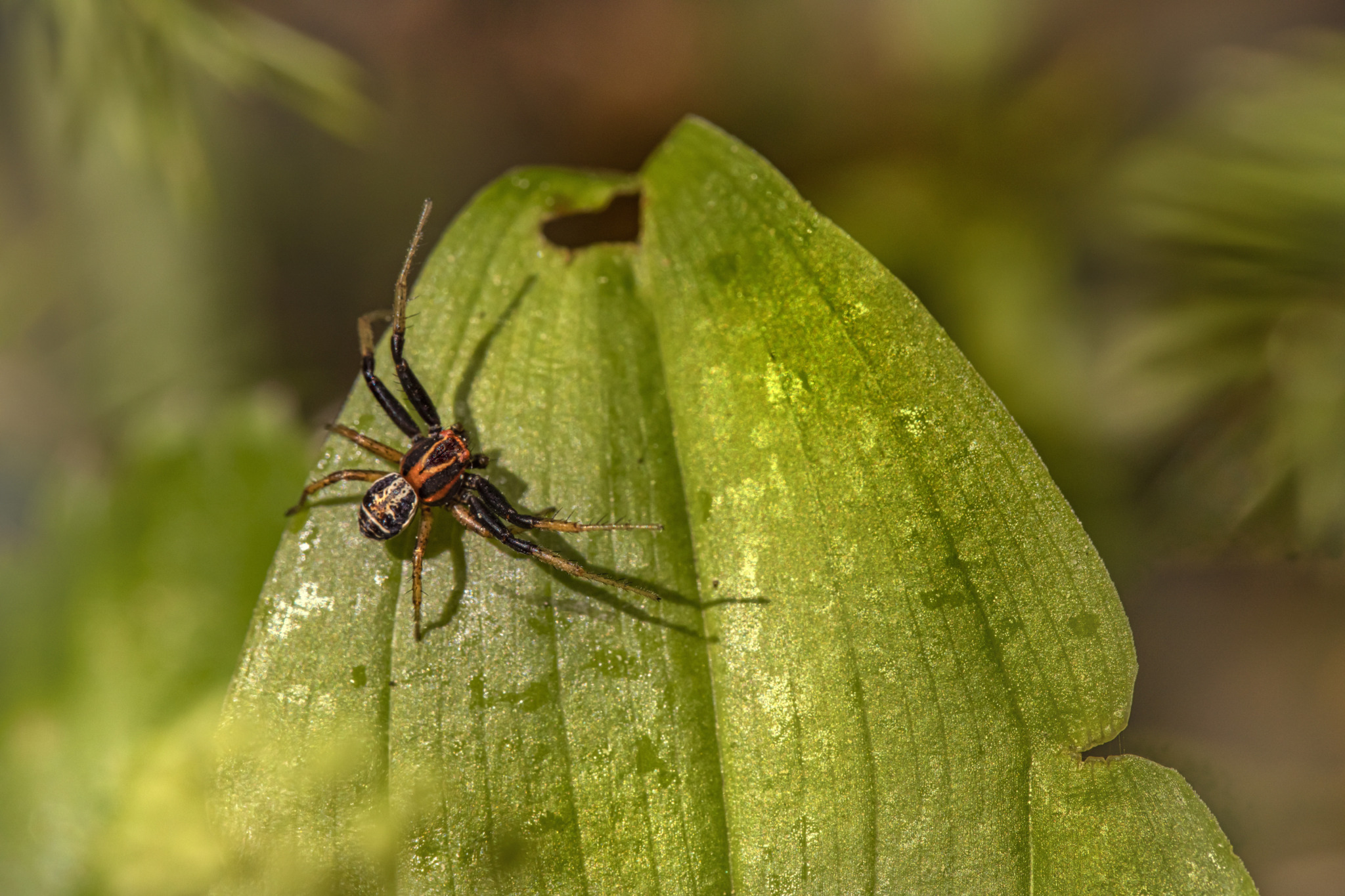

🕷️ Deep Review: Goldenrod Crab Spider (Misumena vatia)
Continuing our deep dives into the intricate world of invertebrates, we turn to one of the most remarkable ambush predators in the meadows: the Goldenrod Crab Spider (Misumena vatia). Belonging to the family Thomisidae, this species earns its common name both from its preferred hunting grounds and its distinctive, sideways-scuttling gait reminiscent of a crab.
📏 Physical Characteristics: The Color-Shifting Ambush Master
The Goldenrod Crab Spider is a master of morphological adaptation and visual deception.
- Sexual Dimorphism: There is a dramatic size difference between the sexes. Females are robust and measure between 7 and 10 mm in length, while males are much smaller and daintier, reaching only 3 to 4 mm.
- The Crab-Like Stance: Their front two pairs of legs are significantly longer and stronger than their rear legs, held out wide in a grasping posture designed to snap shut around unsuspecting prey.
- Color-Changing Ability (Homochromy): Females possess the rare ability to actively change their body color between white and yellow to match the specific flower they are sitting on. This transformation is achieved by secreting a liquid pigment into the outer cell layer of the skin, though the process can take anywhere from a few days to over a week depending on temperature and background contrast.
🐝 Diet and Hunting Strategy: The Ultimate Wait-and-See
Unlike web-spinning spiders that build traps or active hunters that chase down quarry, Misumena vatia is a pure sit-and-wait predator.
- The Flower Stand: They station themselves squarely in the center of open flower heads—favorites include goldenrods (Solidago), oxeye daisies, wild carrots, and thistles—where nectar-seeking insects gather in high numbers.
- The Ambush: Remaining completely motionless, the spider waits until a pollinator (such as a honeybee, hoverfly, butterfly, or bumblebee) lands on the flower to feed. With blinding speed, the crab spider lunges forward, seizing the insect behind its head and driving its venomous fangs into the prey before it can react.
- Giant Slayers: Remarkably, female crab spiders are strong enough to overpower and kill prey items many times their own size—including large drone flies and even heavy honeybees.
🌍 Habitat and Distribution
- Environment: They thrive in open, sunlit habitats, meadows, forest edges, and gardens where flowering herbaceous plants are abundant during the summer months.
- Range: Widespread across the Holarctic realm, including most of Europe (from the Mediterranean up to the Baltic region, including Estonia), temperate Asia, and North America.
- Seasonality: Adults are most active during the height of summer, peaking from June through September, right when meadows are bursting with blooms and insect activity is at its annual high.
🛡️ Reproduction and Maternal Care
- Courtship: When a tiny male finds a mature female on her flower, he climbs onto her back, carefully ties her down with a few silken threads to subdue her predatory instincts, and mates.
- The Nursery: After fertilizing her eggs, the female constructs a secure retreat by folding the leaves of the host plant together and binding them with dense white silk. Inside this pouch, she lays her eggs and guards them fiercely until she eventually reaches the end of her life cycle in autumn, while the spiderlings hatch and overwinter in the leaf litter.
Field Tip: Next time you are walking through a sunlit patch of yellow or white flowers in mid-summer, look closely into the center of the blossom clusters. If you see a stout, crab-like spider sitting stock-still with its front legs arched outward—blending so perfectly into the petals that it looks like a natural part of the flower—you’ve spotted the legendary Goldenrod Crab Spider!
Views: 2070
Subscribe to the newsletter: